
By Barbra Chakaramba
A family dispute in Murehwa ended in tragedy when Daniel Bandahwe was allegedly killed by his younger brother, James.
The killing shocked residents in the rural community, but for police investigators, it was another addition to a growing list of homicide-related offences that have increasingly dominated crime reports across Zimbabwe.
As relatives gathered to mourn, the incident joined a disturbing pattern emerging from court records, police reports and national crime statistics. In Zimbabwe, people are increasingly dying at the hands of people they know.
Brothers are killing brothers. Husbands are killing wives. Neighbours are killing neighbours. Friends are killing friends.
Behind the individual tragedies lies a troubling national trend revealed by data from the Zimbabwe National Statistics Agency (ZIMSTAT), which shows that offences classified as “Acts Leading to Death or Intending to Cause Death” rose steadily throughout 2025.
The figures reveal that Zimbabwe recorded 1,183 homicide-related offences during the fourth quarter of 2025, up from 1,027 cases recorded during the first quarter. The increase represents a 15.2 percent rise over the course of a single year.
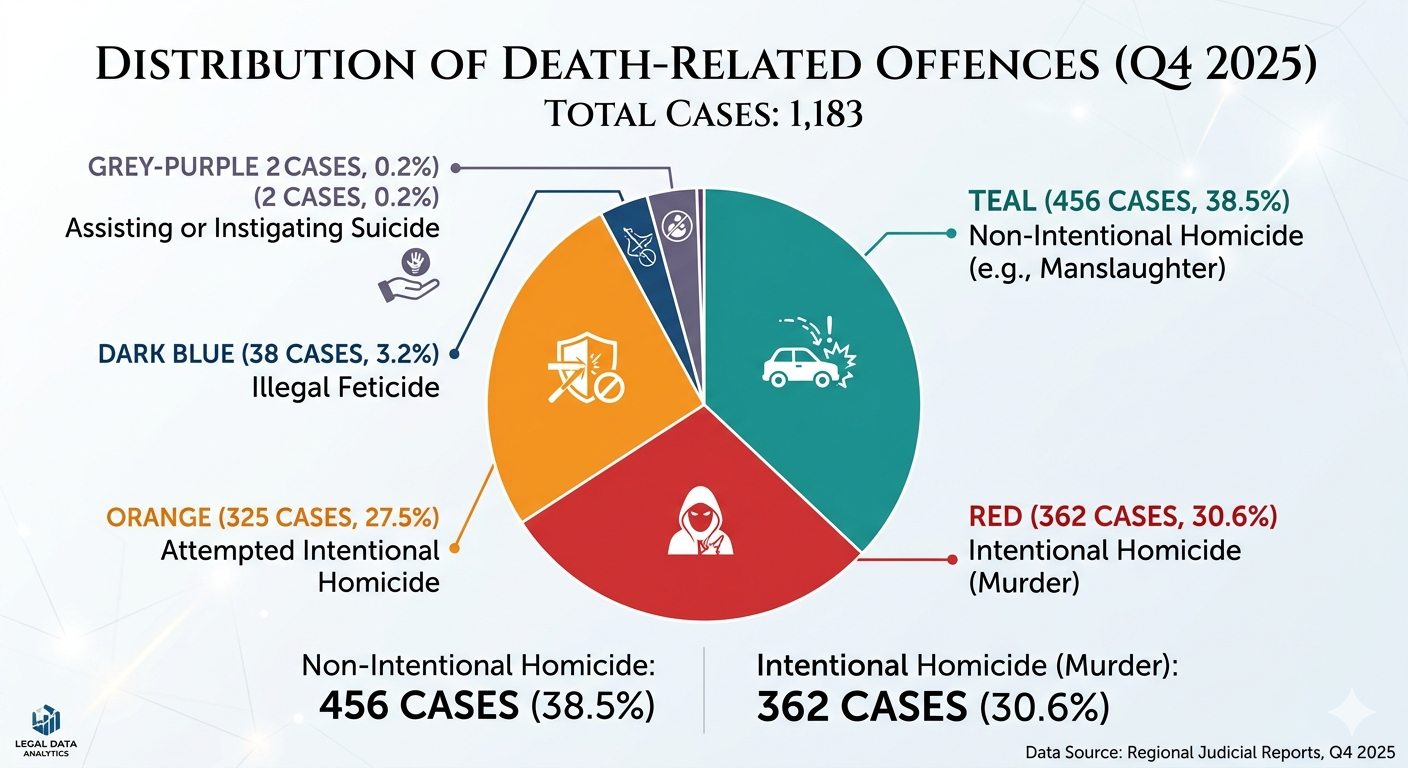
Zimbabwe also recorded 362 murder cases during the fourth quarter, according to ZIMSTAT. Based on the 92 days in the quarter, that translates to nearly four reported murder cases per day. However, the agency’s crime statistics classify offences rather than confirmed deaths, making direct comparisons with mortality data difficult.
The statistics suggest interpersonal violence remains a significant public safety challenge.
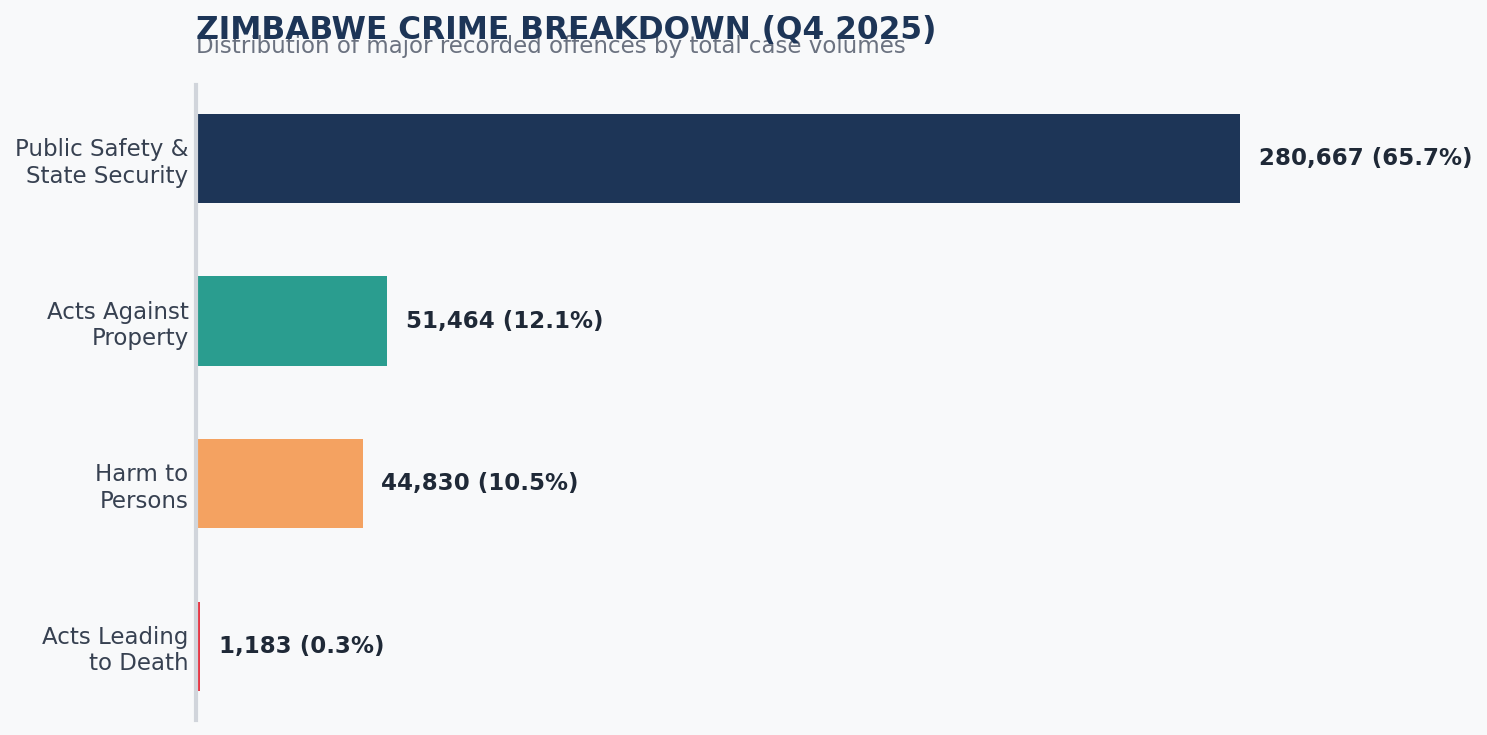
ZIMSTAT classifies “Acts Leading to Death or Intending to Cause Death” as a broad category that includes murder, attempted murder and non-intentional homicide offences. The figures, therefore, reflect a wider spectrum of violent incidents than murders alone and should not be interpreted as homicide deaths only.
A YEAR OF RISING DEATHS
The data shows that homicide-related offences increased in every quarter of 2025.
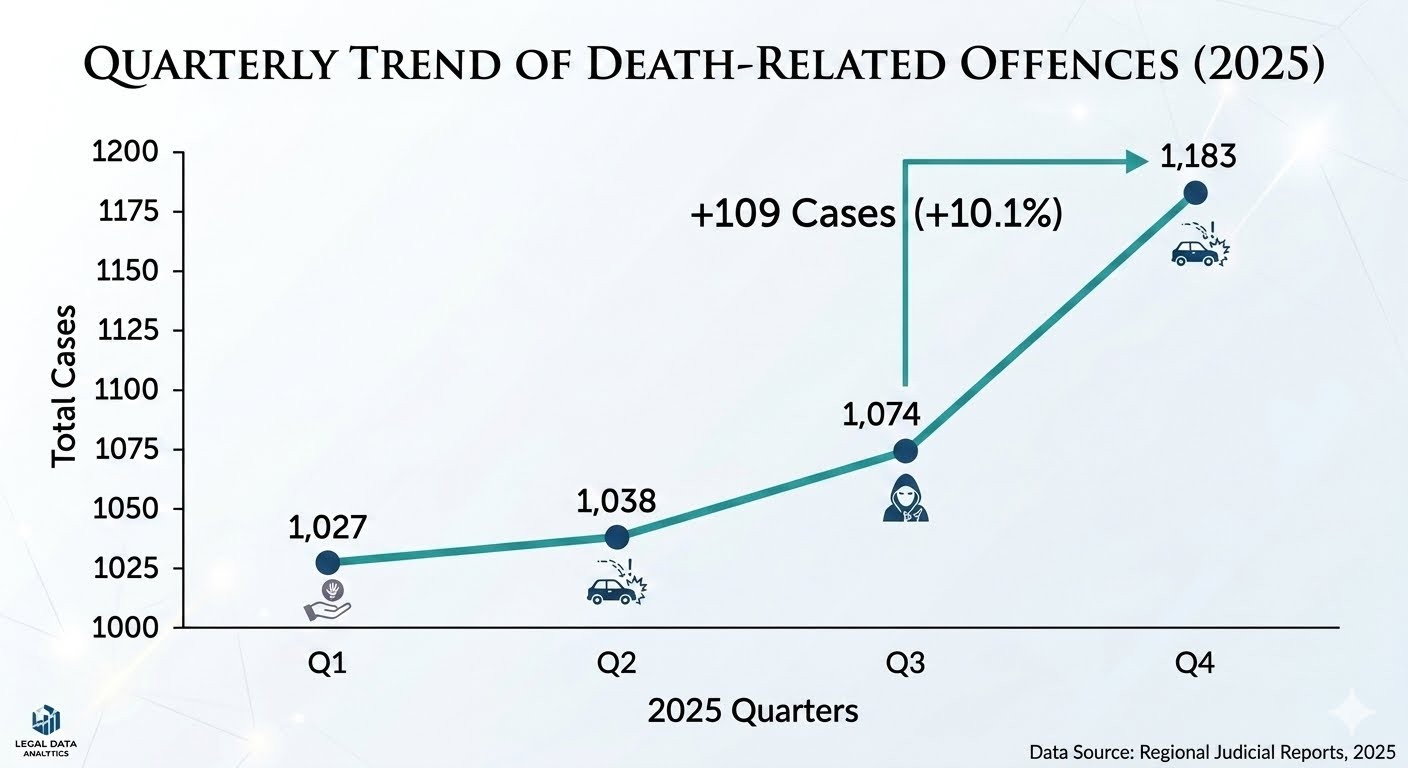 Quarterly Homicide Related Offences, 2025
Cases rose from 1,027 in the first quarter to 1,038 in the second quarter, then increased to 1,074 in the third quarter before reaching 1,183 in the final quarter. Between the third and fourth quarters alone, the country recorded an increase of 109 cases, representing a 10.1 percent rise.
While murder cases accounted for 362 incidents, attempted murders reached 325. Non-intentional homicides accounted for 456 cases, surpassing intentional murders and highlighting the extent to which reckless behaviour, negligence and violent confrontations continue to claim lives.
“The statistics reveal social distress,” said psychologist Ison Ndoro.
“Violent offending behaviour is often linked to psychological, social and environmental factors. When we see homicide figures rising consistently, we are also seeing evidence of deeper challenges within families, communities and the broader economy.”
HARARE LEADS THE NATION
According to ZIMSTAT, Harare recorded 207 homicide-related cases during the fourth quarter of 2025, the highest in the country. Mashonaland West followed with 190 cases, while Midlands recorded 156.
Harare accounted for approximately 17.5 per cent of all homicide-related offences nationally.
Residents interviewed cited unemployment, drug abuse, overcrowding and worsening economic pressures as factors contributing to violent crime, although the crime statistics do not directly identify causes. These conditions do not automatically lead to violent crime, but they can increase the likelihood of interpersonal conflict and criminal activity.
In Mbare, Epworth, Chitungwiza and other densely populated communities, stories of murders, armed robberies and violent assaults have become increasingly common.
“We are living in fear,” said Chrispen Moyo, a Mbare resident.
“Almost every week we hear of somebody being killed, attacked or robbed. People no longer feel as safe as they did a few years ago.”
The observations align with police reports and court records showing that many violent incidents emerge from disputes involving alcohol, drugs, domestic conflicts and economic stress.
MEN DOMINATE THE STATISTICS
Of the 936 people charged for offences involving death or intended death during the fourth quarter of 2025, 875 were male, while only 61 were female.
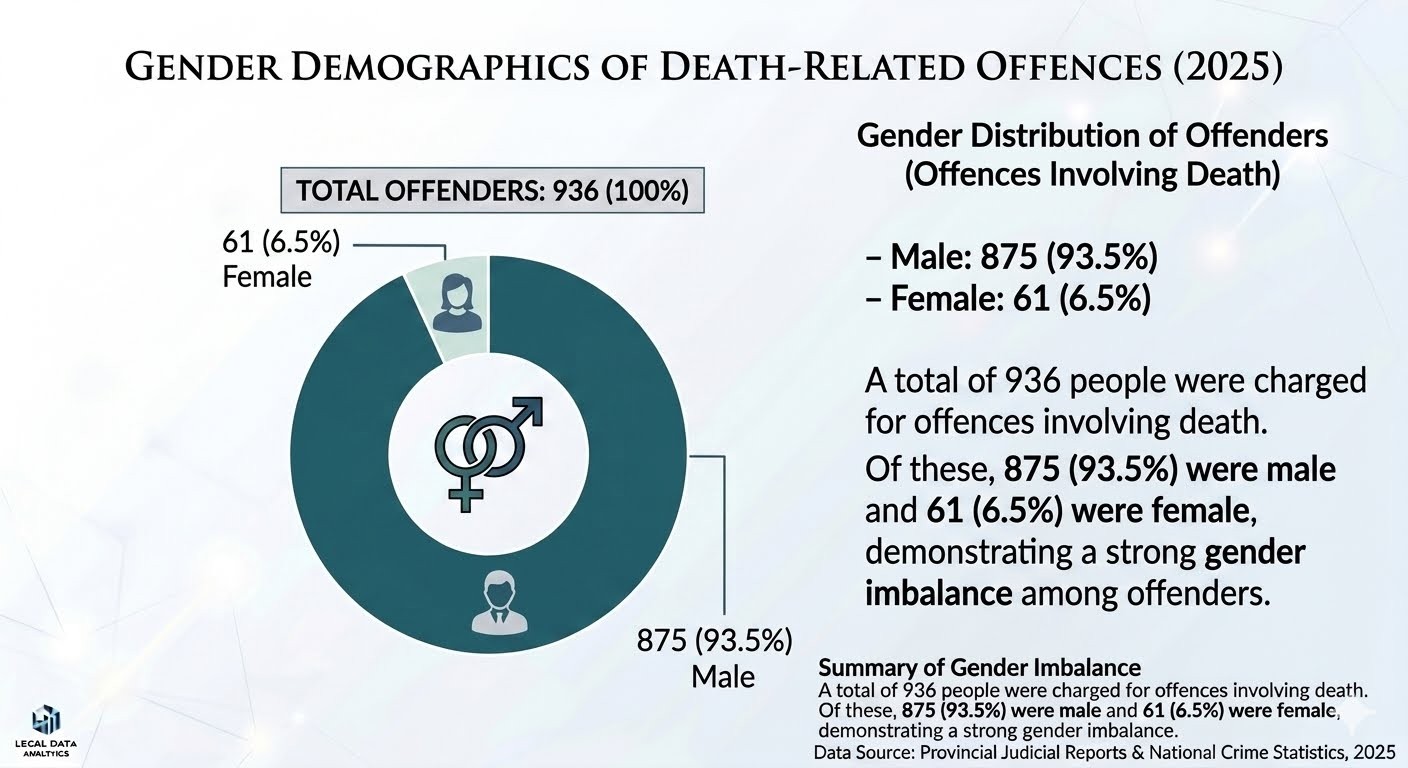
Persons Charged by Sex, Q4 2025
Men accounted for 93.5 percent of all accused persons.
The figures suggest violent offending remains overwhelmingly concentrated among men. Researchers have long linked this pattern to social expectations surrounding masculinity, risk-taking behaviour and conflict resolution through confrontation.
Clinical psychologist Kudakwashe Bandira said many men struggle to seek help when facing emotional, financial or relationship problems.
“Men are often taught to endure hardship silently,” she said.
Her observations correspond with the ZIMSTAT figures, which show that men accounted for nearly 94 percent of all accused persons in homicide-related offences during the quarter.
“When stress, jealousy, rejection or economic frustration accumulate, some respond through aggression rather than healthy coping mechanisms.”
She said alcohol and substance abuse frequently aggravate conflicts.
“Many violent incidents occur when individuals are intoxicated or under the influence of drugs. Impulse control becomes weaker, and disagreements can quickly escalate into fatal encounters.”
Statistics from women’s rights organisations and criminal justice agencies consistently identify domestic violence as one of Zimbabwe’s most prevalent forms of interpersonal violence.
According to figures compiled by the National Prosecuting Authority of Zimbabwe, 13,838 sexual offences and aggravated domestic violence cases were recorded nationally in 2023, including 6,028 cases classified specifically as domestic violence.
While these figures demonstrate the prevalence of domestic and sexual violence, national data directly linking such offences to homicide remain limited.
WHEN HOME BECOMES THE MOST DANGEROUS PLACE
Some of Zimbabwe’s most brutal murders have occurred within households.
Earlier this year, the High Court sentenced Elias Tasiyana to 25 years’ imprisonment for murdering his wife in Mhondoro-Ngezi after repeatedly striking her with a spade.
Justice Catherine Bachi-Mzawazi rejected claims that the killing was accidental and ruled that the injuries demonstrated clear intent to kill.
The court heard that the victim suffered severe injuries to her body and skull in an attack that left a young child without a mother and permanently altered the lives of those around her.
Legal experts say such cases highlight the deadly consequences of domestic violence.
“Many murders do not begin with murder,” said Harare lawyer Rutendo Chigwedere.
“They begin with threats, assaults, emotional abuse and controlling behaviour. By the time somebody dies, there is often a history of violence that was either ignored or inadequately addressed.”
Statistics from women’s rights organisations and police reports consistently identify domestic violence as one of Zimbabwe’s most prevalent forms of interpersonal violence. However, national data linking domestic violence directly to homicide remains limited, making it difficult to quantify the full contribution of intimate-partner violence to rising homicide-related offences.
THE ROLE OF THE ECONOMY
While not every murder can be linked directly to economic hardship, experts say economic stress often creates conditions that contribute to violence.
Zimbabwe continues to face high levels of youth unemployment, informal employment and household financial pressure.
Social expert John Chikawere said economic instability and violent crime frequently intersect.
“When people lose hope, when opportunities become scarce and when communities experience prolonged economic strain, social tensions rise,” he said.
While the homicide dataset does not record economic motives, the concentration of offences in densely populated urban areas such as Harare provides some support for concerns that economic pressures may be contributing to conflict and violence.
WHAT THE DATA REVEALS
First, homicide-related offences increased consistently throughout 2025, indicating a sustained rather than temporary trend.
Second, non-intentional homicides exceeded intentional murders, suggesting that negligence, reckless conduct and uncontrolled violence are significant contributors to loss of life.
Third, men overwhelmingly dominate offender statistics, highlighting the need for targeted interventions focusing on conflict resolution, mental health and positive masculinity.
Fourth, urban centres continue to experience disproportionately high levels of homicide-related crime.
WHAT MUST HAPPEN NEXT?
Experts say reversing the trend requires a coordinated national response.
Recommendations include strengthening domestic violence prevention programmes, expanding mental health services, creating employment opportunities for young people, increasing investment in community policing and addressing substance abuse.
The figures suggest violent deaths and death-related offences are becoming a persistent feature of Zimbabwe’s crime landscape.
The increase recorded throughout 2025 points to challenges extending beyond policing and criminal justice. Experts interviewed for this story identified mental health pressures, substance abuse, domestic violence, unemployment and conflict-resolution failures as recurring risk factors.
The statistics suggest that Zimbabwe’s challenge is no longer simply prosecuting violent offenders after tragedy strikes. The greater challenge is preventing violence before it occurs. As homicide related offences continue to rise, experts argue that investments in mental health services, domestic violence prevention, youth employment and substance abuse interventions may prove just as important as policing in reversing the trend.