

By Antony Chawagarira
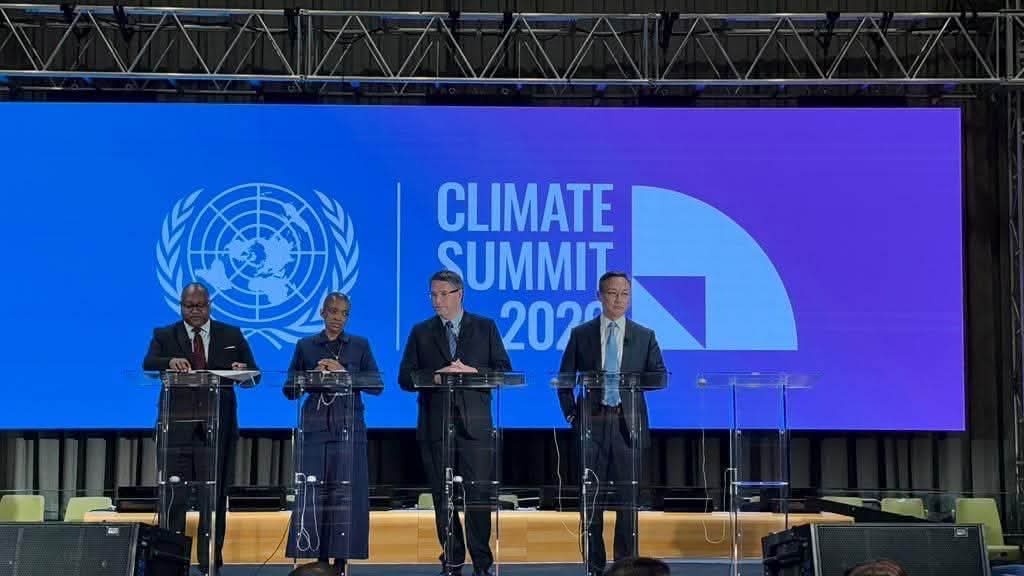
NEW YORK — Zimbabwe has reaffirmed its commitment to climate action, with Tourism and Hospitality Industry Minister Barbara Rwodzi telling a high-level United Nations Climate Summit that the country is integrating climate resilience into its development agenda.
Minister Rwodzi represented Zimbabwe at the summit, convened by United Nations Secretary-General António Guterres on the sidelines of the 81st United Nations General Assembly in New York.
She said Zimbabwe remained committed to the Paris Agreement and its Third Generation Nationally Determined Contribution, which targets a 40 percent reduction in per-capita greenhouse gas emissions by 2035.
Minister Rwodzi said the country’s climate response was anchored in its National Development Agenda and was being implemented across critical sectors, including agriculture, water, infrastructure and tourism.
She said tourism was particularly vulnerable to climate change because it depended heavily on healthy ecosystems, biodiversity, wildlife, water resources and climate-resilient destinations.
“Climate action must benefit communities through economic value, job creation and improved livelihoods,” she said.
Minister Rwodzi said Zimbabwe’s approach to climate change went beyond reducing emissions to ensuring that environmental measures also supported economic development and improved the welfare of communities.
In agriculture, she highlighted Climate-Smart Agriculture and climate-proofing initiatives such as Pfumvudza/Intwasa, which are being implemented to strengthen resilience and support food security amid changing climatic conditions.
The Minister also highlighted progress in mineral value addition, citing local lithium processing as part of efforts to derive greater economic value from Zimbabwe’s mineral resources.
She said more than 16 000 tonnes of lithium sulphate had been produced through local processing, with the output valued at close to US$100 million.
Minister Rwodzi said the drive towards climate resilience should create opportunities for communities while supporting productive investment and sustainable livelihoods.
For the tourism industry, she said climate resilience was critical to protecting the natural and cultural resources that underpin Zimbabwe’s tourism destinations.
The country is also preparing to host the first-ever meeting of all UN Tourism Member States for the International Year of Sustainable and Resilient Tourism 2027.
The meeting is expected to provide an international platform for advancing dialogue on sustainable and resilient tourism and exploring ways to ensure that tourism continues to contribute to economic development while protecting the environment.
Zimbabwe’s participation in the New York summit comes as countries intensify efforts to respond to climate change through emissions reduction, adaptation and measures aimed at building resilient economies.
Minister Rwodzi said Zimbabwe would continue pursuing climate action in a manner that links environmental protection with economic growth, job creation and improved livelihoods.
The engagement has also placed Zimbabwe’s tourism sector within the broader international debate on building destinations and economies capable of withstanding the growing effects of climate change.