
Antony Chawagarira
HARARE — Zimbabwe is set to attract two additional international airlines in 2027 as the Government steps up investment in aviation infrastructure while consolidating gains in the energy and mining sectors, President Emmerson Mnangagwa has said.
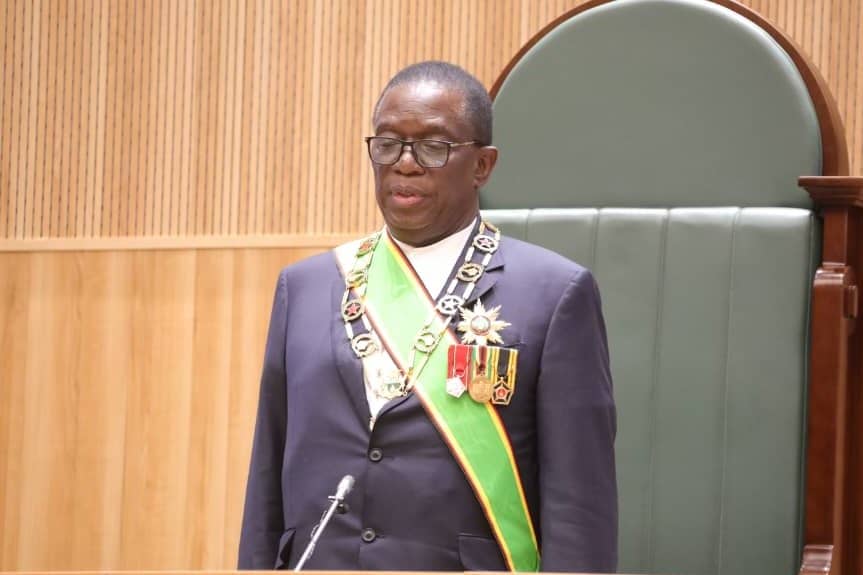
Delivering the 2026 State of the Nation Address at the New Parliament Building in Mt Hampden today, President Mnangagwa said the Government was implementing measures to strengthen the country’s aviation capacity and accommodate increased passenger and cargo traffic.
He said plans were underway to upgrade Kariba Airport and expand cargo-handling facilities at Victoria Falls and J.M. Nkomo International Airports.
“Two more international airlines are expected to commence operations into Zimbabwe in 2027,” President Mnangagwa said, highlighting the continued expansion of the country’s aviation sector.
The developments are expected to complement ongoing efforts to improve connectivity and position Zimbabwe as a competitive destination for tourism, trade and investment.
On the energy front, President Mnangagwa said Zimbabwe had made significant progress in improving electricity supply, with the country’s generation capacity being supported by power from Kariba and Hwange, independent power producers, captive power plants and rooftop solar installations.
He said rural electrification was also continuing to expand as the Government pursued broader access to electricity across the country.
President Mnangagwa said progress had also been recorded in the mineral beneficiation and value-addition drive, with Zimbabwe producing lithium sulphate locally for the first time.
The development marks another step in the Government’s efforts to move away from exporting raw minerals and increase the value derived from the country’s mineral resources.
He said more lithium sulphate plants were being established across the country as Zimbabwe strengthens its position in the global lithium value chain.
Meanwhile, President Mnangagwa said Zimbabwe had maintained single-digit inflation since January 2026, supported by increased foreign currency inflows.
The country received US$10.7 billion in foreign currency inflows during the first half of the year, with the figure projected to reach US$20 billion by year-end.
The President said the developments reflected continued efforts to strengthen macroeconomic stability and support sustainable economic growth.
The aviation, energy, mineral beneficiation and macroeconomic developments form part of the Government’s broader agenda to accelerate economic transformation and advance the objectives of Vision 2030.