Harare, (New Ziana) – President Emmerson Mnangagwa has called for Zimbabweans to honour and preserve the legacy of families that relocated to neighbouring countries during the colonial era, since they made significant contributions to the liberation of the country.
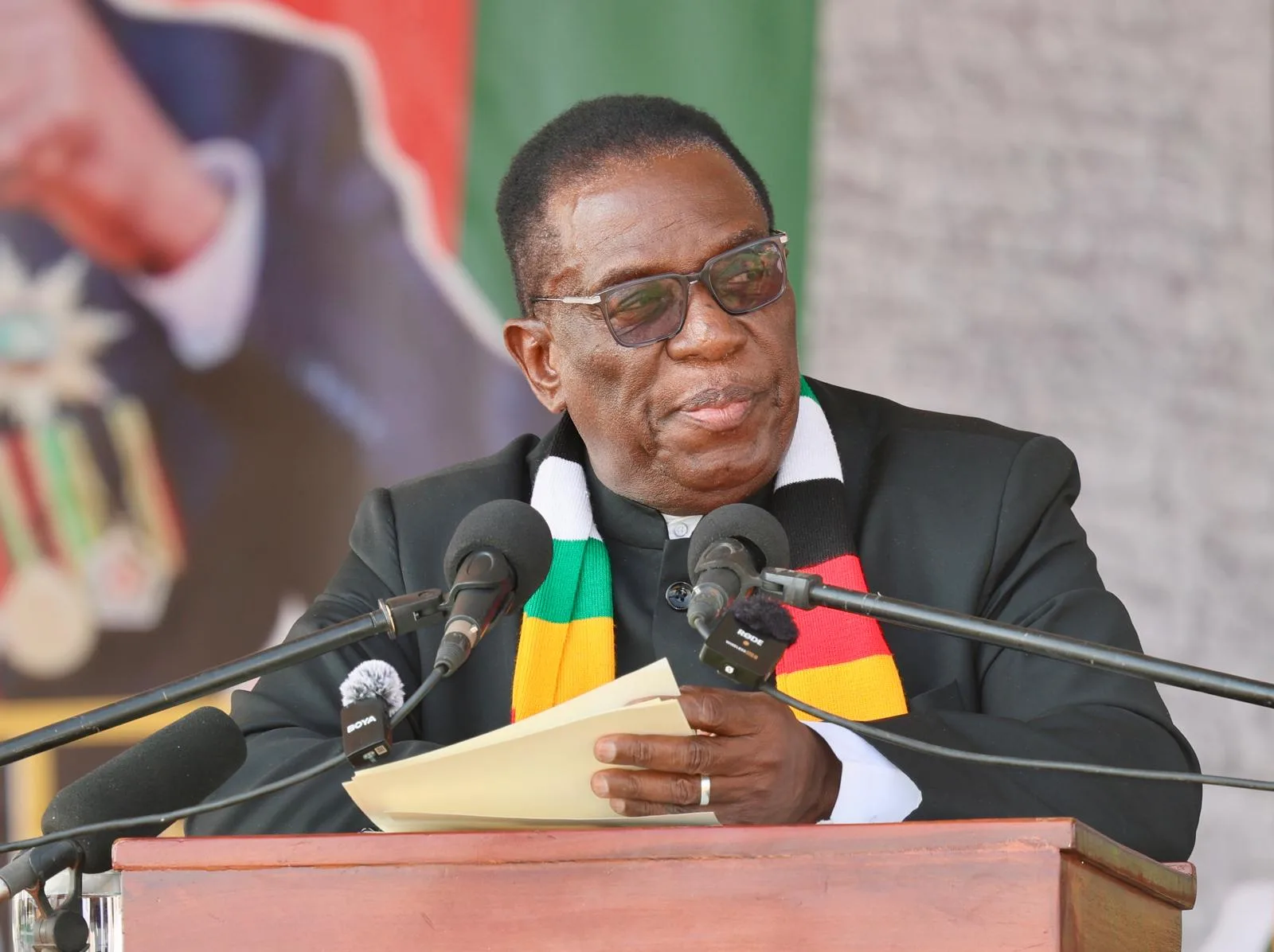
Addressing mourners at the burial of national hero, former ambassador to Mozambique aand Eswatini, Victor Matemadanda, at the National Heroes Acre in Harare on Friday, President Mnangagwa said the sacrifices of Zimbabweans in the Diaspora should never be forgotten.
Thousands of mourners gathered to pay their last respects to the veteran liberation fighter and former Zanu PF national political commissar.
“Many of these families left the then Southern Rhodesia following forced displacements by the oppressive colonial authorities, in the aftermath of the 1930 Land Apportionment Act and related persecutions. Displaced and migrant families became the nucleus of our early stages of the revolution, always ready to aid the military wings of ZANU and ZAPU who used Zambia and Mozambique as the rear.
“I recall that many families released their sons and daughters, including students and professionals to participate in the cause of national freedom and independence. Despite being in foreign lands, many of our people never dodged national obligations. We should never forget their contributions,” he said.
He said Matemadanda embodied the commitment of Zimbabweans living abroad who abandoned relatively stable lives to join the liberation struggle.
According to President Mnangagwa, Matemadanda, who was part of the Zimbabwean migrant community in Zambia, played a key role in mobilising support for freedom fighters and refugees in camps across that country and Mozambique, working alongside prominent liberation figures, including the late businessman Patrick Kombayi.
“Due to his evident courage and bravery, our late national hero was directly involved in frontline operations tasked with managing transportation of war materiel for ZANLA, in the northern and north-eastern entry points,” he said.
President Mnangagwa also paid tribute to Zimbabweans living and working abroad, commending their continued contribution to the development, industrialisation and modernisation agenda of the country.
Reflecting on his final meeting with Matemadanda, President Mnangagwa described him as a steadfast patriot whose ideological clarity and commitment to the values of the liberation struggle never wavered.
“In April 2026, I was in Eswatini to commemorate the 40th Anniversary of the coronation of King Mswati III. Ambassador Matematanda received me and accompanied me throughout the event. As per tradition, we shared a meal, laughed and reminisced about the days of the struggle, departed comrades, as well as views on how we can grow relations with the countries where he was accredited ambassador.
“He later saw me off as I returned home. Unbeknown to me that was the last meal we would share, the last handshake and the last wave goodbye, as I bid him farewell. It was therefore with immense shock and sadness that I received the news of his passing on, last Saturday the 20th of June, 2026, at Parirenyatwa Hospital.
“His demise is a blow to our nation, and we grieve this loss. On behalf of our revolutionary mass Party, Zanu PF, the people and Government of Zimbabwe, that of my family and indeed on my behalf, I once again extend heartfelt condolences to the Matemadanda family. He answered the call of our national armed struggle and remained fiercely dedicated to the complete economic liberation of Zimbabwe. We have lost a leader, whose indelible legacy will serve as guidance to future generations,” he said.
President Mnangagwa urged young people and women to harness their energy, skills, innovation and entrepreneurial spirit to become future leaders and active contributors to national development.
“To the stakeholders across the socio-economic and political spectrum of our country, I commend you for the unity, peace and harmony prevailing in our country. It is this unity of purpose that shall continue to inspire our people as well as friends and neighbours.
“National cohesion, peace, unity and development remain vital ingredients for the realization of our national Vision 2030 as well as the SADC Vision 2050 and wider aspirations of the African continent. Zimbabwe’s election for a non-permanent seat at the United Nations Security Council for the period 2027-2028 is a show of trust and confidence by many across the world in our country.
“We shall, therefore, continue to demonstrate that Zimbabwe has the strength and stamina to safeguard and advance global peace and security for shared, sustainable and inclusive prosperity for all peoples,” he added.
The late Matemadanda was born on 3 March 1960 in Gokwe. He received his primary education at Nambala Primary School in Mumbwa, Zambia, before proceeding to Mumbwa Secondary School.
After independence, he was integrated into the Zimbabwe National Army, where he built a distinguished military career founded on discipline, leadership and patriotism. He later pursued further studies, earning qualifications in Personnel Management, Marketing, Automotive Engineering, Development Studies and International Relations.
After retiring from the military, Matemadanda played a pivotal role in mobilising grassroots support for Zanu PF and strengthening the party’s structures nationwide. He also served as Deputy Minister of Defence and War Veterans Affairs before his appointment as Zimbabwean ambassador to Mozambique and the Kingdom of Eswatini.
New Ziana