By Johnson Siamachira
Harare, (New Ziana) – On Zimbabwe’s eastern highlands, blueberries, macadamia nuts, citrus and other high-value horticultural crops are reshaping the country’s agricultural export ambitions.
The growth of these commodities, in output terms, comes as Zimbabwe prepares to lead a regional trading bloc whose markets could offer farmers and agribusinesses new opportunities beyond traditional export destinations.
Zimbabwe’s trade with COMESA. Source: ZimTrade.
Zimbabwe’s horticultural exports reached a reported US$181.7 million in 2025, surpassing the previous peak of US$140 million recorded in 1999. Blueberries, avocados, citrus and sugar snap peas have helped drive the sector’s recovery.
But the next challenge is not simply to grow more produce. It is to connect that production to reliable buyers, efficient transport and competitive regional value chains.
Zimbabwe’s assumption of the Common Market for Eastern and Southern Africa (COMESA) chairmanship in October 2026 provides a platform to pursue that goal. The country will host the 25th COMESA Heads of State and Government Summit in Harare from October 19 to 22, taking over the rotating chairmanship from Kenya.
The opportunity is substantial: COMESA brings together 21 African countries and more than 600 million people. Its free trade area seeks to reduce barriers to trade and create a larger market for goods and services. For Zimbabwean farmers, processors and exporters, this could mean access to more customers across the region.
A market larger than the farm gate
Zimbabwe’s agricultural export basket already includes tobacco, maize, sugar, cotton, tea, coffee and horticultural products. The COMESA market offers opportunities to expand these commodities while developing processed foods and other value-added products, says the Horticultural Development Council
The latest trade figures highlight both the opportunity and the challenge. Zimbabwe exported goods worth US$222 million to COMESA in 2025, up from US$200.9 million in 2024. Yet intra-COMESA trade stood at about US$13 billion, leaving Zimbabwe with considerable room to increase its regional market share.
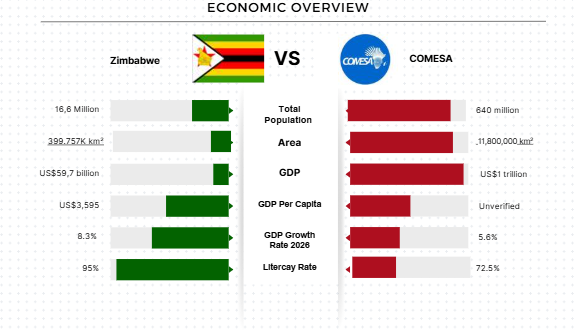
Zimbabwe-COMESA economic overview. Source: ZimTrade.
Zambia remains Zimbabwe’s largest COMESA export destination, accounting
for US$131.4 million of exports in 2025.
Malawi, Kenya, Egypt and the
Democratic Republic of Congo also offer opportunities for market
diversification, says Trade Map.
COMESA major exporters. Source: Trade Map.
For horticultural producers, regional markets could complement
established European destinations. Fresh fruit and vegetables, however,
require more than demand. Exporters need consistent quality, food safety
certification, suitable packaging and dependable delivery.
The regional market therefore presents a commercial opportunity, not an
automatic guarantee of sales.
From blueberries to value-added exports
Zimbabwe’s horticultural recovery has attracted investment in
blueberries, avocados and other high-value crops. The country’s export
potential also extends to citrus, grapes, berries, macadamia nuts and
sugar snap peas.
Zimbabwe’s growing horticulture industry. Source: Horticulture Development Council.
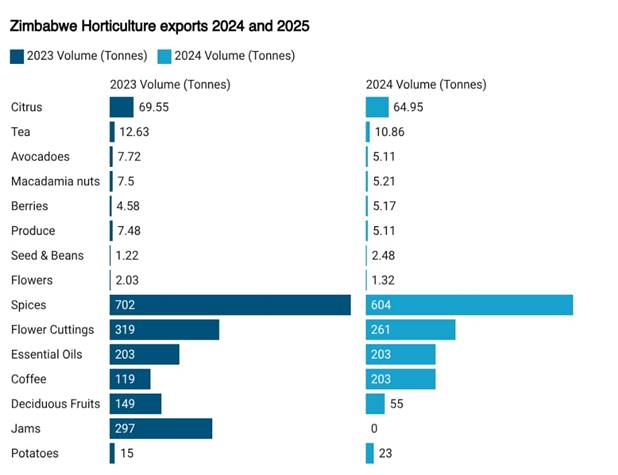
Chart: Johnson Siamachira. Source: Horticultural Development Council.
These commodities can create opportunities beyond primary production.
Farmers can supply packhouses, processors and exporters, while
manufacturers can produce packaging, cold-storage equipment and other
services needed by the horticultural industry.
Zimbabwe is now earning $120 million annually from exports of horticultural products including citrus, flowers, tea, avocados, blueberries and macadamia nuts, according to the Horticultural Development.
“We have to grow 10 times to reach this goal and obviously it calls for rapid expansion in the sector,” Horticultural Development Council Vice President Linda Nielsen told a horticultural conference in Harare in April this year.
The targeted growth would require $1.2 billion of investment, according to the Horticulture Development Council, an uphill task for a sector struggling with high borrowing costs, logistics challenges and persistent concerns over land tenure.
“We see a revival of up to 10,000 hectares (of citrus plantations) by 2030,” Citrus Growers Association President Pete Breinstein said at the conference.
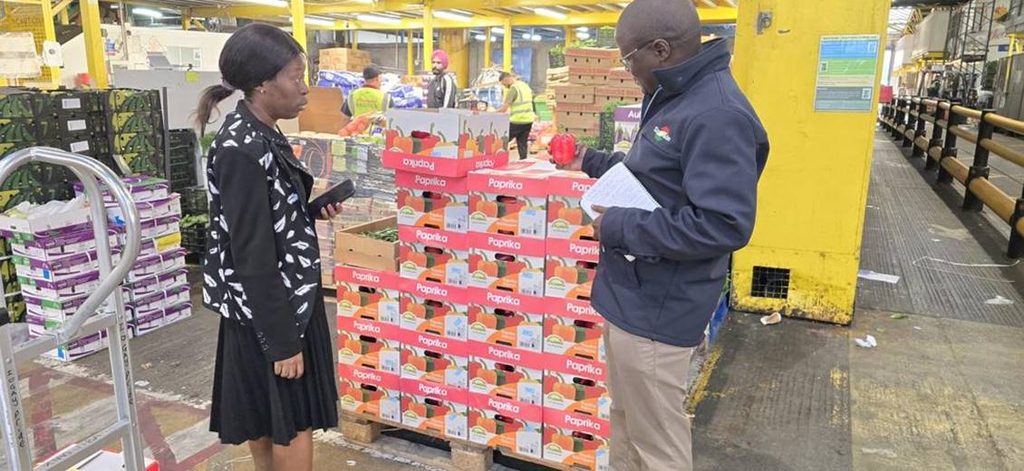
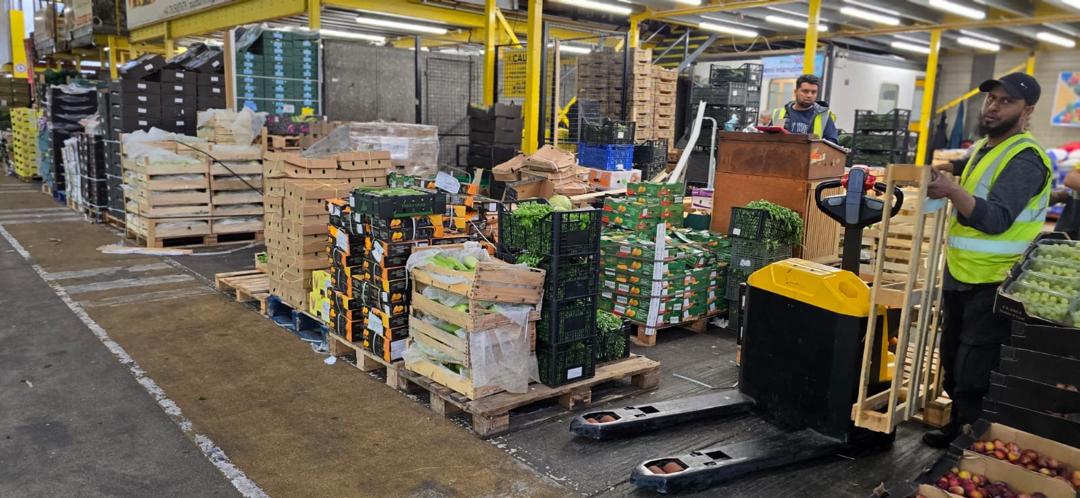
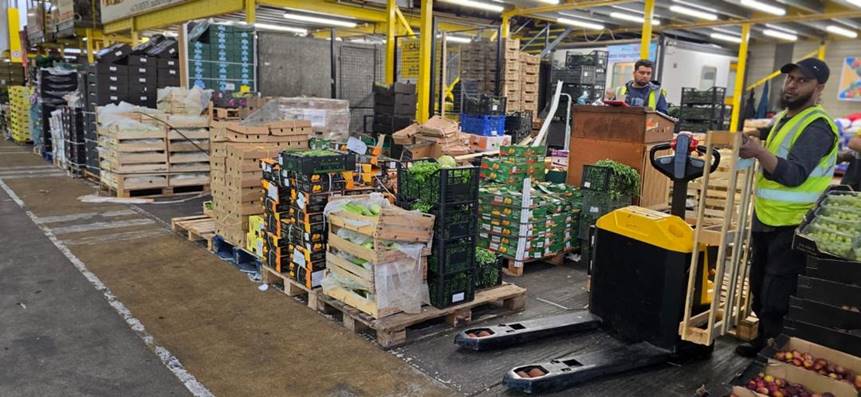
Horticulture produce ready for export. Source: ZimTrade
The same principle applies to traditional agricultural commodities.
Zimbabwe can increase the value of maize, sugar, tobacco and other crops
through processing, packaging and branding for regional consumers.
Professor Gift Mugano, executive director of African Economic Development Strategies, said Zimbabwe needed to position local businesses to benefit from the wider COMESA market.
He identified food and beverages, among other sectors, as areas with
potential for regional expansion, while stressing the importance of
anchor companies that can aggregate products from small and medium
enterprises.
For smallholder farmers, such arrangements could help address one of the
biggest barriers to export participation: the difficulty of producing
and delivering sufficient volumes consistently.
The chairmanship and the business opportunity
The chairmanship of COMESA will put Zimbabwe at the centre of regional
discussions on trade, investment and industrialisation. The COMESA
Business Forum, scheduled for October 19–21, will bring together
business leaders, investors and policymakers.
COMESA presents huge export opportunities for Zimbabwe. Source: Journalist Johnson Siamachira Own Creation
COMESA brings huge export opportunities
For Zimbabwean agribusinesses, the forum could provide opportunities to
meet regional buyers, identify distributors and explore investment
partnerships.
The country can also use its leadership role to advocate for the removal
of non-tariff barriers, improved transport corridors and more efficient
trade procedures. These measures matter particularly for perishable
horticultural products, whose value can decline rapidly when transport
delays or inadequate cold-chain facilities interrupt deliveries.
COMESA’s Common Agro-Industrial Park initiative also points to opportunities for regional value addition. By encouraging joint agro-processing ventures, such initiatives could help countries move beyond exporting raw commodities towards producing higher-value goods.
A brief history of regional integration
COMESA grew out of the Preferential Trade Area for Eastern and Southern Africa, established in 1981. Member states replaced that arrangement with COMESA in December 1994, seeking to create a larger economic and trading unit capable of overcoming barriers faced by individual countries.
The bloc launched its free trade area on October 31, 2000, when nine
member states, including Zimbabwe, eliminated tariffs on qualifying
COMESA-originating products. Burundi and Rwanda later joined the free
trade area in 2004.
Today, COMESA’s agenda extends beyond tariff reduction to include trade
facilitation, infrastructure, industrialisation and regional value
chains.
COMESA major importers. Source: Trade Map.
Turning regional leadership into farm incomes
Zimbabwe’s chairmanship of COMESA offers the country an opportunity to
translate political influence into commercial gains. But the benefits
will depend on whether local producers can meet regional demand
competitively.
From farm to regional markets, export horticulture on the increase. Source: ZimTrade.
ZimTrade, the country’s trade promotions agency, has identified
production capacity, trade infrastructure, market intelligence and
policy alignment as essential to increasing Zimbabwe’s participation in
COMESA trade.
“For horticulture, that means improving access to finance, strengthening
certification systems, developing cold-chain logistics and helping
smaller producers meet export standards,” said ZimTrade chief executive
Zimbabwe’s COMESA chairmanship brings greater economic opportunities Source: ZimTrade.
“It also means building relationships between farmers and anchor
companies that can aggregate produce, process it and connect it to
buyers,” he said.
New Ziana