

Harare (New Ziana)- A tsetse control agency said on Monday it will start using drones to help eliminate the pest in areas where it was prevalent to open them for livestock production.
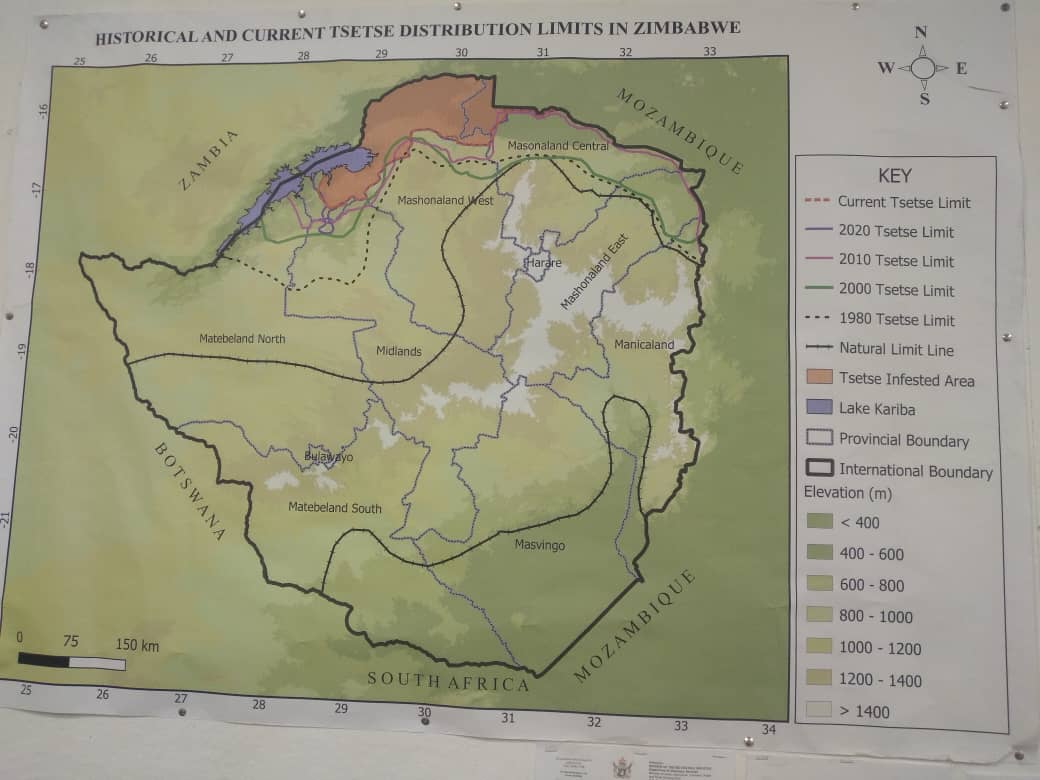
Tsetse flies are mainly prevalent in the north of the country, where neither human nor livestock habitation is easy due to the pest.
Alban Mhindurwa, director of Tsetse Control Services, an agency in the Ministry of Agriculture, said drones were being introduced in the fight against the pest, and would be particularly effective because of range of reach and deployment flexibility.
“We are about to embark on the drone technology, where we are going to use these drones with insecticide to spray, and that reduces the conduct between the applicant and the insecticide,” he said.
“It is very specific, GPS mounted, (with) coordinates where you want the insecticide to be dropped. If we have residual pockets of the fly, we identify the site with coordinates and (pick) exactly the point where we want the drone to go and drop insecticides,” said Mhindurwa.
The total area that is still infested with tsetse flies at the moment is about 20 000 square kilometres, and there are two species, the morsitans and the pallidipes, which transmit the disease.
“Basically, the majority of the 20 000 square kilometres that I’m referring to are in national park areas. The problem at the moment is confined to the wildlife sanctuaries and about four to five thousand settlement areas,” he said.
Most of these are in Mashonaland Central and Mashonaland West provinces.
New Ziana