
Harare, (New Ziana) – The Government has directed ministries, local authorities and disability institutions to begin an immediate nationwide audit of disability inclusion systems, with key reforms and implementation benchmarks expected within the next 90 to 120 days.
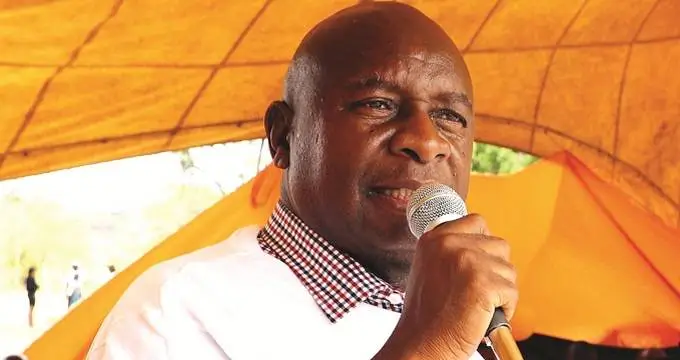
Speaking at the National Disability Symposium in Harare on Wednesday, the Minister of Public Service, Labour and Social Welfare, Hon Edgar Moyo said the country could no longer treat disability inclusion as a mere policy aspiration, but must translate commitments into measurable action and accountability.
Held under the theme “Towards an Inclusive Future: A Self-Assessment of the Inclusion of Persons with Disabilities,” the symposium brought together Government departments, organisations of persons with disabilities, development partners, academia, civil society and the private sector to assess Zimbabwe’s progress in implementing disability rights frameworks.
Moyo said the symposium was not a ceremonial gathering, but a “technical checkpoint, governance instrument and national mirror” meant to interrogate policy implementation and identify systemic weaknesses affecting persons with disabilities.
“As Minister responsible for coordination, I hereby direct the following technical actions to commence immediately,” he said.
He announced that within 90 days, the National Disability Board, working with the Ministry of Public Service, Labour and Social Welfare, must produce a baseline report consolidating administrative data, partner input, priority gaps and resource estimates relating to disability inclusion.
Within 120 days, Government is expected to pilot the National Disability Identification, Assessment and Determination Framework in preparation for the issuance of identification cards for persons with disabilities.
The Minister also directed that within the same 120-day period, an independent review of the implementation of the National Disability Policy be conducted, leading to the development of a revised policy framework.
He further said that within six months, authorities must begin pilot budget tracking for disability inclusion in the 2027 national budget to assess funding credibility and absorptive capacity.
Moyo said Zimbabwe already had a comprehensive legal and policy architecture to support disability inclusion, anchored by the new Persons with Disabilities Act and the National Disability Policy launched by President Emmerson Mnangagwa in 2021.
He said the framework was designed to guarantee rights protection, service access and reasonable accommodation for persons with disabilities across sectors such as education, health, transport, housing, labour and information communication technologies.
“The task before us is to ensure these functions are implemented coherently across ministries, departments, agencies, business and other sectors from national to sub-national structures,” he said.
The Minister noted that Zimbabwe’s disability inclusion agenda was also aligned with international and regional obligations, including the Sustainable Development Goals and global standards on disability rights.
He said Government was working towards establishing a Central Register of Persons with Disabilities through the National Disability Identification, Assessment and Determination Tool to strengthen evidence-based planning.
However, Moyo acknowledged that major challenges remained, including the absence of routinely disaggregated disability data, procurement delays for assistive devices, inadequate teacher training, gaps in social protection coverage and inaccessible infrastructure.
“We are not sure if we have properly accessible infrastructure wherever we are. If not, this symposium must identify those gaps,” he said.
The Minister urged ministries and local authorities to institutionalise dedicated disability budget lines covering assistive technologies, community rehabilitation and inclusive education.
He also called for increased technical capacity in disability-inclusive planning, universal design standards and disability-responsive monitoring and evaluation.
The Minister stressed that persons with disabilities and organisations representing them must be fully involved in programme planning, implementation, monitoring and oversight.
“The principle of ‘nothing without us’ must guide all our interventions,” he said.
He added that Government would continue scaling up capacity-building programmes for ministries, departments and agencies, local authorities and the private sector on universal design, assistive technology procurement and disability-inclusive planning.
Moyo added that disability inclusion was not the responsibility of a single ministry, but required coordinated systems transformation backed by sustained financing, institutional reform and stakeholder participation.
“This symposium must produce more than statements of intent,” he said. “Let us be relentless in our pursuit of an inclusive Zimbabwe and live up to His Excellency’s call to leave no one and no place behind.”
New Ziana