
By Zachary Gava
Harare, (New Ziana) – With the confirmed death toll from last week’s Lake Kariba ferry accident now standing at 92, the maritime tragedy has eclipsed, in deadliness, the country’s infamous 1991 Nyanga bus carnage in which 89 lives were lost.
The death toll from the boat disaster is expected to climb up further as police divers and other rescue teams continue searching for more victims still missing.
National police spokesperson, Paul Nyathi said eight more bodies had been retrieved by 3 pm on Monday, taking the confirmed number of fatalities to 92.
“The Zimbabwe Republic Police confirms that as at 1500 hours today (August 17), the Kariba Rural Infrastructure Development Agency (RIDA) boat accident death toll is now 92 after eight bodies were recovered from Lake Kariba,” Nyathi said.
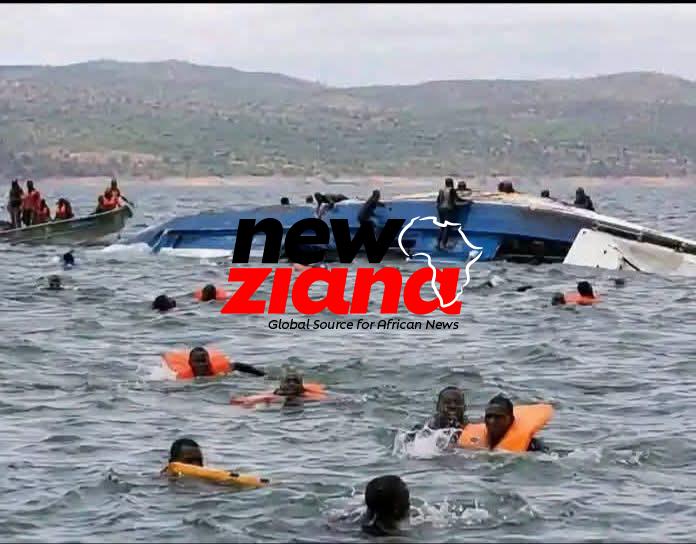
The tragedy unfolded on August 11 when the Rural Infrastructure Development Agency-operated Mbuya Nehanda ferry capsized while travelling from Kariba towards Chalala and surrounding fishing communities.
The vessel was operating on an important transport route for communities around Lake Kariba, where poor road infrastructure and limited conventional public transport make water transport an essential lifeline.
For decades, the Nyanga bus disaster stood as the worst mass transport tragedy in the country.
On the night of August 3, 1991, a bus carrying students and staff from Regina Coeli Mission in Nyanga plunged into a gorge from the winding Nyanga-Ruwangwe road after the driver lost control.
The passengers were returning from a sporting event at St Killian’s Mission near Rusape when disaster struck. Contemporary reports said the overcrowded bus was travelling along a treacherous mountain road and that passengers had urged the driver to slow down before the crash.
A total of 89 people died, including the driver and 82 schoolchildren, according to historical accounts of the tragedy.
The scale of the Nyanga tragedy shocked the country and remained etched in the national memory for generations. The disaster became synonymous with the dangers of overcrowding, road safety failures and reckless driving, while the crash site became a lasting place of remembrance.
Now, more than three decades later, and again in August, the Lake Kariba disaster struck.
The Kariba tragedy is now the deadliest known public transport accident in Zimbabwe, but the Nyanga disaster remains the country’s worst road accident.
Preliminary investigations are pointing to overloading of the ferry, poor condition of the boat, and harsh windy weather, for the Kariba tragedy.
The vessel was authorised to carry 90 passengers, but reports have indicated that substantially more people were aboard. Earlier accounts put the number of passengers and crew as high as 153, while the latest figures – 92 dead and 77 rescued – indicate that at least 169 people may have been aboard if those figures are combined. The exact passenger count remains a subject of investigation.
At least 18 children are among those confirmed dead, with reports indicating that 16 of the children were aged 10 or younger, including a one-year-old.
President Emmerson Mnangagwa declared the incident a national disaster, while government agencies mobilized resources for rescue, recovery, identification of victims and assistance to bereaved families.
Nyathi said police had deployed two large boats, two smaller boats and more than 40 Sub-Aqua members, alongside other resources, to coordinate the search and recovery operation.
The continuing operation reflects difficulties in recovering bodies from the vast waters of Lake Kariba, while authorities are also working to establish the identities of recovered victims and determine how many people were actually aboard the ferry.
The circumstances surrounding the Nyanga and Kariba disasters are different – one occurred on a winding mountain road and the other on a vast inland lake – but both have raised questions about the consequences of overcrowding, safety precautions and the vulnerability of passengers travelling on essential transport routes.
As recovery teams continue their work beneath the waters of Lake Kariba, the possibility that the toll could rise further means the country may yet have to confront an even darker final chapter to the disaster.
New Ziana