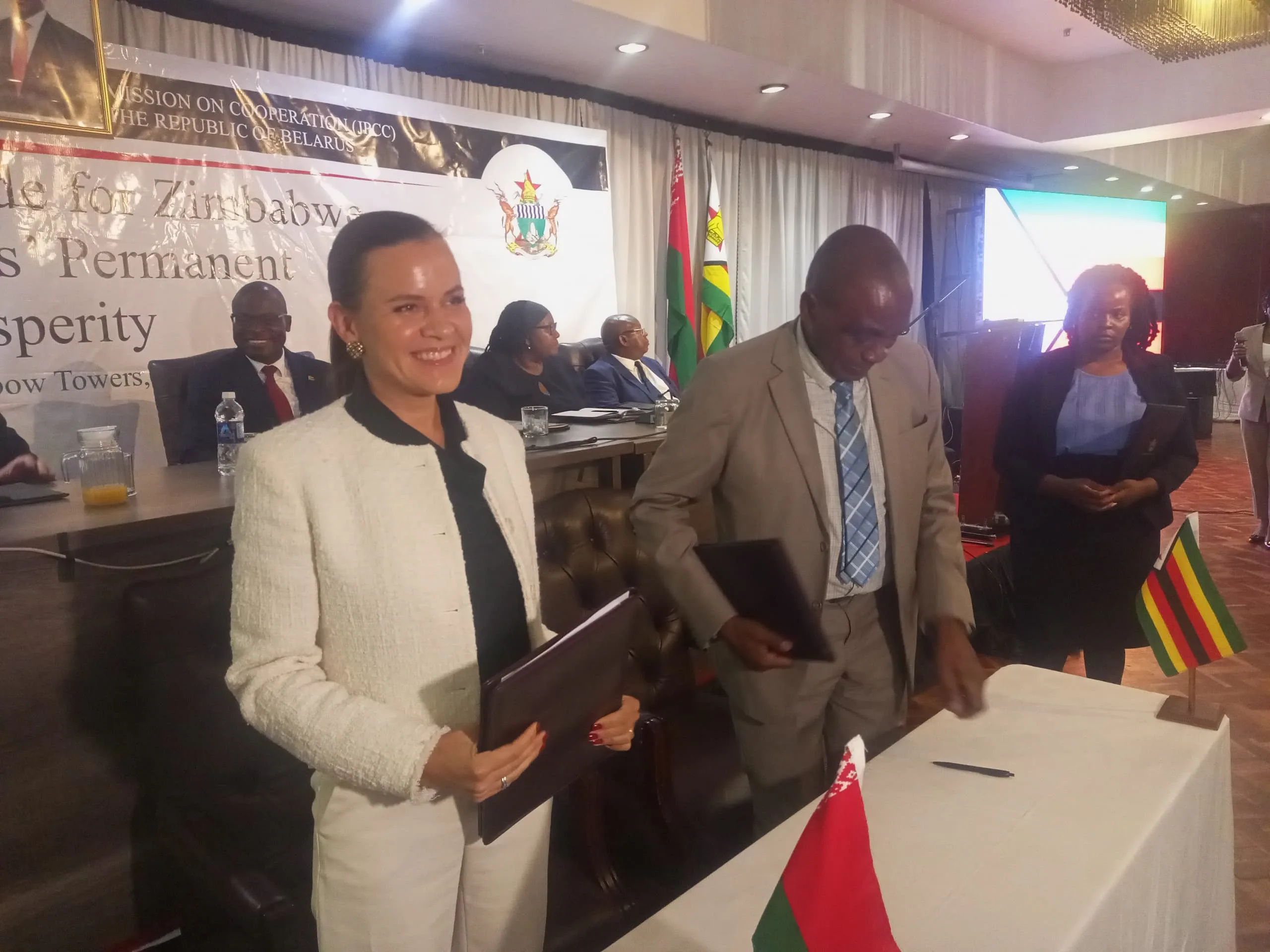
Harare , (New Ziana) -Belarus has formally pledged its support for Zimbabwe’s bid for a non-permanent seat on the United Nations Security Council (UNSC) for the 2027–2028 term. This emerged during the Mid-Term Review (MTR) of the Zimbabwe-Belarus Joint Permanent Commission on Cooperation (JPCC), which concluded in Harare on Wednesday.
Zimbabwean Foreign Affairs and International Trade Minister Professor Amon Murwira and his Belarusian counterpart, Maxim Ryzhenkov, co-chaired the meeting, with Belarusian Deputy Prime Minister Viktor Karenkevich in attendance as the guest of honour.
According to a communique issued after the review, the two nations reaffirmed their mutual co-operation in global diplomatic platforms, explicitly highlighting Zimbabwe’s UNSC aspirations.
“Both Parties affirmed their mutual support in the United Nations and other international organisations, including, inter alia, support of the bid of the Republic of Zimbabwe for a non-permanent seat on the United Nations Security Council for the period 2027-2028,” read part of the statement. Several countries have expressed support for the campaign for the seat including Russia, India, Cuba, and members of the Southern African Development Community (Sadc) and if successful, Zimbabwe would gain a stronger voice on global matters and represent regional interests on the world stage.
The MTR also focused on assessing and accelerating existing bilateral cooperation agreements and marked the second sitting of the Joint Working Group in agriculture, which evaluated progress and mapped new priority areas for collaboration.
Sectors identified for continued and enhanced cooperation include agriculture, industrial development, education, healthcare, mining, and disaster management.
The parties stressed the importance of implementing already signed instruments and concluding pending agreements swiftly with the entry into force of the Agreement on the Avoidance of Double Taxation, signed in 2023 among notable achievements.
Zimbabwe expressed its appreciation to Belarusian President Alexander Lukashenko for providing humanitarian aid following the El Niño-induced drought, responding to a direct appeal from President Emmerson Mnangagwa.
Additionally, the MTR discussed easing diplomatic engagement through the finalisation of a visa exemption agreement for holders of diplomatic and service passports with both countries also committing to facilitate broader mutual travel for citizens.
Belarus is set to host the Second Session of the Joint Permanent Commission next year to monitor the implementation of existing agreements and explore further avenues of cooperation. In his closing remarks, Prof Murwira described the meeting as “decisive and results-driven,” emphasising that the focus now shifts to delivering measurable outcomes from the reviewed commitments.
Echoing the same sentiment, Ryzhenkov praised the strong personal relationship between Presidents Mnangagwa and Lukashenko, calling it a foundation for expansive and trusting bilateral relations.
“Because we are very friendly nations, we share the views of the international agenda,” he said. The two countries reaffirmed their commitment to deepening ties and translating diplomatic goodwill into tangible development projects.
New Ziana