In Zimbabwe, special schools have been set up to cater for people with specific needs. Over the years, these institutions have helped develop many children realise their dreams as they have become leaders in communities. Some have become doctors, lawyers, teachers, musicians, politicians and many other respectable professions. They all have special tales to share on how they have overcome their various disabilities.
Interestingly, if one asks, for example, what the legendary Peter Ndlovu, or Knowledge Musona are known for, the answer will definitely be ‘soccer’. Or ask about what Jah Prayzah and Sulumani Chimbetu are known for, the answer will be musicians. But ask about Paul Matavire and the answer will sadly be “Oh, the blind singer”. He is defined by his blindness. Very sad, isn’t it?
The World Health Organisation (WHO) states that disability is a natural part of life, as almost everyone will experience disability at some time or another. An estimated 1.3 billion people – that is 16 percent of the global population – currently have a disability. This number is rising, in part due to an ageing population and growing prevalence of non-communicable diseases.
According to the Ministry of Primary and Secondary Education Annual Statistics Report 2020, there was a 50 percent increase in two years in the number of in-school children with impairments. A total of 52,232 children were found to have some form of impairment. These children are excluded from social services such as healthcare, education, and legal aid, thus experiencing limited opportunities to engage with the community.
The 2022 Population and Housing Census in Zimbabwe adopted the six main functional domains of difficulty of the Washington Group on Disability Statistics, namely; seeing, hearing, walking or climbing stairs, remembering or concentrating, self-care, and communication. These are functional abilities that are applicable to people of all societies and cultures, thereby restricting the concept to functional limitations.
The 2022 Census conducted by Zimbabwe National Statistics Agency (Zimstat) found that 9.2 percent of people aged five and over had difficulty in some activities. Of these, 1.6 percent reported “a lot of difficulty” in one domain, and 0.3 percent said they “could not do at all”.
Individuals classified as having a disability fell into two categories: those having ‘a lot of difficulty’ and those who ‘cannot do at all’. Nationwide, 1.6 percent of people had a disability, ranging from 0.8 percent in Harare province to 2.2 percent in Matabeleland South province. Females made up the majority of those with disabilities in rural areas (2.2 percent) and urban areas (1.0 percent).
Of the 13 million people aged five years and over, 0.08 percent (about 10,000 people) are said to have difficulties in seeing and hearing. Another, 0.11 percent (or approximately 15,000 people) experienced difficulties in other domains outside seeing and hearing.
Lizzy Longshore, Director of the National Council of Disabled Persons of Zimbabwe (NCDPZ), said that they organise an annual disability fair to raise awareness on sexual and reproductive health and rights (SRHR).
“People with disabilities lack access to information and services in healthcare facilities, such as those related to sexual and reproductive health and rights. Additionally, they experience exclusion from disaster risk management, economic empowerment projects, leadership and governance, education, employment opportunities, and social activities,” said Longshore.
Barbra Nyangairi, Executive Director of Deaf Zimbabwe Trust said, “We have programmes that we conduct throughout the year such as increasing awareness on disability issues, sign language promotion, development and documentation. As a country, we still have a long way to go to redress this legacy of imbalances.”
Senator representing special interests in Parliament, Annah Shiri remarked that in some cases, it was not necessary for disabled children to be grouped in special schools, believing they are not “normal”. Institutions such as Jairos Jiri Association need to reconsider their operations and have disabled children re-integrated into regular schools, reducing stigmatisation in the process.
While appreciating the earlier works carried out by the founding father of the institution, Senator Shiri said: “Jairos Jiri used to cater for people with disabilities at an institution under a welfare model. But now, we are transitioning from a charity model to a human rights-based approach. We want to empower people with disabilities economically, so they can contribute to mainstream society.
“We appreciate the previous works of Baba Jiri, but we no longer want institutions or to treat those with disabilities as charity cases or objects of pity. We want people with disabilities to stay in their homes, go to inclusive schools, and have facilities that accommodate every child. Let’s embrace the mantra of leaving no one behind, even the poorest and the disabled,” said Senator Shiri.
She pointed out that no one asks for a disability and as such parents should not be ashamed of their offsprings with a disability.
“It is sad to note that some children with disabilities are discriminated against by their own parents. When there is such a child, there is often conflict in the home, and parents may end up divorcing because of it. These children don’t deserve to be treated that way.”
She appealed to journalists to also use proper language when reporting and do away with certain terms.
“We no longer prefer the term ‘people living with disability. We recommend using the term ‘’people with disability’’. Instead, we live with our loved ones, with our families. Disability is not acquired. See the child or the woman first, not just their disability.”
On issues to do with languages in which those lacking sight, the Senator said people should not forget that sign language is one of the country’s official language and needs to be taught for the benefit of all.
“Inclusive policy means that sign language will be taught from primary to tertiary education. Our health personnel, police, and social workers, should also have training in sign language. Sign language is one of the official 16 languages in Zimbabwe.”
Accessibility presents many challenges, particularly for those with hearing or visual impairments. Information, such as a newspaper in Braille, is essential. Sign language interpreters must be available always, especially in public institutions, to ensure those with disabilities are not forgotten.
In her oversight role Senator Shiri said she will ensure that the national budget is disability-inclusive and push for a dedicated fund for disability cases, overseen by the Ministry of Finance and Investment Promotion.
She also emphasises the importance of self-representation for people with disabilities in key decision-making bodies, from the local ward level to the national level. She believes that inclusive development can only be achieved when people with disabilities are involved in all spheres of decision-making.
It would be a wonderful world in which the legendary musician Paul Matavire would one day be recognised as that greater entertainer who produced hits such as Tanga Wandida, Ma U, Dhiabhorosi Nyoka and many others and not that blind singer.
Policies that promote the education and empowerment of persons with disabilities are critical. Disability should not be viewed as an acquisition; instead, individuals should be viewed for their unique talents and abilities. An inclusive society that values and supports persons with disabilities in both their personal and professional lives should be emphasised.

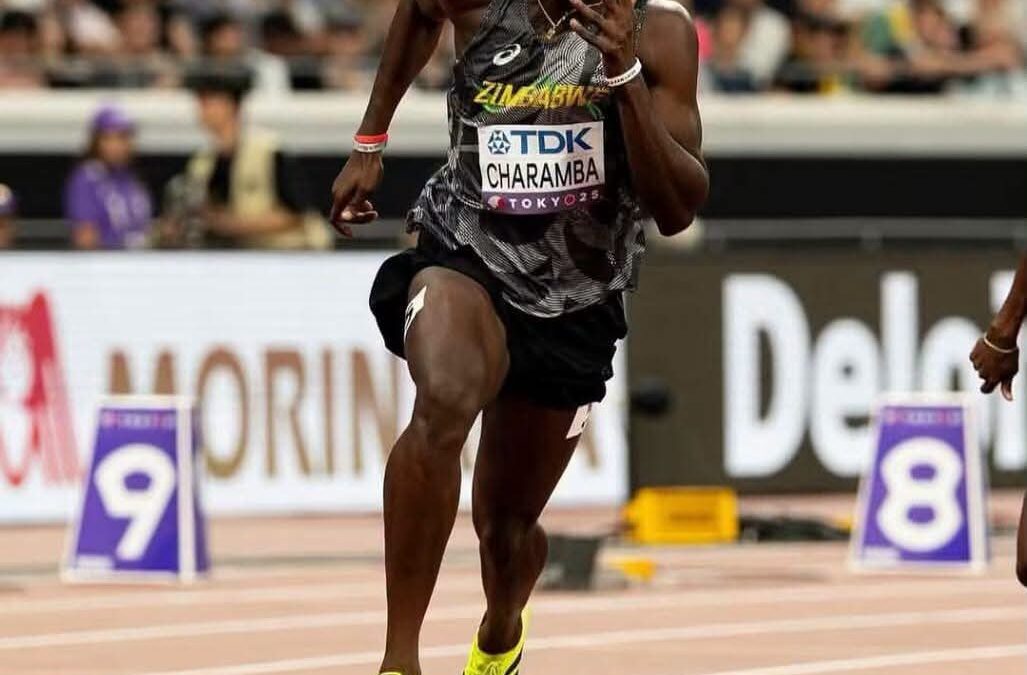
Charamba joins world’s elite with Brussels bronze
Antony Chawagarira BRUSSELS, Belgium – Zimbabwean sprinter Makanakaishe...