By Eugenie Muchetu
Harare , (New Ziana) —Realising one is in freefall from the top of a ridge, on the wrong side of the road, with a sleeping and intoxicated driver behind the wheel, is enough to make one hate oneself for not having an own car in Zimbabwe.
In one such heart-stopping incident, a quick-thinking passenger seated beside an inebriated driver, instinct took over as he grabbed the steering wheel, swerved away from oncoming traffic, and became the hero of the day, saving nine lives, including that of the driver.
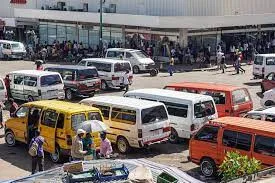
This is not a scene from an action movie but a real-life ordeal that many commuters in Zimbabwe face every day, as the transport system is largely run by unregistered and often reckless individuals, who operate illegal taxis known as mushika-shika, making daily commuting a gamble with life.
Even registered motorists are no better as many drive against oncoming traffic, run red robots, and ignore basic road rules like stopping at zebra crossings and stop signs, resulting in thousands of lives lost or permanently maimed on the roads.
Tinotenda Murimi (29) was still in shock as she trudged home after the heart-stopping incident in which the brave commuter had taken control of the vehicle, locked the drunk driver in the boot, and personally delivered each passenger to their bus stops.
“I have never been so scared in my life. I was in the front seat and saw everything unfold. If the man beside me hadn’t acted fast, we’d be statistics today,” she said. Weeks later, she still gets chills recalling the event, but continues to rely on mushika-shika to get to work since there are no registered commuter omnibuses on her route.
“Besides, (registered) kombis aren’t any better. Most of their drivers are just as reckless, running red robots, driving on the wrong side of the road, or using cycle tracks and pavements to compete for passengers,” she lamented.
George Chirume shared a similar experience. New to the city, he once rode with a commuter omnibus driver who sped through Harare’s busy streets on the wrong side of the road. When he cautioned him, the driver retorted, “No one wants to die, old man.
He (the other motorist) can see me and will avoid me.” The road carnage in Zimbabwe is not merely the result of individual recklessness, but reflects a deeply broken system as each year, thousands of lives are lost in preventable traffic accidents.
Major causes of the accidents include poor enforcement of traffic laws, underinvestment in public transport infrastructure, and the unchecked proliferation of unregistered vehicles.
According to Zimbabwe Republic Police (ZRP) statistics, 1 088 people died in 28 158 road traffic accidents between January and June this year, a rise from the 1 037 fatalities recorded in 25 968 accidents during the same period last year. While the number of injuries slightly decreased from 5 856 in 2024 to 5 525 in 2025, the overall toll remains staggering.
Human error remains the leading cause of these accidents with key contributors including speeding, drunk driving, failure to observe road rules, overtaking errors, tailgating, reversing mistakes, misjudgements, and inattention.
“Overloading of vehicles beyond stipulated capacity also increases accident risks, while mechanical faults due to poor maintenance or faulty vehicle parts also contributed to some of the road traffic accidents,” explains national police spokesperson Commissioner Paul Nyathi. The impact on children is especially harrowing.
Between January and June this year, 105 children were killed and 545 injured in 1 362 accidents, a notable decrease from the 291 killed and 1 167 injured in 2 683 child-involved accidents during the same period last year, yet even this decline cannot mask the devastating cost to Zimbabwe’s future.
In the first half of this year alone, police recorded 4 415 hit-and-run road traffic accidents across Zimbabwe and of these, only 932 cases have been detected, a sobering reminder of how many victims remain without justice. According to the Traffic Safety Council of Zimbabwe, last year the country recorded over 52 000 road traffic accidents, an average of more than 140 accidents per day, with the collisions claiming 2 015 lives and leaving 10 074 people injured.
The World Health Organisation (WHO) reports that road traffic accidents claim approximately 1.19 million lives annually and injure between 20 to 50 million people worldwide with more than half of the deaths involving vulnerable road users, pedestrians, cyclists, and motorcyclists.
Road injuries are now the leading cause of death for children and young adults aged 5–29 with two thirds of road traffic fatalities occurring among people of working age (18–59 years). At least 9 in 10 fatalities on the roads occur in low and middle-income countries, even though these countries have around 60 percent of the world’s vehicles.
Beyond the human toll, road traffic injuries impose a heavy economic burden, through treatment costs and lost productivity, costing countries up to 3 percent of their annual Gross Domestic Product (GDP).
Africa bears 19 percent of global road deaths despite having just 15 percent of the world’s population and 3 percent of its vehicle fleet. The 2030 Agenda for Sustainable Development aims to halve road traffic deaths and injuries by 2030 yet progress in Africa remains slow.
A recent World Health Organisation (WHO) report attributes the region’s rising accident rates to weak safety laws, poor infrastructure, and limited investment in alternative transport systems. “The findings of this report point to a serious public health concern for African countries… WHO is committed to working hand in hand with countries to tackle this preventable threat,” says WHO regional director for Africa.
`Public calls for reform are growing with citizens urging the government and private players to reinvest in public transport, especially after many operators sold off commuter omnibuses during the Covid-19 period. There is also pressure to rehabilitate major and residential roads riddled with potholes as many accidents occur when drivers swerve to avoid them. While some roadworks have begun, key routes like the Harare to Chirundu and inner-city roads remain in urgent need of repair.
Commissioner Nyathi explained that police have been actively engaging motorists and the public to raise awareness about road safety and promote responsible driving as they have taken concrete steps to address road safety issues.
“A key operation targeting pirate taxis or mushika-shika vehicles has resulted in the arrest of 15 117 motorists from January 2025 to June. During the same period, 318 motorists were apprehended for driving unregistered vehicles and 78 288 were arrested for other offenses, bringing the total number of arrests to 94 809,” he said.
But commuters say the crackdown has come at a human cost with one woman left battered and bruised recently after being struck by a fleeing mushika-shika driver, more concerned with evading police than passenger safety. Witnesses accused both police and operators of disregarding commuter welfare.
“Key fundamentals must be addressed before any such operations. long as there is no alternative, registered transport, people will continue using mushika-shika. Government must provide us with options before trying to eliminate illegal operators. A win-win situation must be found, one that allows these drivers to register and operate from designated ranks.
Right now, commuters are collateral damage in a war where no one cares about us,” said one commuter. Surveillance and enforcement of road rules are vital, but they must never come at the expense of commuters’ wellbeing.
Those who break the law should be held accountable, yet enforcement must be rooted in a commitment to protect life, not merely punish. Drivers should recognize that impatience and aggression on the road can lead to unnecessary injury or death as many of them abandon the principles they were taught in driving school, treating public roads as personal battlegrounds and encouraging others to do the same.
In response to the growing crisis, the ZRP has introduced the Electronic Traffic Management System (ETMS) which utilizes automated cameras, speed sensors, and licence plate recognition technology to track and penalize traffic offenders in real time.
Com Nyathi noted that the police are working in partnership with the Vehicle Examination Department (VED) and other government agencies to ensure that only roadworthy vehicles are allowed on the roads, reducing carnage and promoting safer travel.
He explained that since January this year, the police have convened workshops, meetings, and public campaigns alongside the Ministry of Transport and Infrastructural Development, VED, Traffic Safety Council of Zimbabwe, commuter associations, local authorities, and other stakeholders.
Their shared goal was to find lasting solutions to road accidents, curb lawlessness, and foster a culture of safety embraced by all Zimbabweans. There is also an urgent need for local authorities, both urban and rural, to collaborate with the government in rehabilitating and constructing decent, usable roads across the country, while licences and toll fees should serve their intended purpose, not just as revenue streams, but as tools for infrastructure development and public safety.
The ZRP should be commended for instituting the ETMS, for it has the potential to enforce road rules without endangering commuters. Technology, when used responsibly, can make policing more effective, and more humane. Behind every road accident statistic is a story, a mother, a student, a breadwinner lost and, as the nation listens to these voices and confront the failures of its transport system, it should choose compassion over complacency, 2 015 people are too many to lose in one year, and change begins with remembering that every life matters.
New Ziana