
By Johnson Siamachira
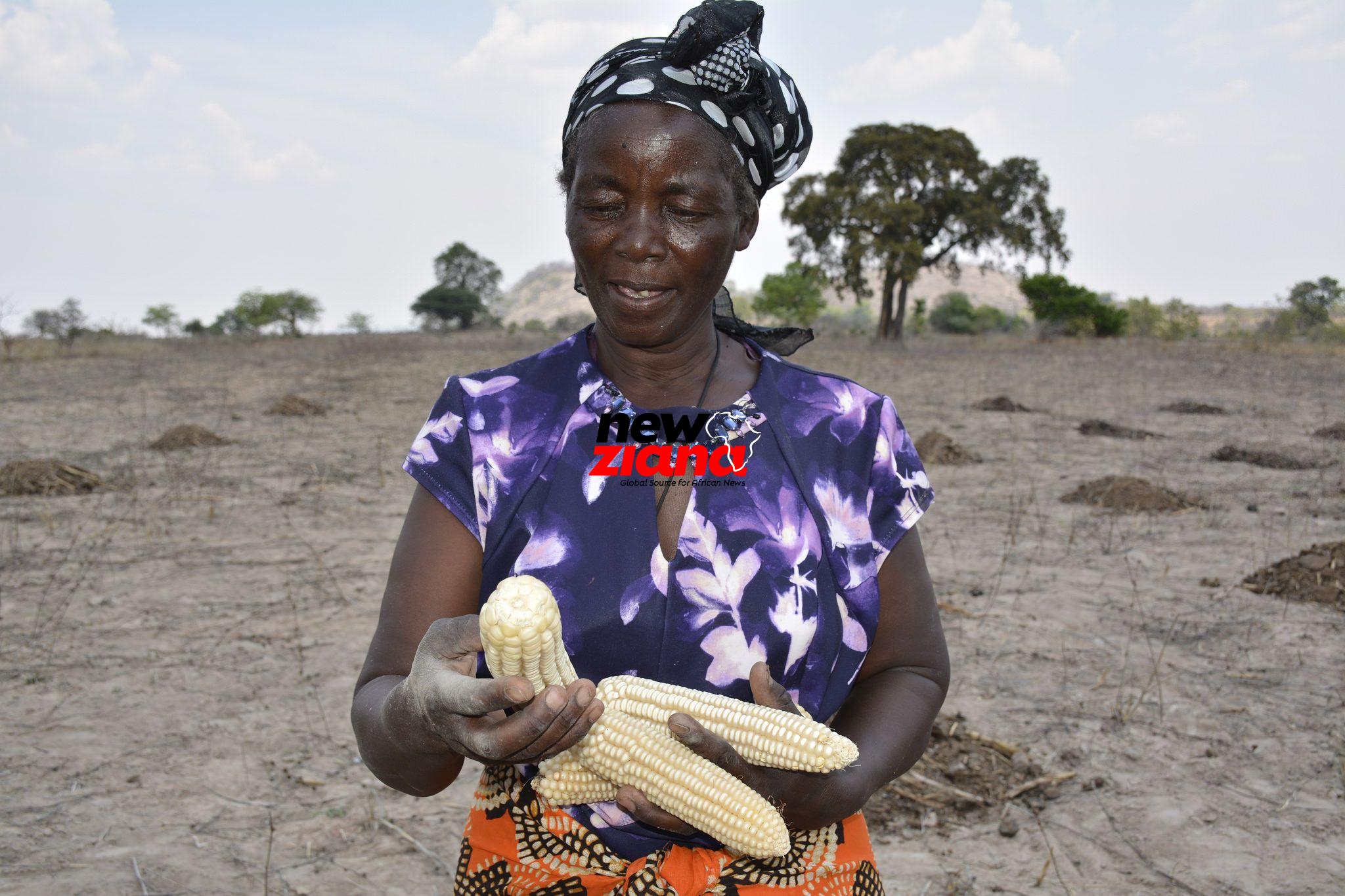
GOKWE NORTH, Zimbabwe, (New Ziana) — As the sun scorched the reddish earth of her maize field in the Midlands Province, 52-year-old smallholder farmer Tariro Mudazvose stood tall among rows of robust green stalks—an unexpected sight in a region battered by drought. “I used to dread the rainy season,” she said. “You never knew if it would come too much, too late or not at all.” But now, armed with a drought-tolerant maize hybrid, Mudazvose harvested 30x50kg bags of maize per hectare last season, double her previous yield.
For Mudazvose, maize is life. Her story is one of resilience—but also a warning.
‘‘In 2016, we entered into a project after hearing about a certain type of maize seed. Among the maize varieties were heat stress tolerant maize seed, better suited to Gokwe North District, a hot area,’’ said Mudazvose
The climate is changing in Zimbabwe. Droughts are becoming frequent, temperatures are increasing and climate projections suggest this is going to continue, says the Meteorological Services Department. By 2050, there will be an extra seven million people in Zimbabwe who will need to be fed.
For smallholder farmers in Zimbabwe to be productive and ensure food security, there is need to build resilience to help them mitigate the onset of climate change.
Climate variations, drought or rainfalls, are something that small-holding farmers in the country are facing and are going to face.
Across Zimbabwe, climate change is outpacing the ability of crop breeding programmes to achievecrop resilience.
Gokwe North district is a very dry region and receives an annual rainfall of 450mm, which is insignificant for meaningful crop production. ‘’For us to grow maize, we need over 600mm of annual rainfall,’’ says another Gokwe North District smallholder farmer, Alfred Dangaiso.
While new climate-resilient varieties offer hope, their rollout is slow and fraught with barriers. Without urgent acceleration in crop breeding, adaptation, and adoption, Zimbabwe’s food security hangs in the balance.
Crop yields will fall within the next decade due to climate change unless immediate action is taken to speed up the introduction of new and improved varieties, agricultural research experts have warned.
Dr. Dumisani Kutywayo is the Chief Director in the Agricultural Research, Education and Specialist Services (ARESS)), formerly the Department of Research and Specialist Services(DR&SS) in the Ministry of Lands, Agriculture, Fisheries, Water and Rural Development. He has seen the shifting weather patterns firsthand. ‘’We are racing against time,” said Dr. Kutywayo.
Said Dr Kutywayo: “High temperatures have become the new norm,” he said. “During maize’s flowering phase, heat stress causes tassel blasting and ear abortion—often leading to total crop failure.”
Add to that, the moisture stress from prolonged dry spells, and pests like the Fall Armyworm thriving in warmer conditions, and maize farmers like Mudazvose face a triple threat.
The result? Maize yields are faltering across the country. Zimbabwe’s smallholders, who grow more than 70 per cent of the nation’s maize, are at the frontline of climate change—often without the tools they need to fight back.
In Gokwe North and beyond, smallholder farmers are turning to traditional crops like sorghum and millet, which better withstand drought. Others are adopting Conservation Agriculture through government-backed initiatives like Pfumvudza, which focus on minimum tillage, mulch cover, and crop rotation.
“These practices help retain soil moisture and reduce erosion,” said Dr. Kutywayo. “They complement modern science—but we still need improved seed varieties that can survive these harsher conditions.” Government has been supporting farmers with appropriate varieties according to the country’s agroecological zones. Drought tolerant maize varieties in wetter ecologies while traditional grains have been deployed in more arid environments.
The tension between tradition and technology is real. While some farmers cherish the taste and familiarity of indigenous varieties, others are hesitant to adopt hybrids due to high seed costs, limited access, and cultural resistance.
A research study led by the University of Leeds and published in the journal Nature Climate Change, focuses on maize in Africa but the underlying processes affect crops across the tropics, including Zimbabwe.
The study warns that without faster crop development, maize varieties will become obsolete before they even reach the field. It currently takes 10 to 30 years to breed and disseminate a new variety—a timeline that climate change no longer respects.
“We looked in particular at the effect of temperature on crop durations, which is the length of time between planting and harvesting. Higher temperatures shorten the growing season,” said lead researcher Professor Andy Challinor from the Priestley International Centre for Climate at the University of Leeds in the United Kingdom.. “That gives crops less time to accumulate biomass—meaning lower yields.” By looking at a range of data on farming, regulatory policy, markets and technologies, the researchers developed average, best and worst case scenarios for current crop breeding systems.
The research team, comprising experts in agriculture, climate and social science, looked at the options for ensuring that crops can be developed and delivered to the field more quickly.
Additionally, scientists are looking to technologies like CRISPR gene editing and high-throughput screening. These tools can speed up breeding, identify drought- and heat-tolerant traits, and deliver new varieties in under a decade.
“In Zimbabwe, we are integrating genomic data into our breeding programmes,” said Dr. Kutywayo. “The goal is to develop climate-adapted varieties faster and get them into farmers’ fields.”
Dr Andy Jarvis, the Director of Decision and Policy Analysis Area at the International Centre for Tropical Agriculture(CIAT), said: “Investment in agricultural research to develop and disseminate new seed technologies is one of the best investments we can make for climate adaptation.’’
He adds: “Climate funds could be used to help the world’s farmers stay several steps ahead of climate change, with major benefits for global food security.”
But breeding better crops is only half the battle. Getting a new strain of maize out of the research station is not the same as getting it to the fields. Creating a distribution chain in Zimbabwe has been a bigger challenge than inventing the product itself.
“Many smallholders don’t even know these varieties exist,” said Dr. Kutywayo. “And those who do often can’t afford them or find them in local markets.”
Zimbabwe Government policies and programmes—like the National Climate Change Policy and the Zimbabwe Resilience Building Fund—are helping, but more coordination is needed among breeders, policymakers, and markets.
Despite the challenges, success stories are sprouting.
Through partnerships with local and international research centres , Zimbabwean farmers are accessing drought-tolerant hybrids such as ZS265 and ZS269. These varieties now dominate over 50 per cent of the seed market giving farmers hope to adapt to climate change.
Local and international agencies are also partnering to promote Conservation Agriculture and sustainable agricultural practices through climate-smart agriculture.countrywide.Their work is helping farmers like Mudazvose, and Dangaiso thrive amid uncertainty.
Climate change isn’t just reducing yields—it’s diminishing the nutritional value of crops. Rising carbon dioxide levels dilute proteins and minerals in staples like maize. Drought stress, meanwhile, increases the risk of mycotoxins, making food unsafe.
Without nutrient-rich crops, Zimbabwe faces rising levels of “hidden hunger”—micronutrient deficiencies that disproportionately affect women and children.
Zimbabwe stands at a climate crossroads.
The stakes are high. If crop breeding doesn’t adapt quickly enough, Zimbabwe could face more frequent crop failures, deeper poverty, and growing dependence on food imports.
Yet hope remains.
“Crop improvement isn’t a silver bullet, but it’s one of the most powerful tools we have,” said Dr. Kutywayo.
If Zimbabwe can close the gap between climate change and crop breeding, the country’s smallholder farmers can still grow their future, and help nourish the nation.