By Sharon Tawuya
Harare, (New Ziana) —Workers unions involved in education on Tuesday called on the government to allocate at least 22 percent of the 2027 National Budget to the sector, with a ring-fenced allocation dedicated to digitising all public schools.
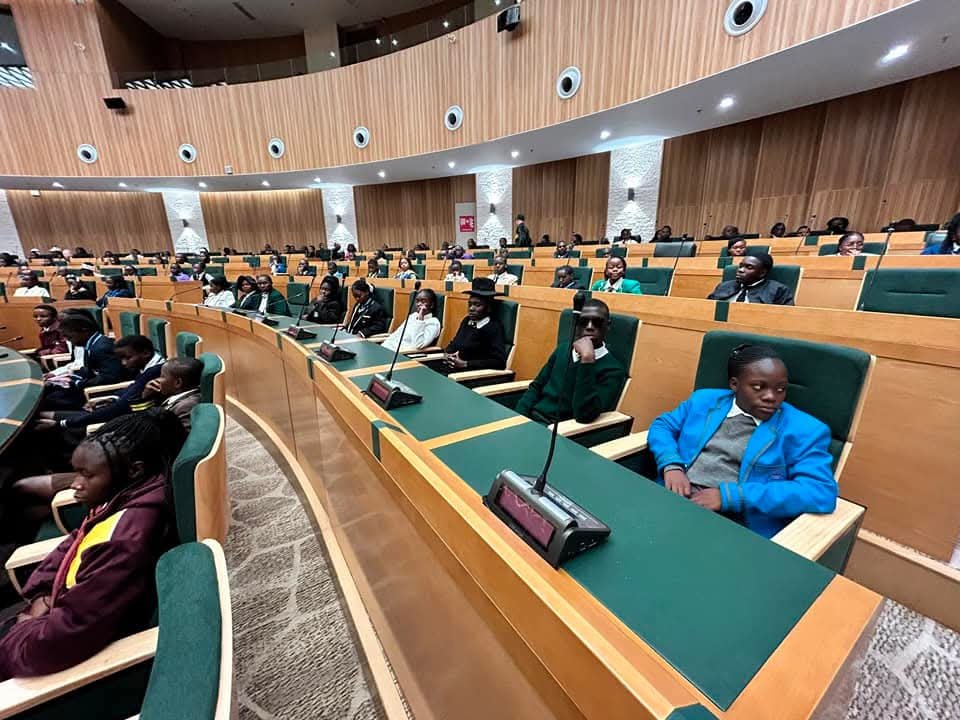
The call was made during a high-level policy dialogue on “Strengthening Public Education Financing Through Evidence-Based Dialogue” held at the Parliament Building in Mt Hampden.
The dialogue brought together Members of Parliament, Parliamentary Portfolio Committees, education unions and other stakeholders to deliberate on financing priorities for the 2027 National Budget.
The campaign is pushing for more, fair and accountable investment in public education to guarantee that every learner, regardless of geographical location or socio-economic status, has access to quality learning opportunities.
Zimbabwe Teachers Association (ZIMTA) president Akuneni Maphosa, who opened the workshop, said investing in education is one of the most effective ways to promote sustainable national development, reduce inequalities and strengthen Zimbabwe’s human capital.
“Education is not just another sector fighting for limited public resources. It is the foundation that other sectors depend on. Every doctor, engineer, entrepreneur, scientist, farmer and public servant starts in a classroom. Education is an investment in the future of Zimbabwe. We need to work together to ensure that the 2027 budget promotes high quality education,” he said.
He said the proposals to Parliament were informed by engagements with union leaders and education practitioners across the country’s provinces and reflected the lived reality of teachers and learners.
The session was meant to deepen interaction between Parliament and education stakeholders ahead of the 2027 National Budget.
The Education unions said Parliament has an important oversight role to ensure that public resources allocated to the sector are sufficient to achieve national priorities, equitably distributed across all provinces and districts, protected from inflation, spent transparently and accountably, and targeted at improving learning outcomes for every learner.
Acting chairperson of the Parliamentary Portfolio Committee on Primary and Secondary Education who is Shurugwi South MP Wilson Mhuri concurred that more resources are required to ensure effective implementation of the new Heritage-based curriculum.
“Adequate resources are needed to fully implement the Heritage Based Curriculum. Behind every budget is a child whose future depends on the decisions we make. The decisions we make should enable us to produce children who are fully equipped with skills which are relevant in today’s industries,” he said.
He urged the government to increase the salaries for teachers to match their role in shaping the future of learners.
“In every school is a teacher doing everything possible with far too little. The teacher needs to be motivated. They are not just employees but nation builders, ” he said.
The engagement also aims to institutionalise ongoing dialogue between policymakers and education practitioners so that future budgets are shaped by evidence from classrooms and communities.
The Education unions jointly advocated for the government to raise funding for the sector to 22 percent of the National Budget and introduce an inflation adjustment mechanism to protect the real value of education spending during the fiscal year.
They also called for the adoption of an equity-based funding framework that considers Zimbabwe’s unique geography and prioritises rural, remote and disadvantaged communities where the cost of delivering education is higher.
The unions further proposed ring-fencing funding for the digitisation of all public schools, including investments in electricity, broadband access, ICT infrastructure, digital devices, maintenance and technical support.
They urged the government to introduce targeted incentives such as housing and hardship allowances to attract and retain teachers in rural and hard-to-reach schools.
Other recommendations include increasing investment in inclusive education, school infrastructure, textbooks, learning materials and the timely disbursement of school funding including the Basic Education Assistance Module (BEAM).
New Ziana