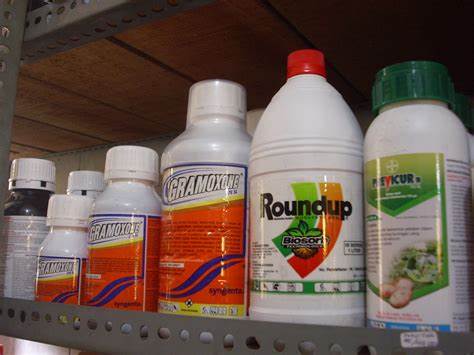
Harare (New Ziana) -At least 10 percent of pesticides registered for use in Zimbabwe are regarded as Highly Hazardous Pesticides (HHP) with the Food and agricultural Organisation (FAO) estimating that these also constitute between 6 to 10 percent of chemicals in the national registers of Low and Middle Income Countries (LMICs), a senior official has said.
Agriculture, Fisheries, Water and Rural Development permanent secretary Dr John Basera said this during the launch of the national farmers and retailers’ pesticide attitude and practices survey report and HHP mitigation strategy in the capital on Wednesday.
Dr Basera, who was represented by the chief director in the same ministry, Professor Obert Jiri, urged farmers to use of pesticides proper while they increase food productivity.
He said a strengthened pesticide management system enhances protection of humans, animals and the environment.
“It is generally accepted that pesticides play an important role in agricultural development because they can reduce the loss of agricultural products while improving yields and quality.
Dr Basera said there will be 78 percent loss of food production without the use of pesticides and 54 percent loss in vegetable production and 32 percent loss of cereal production, hence they play a critical role in reducing diseases and improving the increase in crop yields the world over.
“However, pesticide use should be done in a manner that does not human health, and the environment, either directly or indirectly. Failure to do so results in a reversal to their beneficial use,” he said.
There has been an increase in the use of agro-chemicals including pesticides in recent years with more chemicals likely going to be used as the country strives to improve agricultural production and achieve food security.
“Zimbabwe has registered over 450 active ingredients and 800 formulations, of which 44 active ingredients are classified as Highly Hazardous Pesticides, that is approximately 10 percent of the pesticides registered for use in Zimbabwe are considered highly hazardous pesticides,” said Dr Basera.
Speaking at the same event, FAO representative in Zimbabwe Dr Patrice Talla who was represented by her deputy Louis Mahingirwa said globally, unintentional acute pesticide poisoning cases exceed 385 million yearly, especially in farming communities in developing countries, while suicide cases from ingesting acutely toxic HHPs are also very high, with an estimated 160 000 fatalities recorded annually.
HHPs can be associated with serious chronic illnesses like cancers as well as neurological and reproductive disorders.
They also play a key negative role in environmental degradation and biodiversity loss due to long-term contamination of agricultural soils, ground waters, freshwater resources, wetlands, estuarine and marine ecosystems and non-target flora and fauna, explained Dr Talla.
New Ziana