By Zachary Gava
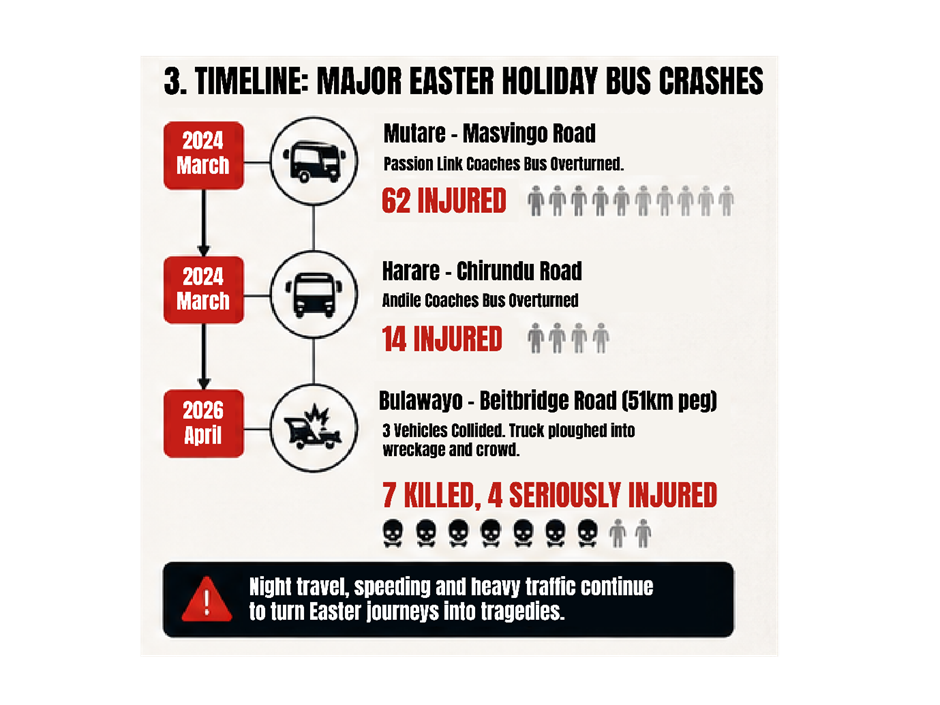
Night had already fallen on the Bulawayo–Beitbridge Highway when people gathered around the wreckage of three vehicles involved in a collision at the 51-kilometre peg on April 3 this year.
Some were helping the injured. Others stood watching.
Then a truck ploughed into the crash scene.
Seven people died and four were seriously injured.
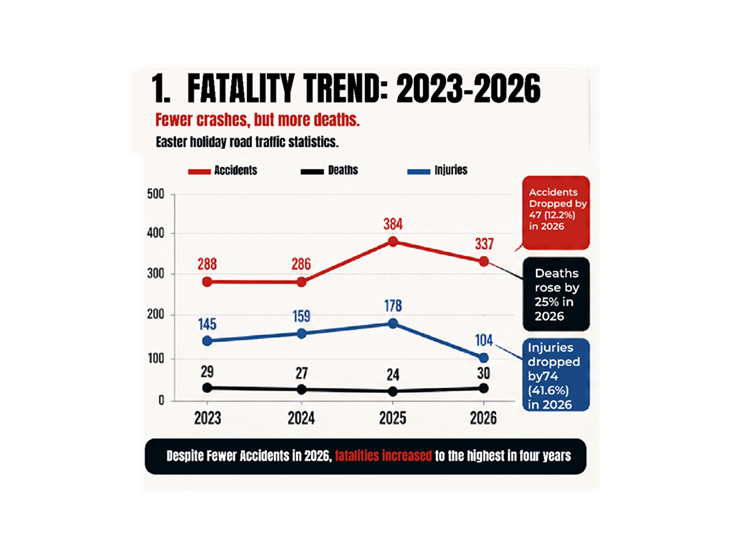
The tragedy became one of the deadliest road accidents recorded during the 2026 Easter holiday period and highlights a disturbing trend emerging from Zimbabwe’s road safety data: fewer crashes are being recorded, but more people are dying.
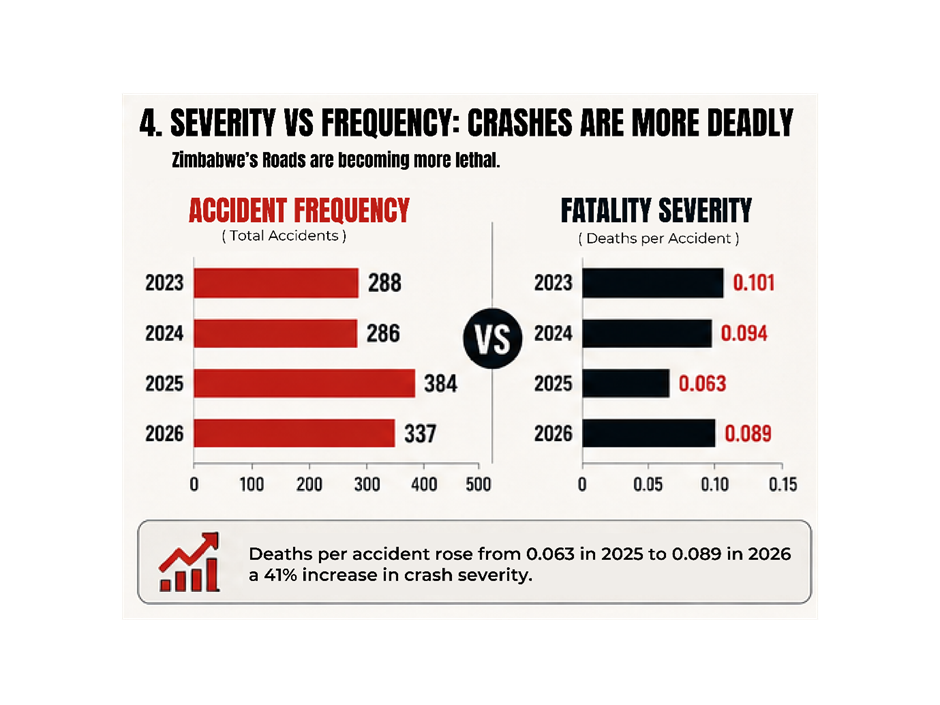
An analysis of Zimbabwe Republic Police Easter holiday statistics from 2023 to 2026 shows that reported accidents fell from 384 in 2025 to 337 in 2026, yet deaths rose from 24 to 30.
Police figures show 288 accidents and 29 deaths in 2023, 286 accidents and 27 deaths in 2024, 384 accidents and 24 deaths in 2025, and 337 accidents and 30 deaths in 2026.
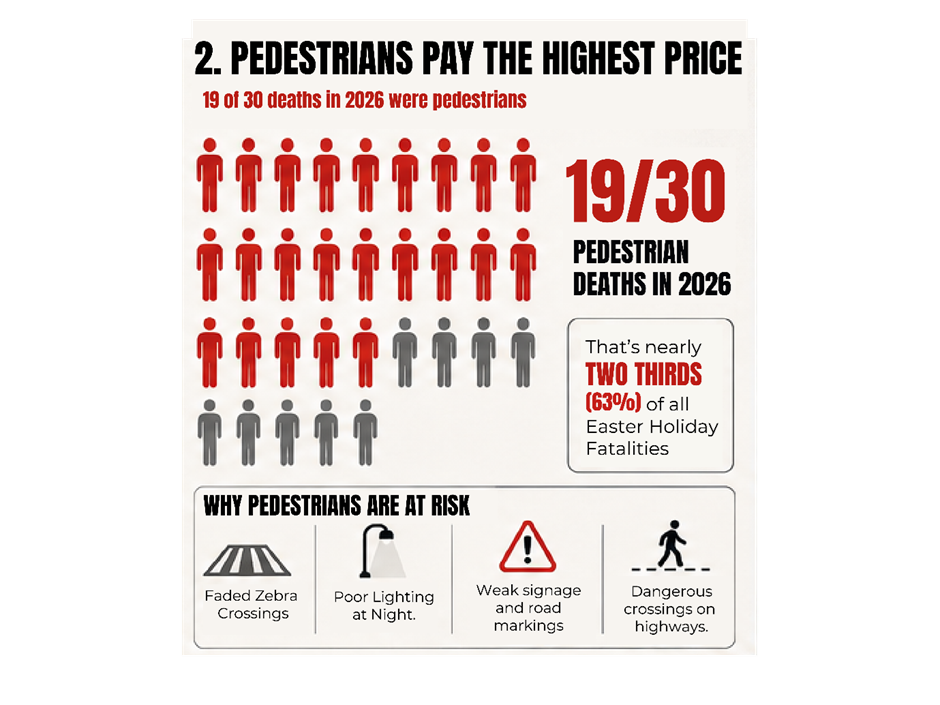
One finding stands out. Pedestrians accounted for 19 of the 30 Easter deaths recorded this year – nearly two-thirds of all fatalities.
The deaths are occurring on the same roads year after year, including the Harare–Masvingo, Bulawayo–Beitbridge, Harare–Chirundu and Mutare–Masvingo highways.
A Gwanda-based nurse in the trauma section, Arnold Mapfumo, said road crashes have become a familiar part of his holiday duty.
“Some patients arrive with injuries that could have been treated earlier if help had reached them faster. There are times when people spend too long waiting for rescue and transport to hospital,” he said.
His observations echo concerns raised by emergency responders and road-safety advocates that survival often depends on how quickly victims receive medical attention after a crash.
The investigation found that one of the least discussed road-safety problems is the absence of a consistent emergency response system along many highways.
While police and local authorities respond when alerted, ambulances are not permanently stationed across large sections of major routes.
Recent private-sector initiatives to deploy highway ambulances have highlighted the gap in public emergency coverage.
For vendors who spend long hours beside busy roads, the danger is impossible to ignore.
“We see near misses almost every day,” said highway vendor Nomalanga Ncube, who operates near a busy roadside trading area along the Harare–Masvingo road, just next to the tollgate.
“At night it becomes worse. Some places have poor lighting and vehicles pass at high speed. People cross the road because they have no safe crossing points.”
Under Zimbabwe’s road governance framework, the Ministry of Transport and Infrastructure Development is responsible for maintaining national roads and ensuring acceptable safety standards, while local authorities are responsible for roads, street lighting and traffic infrastructure within their jurisdictions.
Yet faded road markings, poor lighting and deteriorating road surfaces remain common complaints from motorists and pedestrians.
Earlier this year, the Ministry of Transport and Infrastructure Development launched public hotlines for reporting potholes and road defects, acknowledging the continued presence of hazardous road conditions across the country.
Cross-border trader Lovemore Nyambire, who frequently travels between Harare and South Africa, said passengers often feel powerless when drivers behave recklessly.
“Sometimes people complain about speeding, but the driver keeps going. Most passengers just want to reach their destination safely,” he said.
Police spokesperson Commissioner Paul Nyathi said speeding, unsafe overtaking and failure to follow traffic regulations remain major contributors to fatal crashes.
Traffic Safety Council of Zimbabwe (TSCZ) media and corporate affairs officer Lucy Kuwanda-Mapfumo said safer infrastructure, enforcement and road-safety education must work together to reduce deaths.
But the data suggests the problem extends beyond driver behaviour.
Zimbabwe is not simply facing a road-crash problem. It is facing a road-survival problem.
People are dying as pedestrians. People are dying on highways that repeatedly appear in fatality reports. People are dying while waiting for help.
The numbers tell part of the story.
The rest can be found beside the highways, where families still wait for buses after dark, vendors continue trading metres from fast-moving traffic, and travellers begin journeys hoping they will reach home.
Most do.
Some never arrive.