By Johnson Siamachira
Harare, (New Ziana) — Agricultural research institutions are showcasing climate-resilient crops, livestock technologies, mechanisation and biofortified foods at the 2026 Zimbabwe Agricultural Show as farmers and agribusinesses seek ways to raise productivity amid increasingly erratic weather.
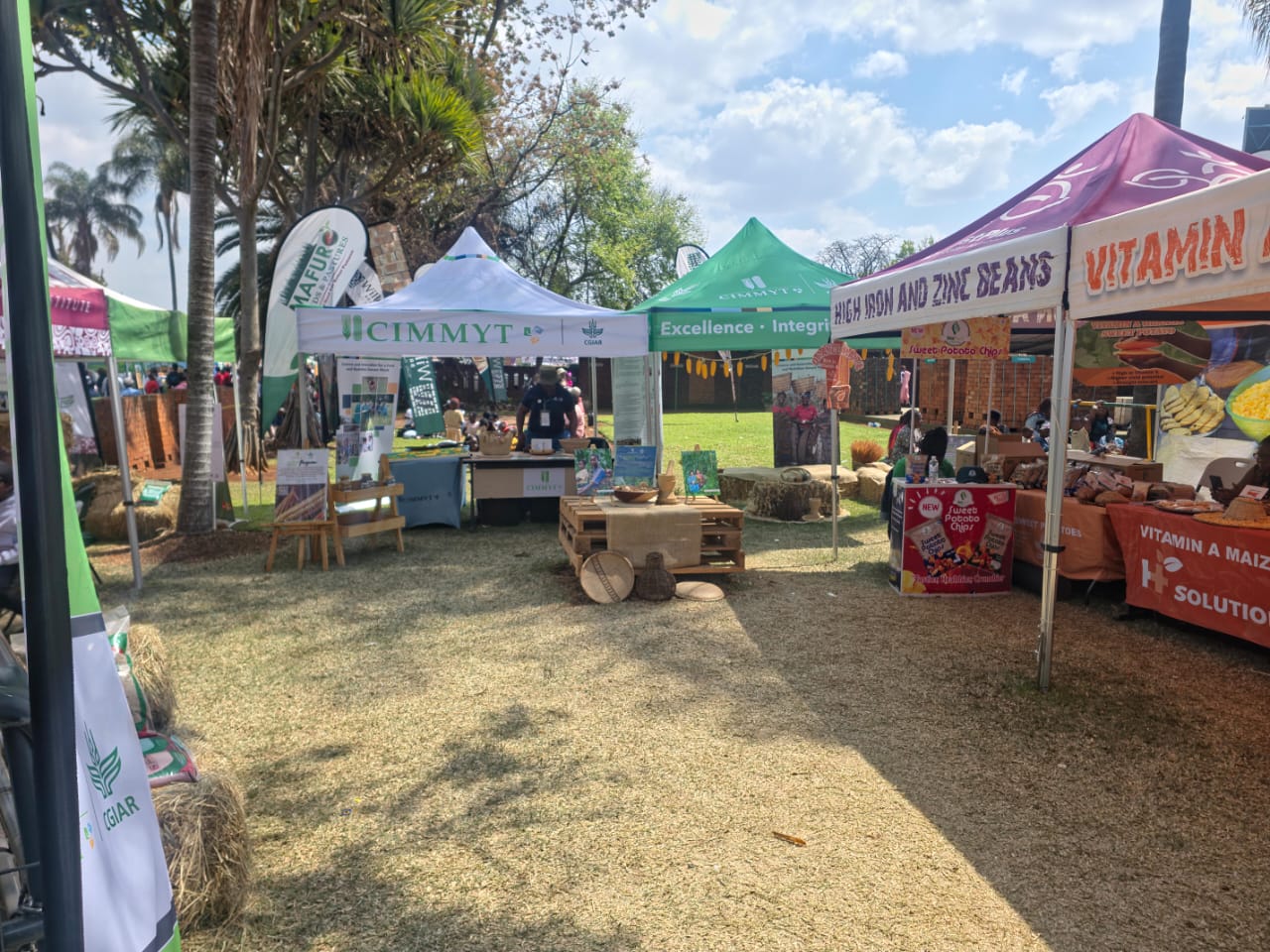
The joint CGIAR exhibition by the International Maize and Wheat Improvement Center (CIMMYT), International Livestock Research Institute (ILRI) and HarvestPlus Solutions is highlighting technologies designed to connect agricultural research with farmers, markets and household nutrition.
The exhibition is part of the six-day Zimbabwe Agricultural Show, which runs through Saturday at the Harare Showgrounds under the theme “Powering Growth: Where Agriculture, Technology and Commerce Converge.” The Zimbabwe Agricultural Society says the show has more than 600 exhibitors and aims to strengthen links among farmers, agribusinesses, investors, technology providers and policymakers.
Zimbabwe’s agricultural sector remains highly exposed to climate variability. The sector contracted 18.1 per cent in 2024 following the El Niño-induced drought before rebounding by an estimated 24 per cent in 2025, according to the Food and Agriculture Organization of the United Nations. Agriculture accounted for an estimated 10.8 per cent of gross domestic product in 2025.
CIMMYT Principal Crop Agronomist Dr. Christian Thierfelder said the organisation has worked in Zimbabwe since 1985, initially focusing heavily on maize improvement before expanding into Conservation Agriculture, sustainable intensification, agroecology, regenerative agriculture and smallholder mechanisation.
“Our role at the show is to present these breakthroughs and technologies, make them better known to the public and demonstrate the contribution that CIMMYT continues to make to agriculture in Zimbabwe,” Dr Thierfelder said.
CIMMYT is testing maize technologies with farmers across 19 districts, according to information provided for the exhibition, allowing researchers to assess technologies under different local conditions.
The approach is increasingly important as government prepares for the 2026-27 farming season amid concerns over climate variability and change. The FAO has called for stronger early-warning systems, preparedness and investment in agricultural resilience.
ILRI is showcasing livestock genetics, feed and forage production, feed conservation and mechanisation.
Professor. Sikhalazo Dube, ILRI Southern Africa Representative, said livestock farmers need more than improved breeds to withstand drought.
“Genetics is important, but so is how farmers organise themselves and harness the resources around them to ensure that their livestock have adequate feed during extended drought periods,” Dube said.
ILRI research in Zimbabwe has identified feed shortages, drought, disease and low-quality animals as major constraints on smallholder livestock productivity. Recent research also points to opportunities for commercially viable forage-feed value chains in Zimbabwe.
HarvestPlus Solutions is showcasing Vitamin A maize and orange sweet potato, as well as iron-rich pearl millet and beans. The crops are developed through conventional breeding to increase the micronutrient content of staple foods.
Sakile Kudita, HarvestPlus Solutions Country Manager, said climate shocks can affect both food production and household nutrition.
The exhibition underscores the growing push to connect research, technology, production and markets as Zimbabwe seeks to build a more productive and climate-resilient agricultural sector.