Harare (New Ziana) – The government says it will continue strengthening Covid-19 monitoring mechanisms in schools to curb the emergence of new cases of the deadly virus in learning institutions.
Government’s re-assurance comes after calls by some teacher unions and parents for the suspension of the current school term following an outbreak of cases among students in several schools across the country.
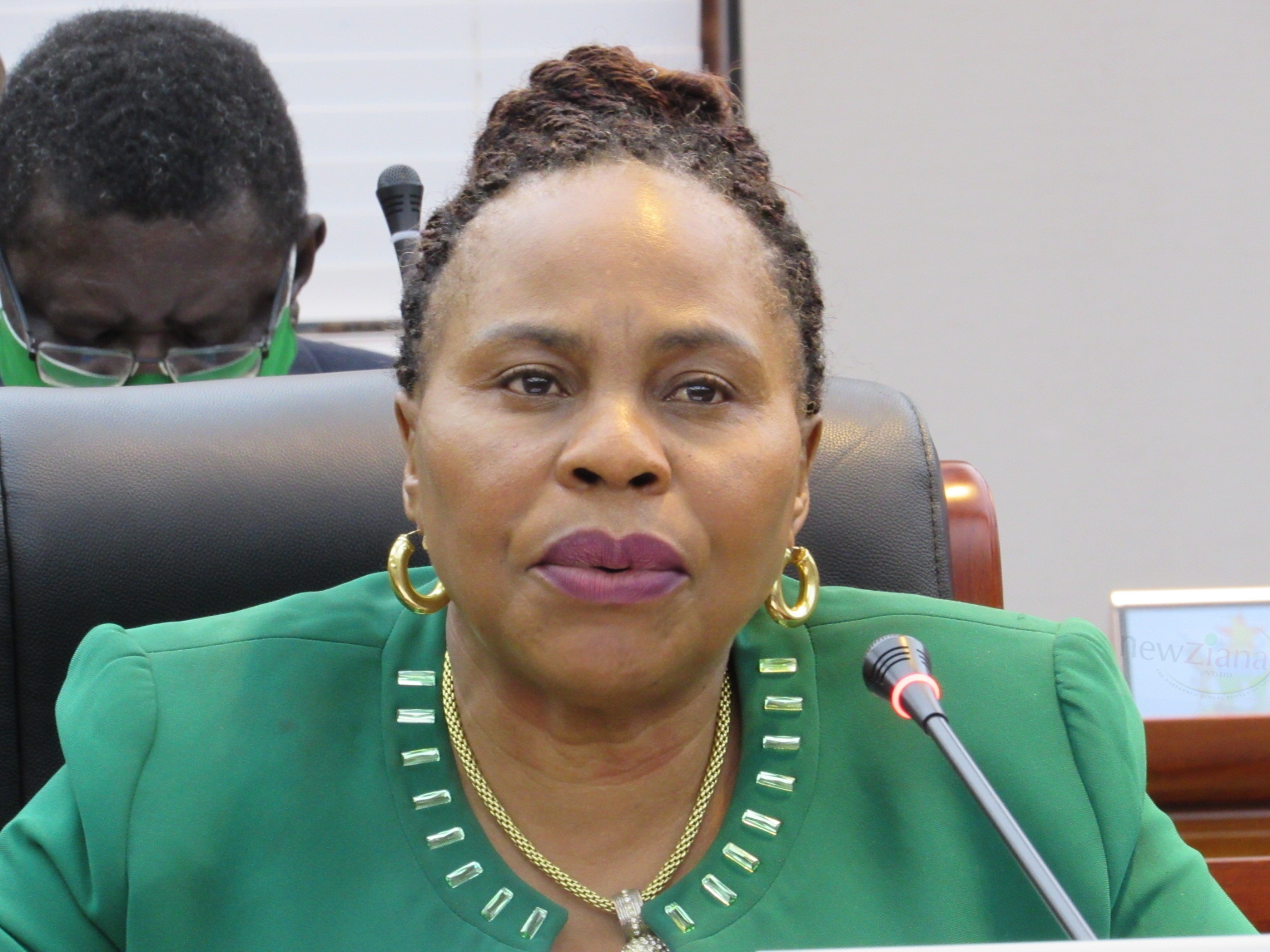
Information, Publicity and Broadcasting Services Minister Monica Mutsvangwa said: “In the learning institutions, a total of 332 COVID-19 cases were reported and the majority of these are asymptomatic, isolated and being monitored by Rapid Response teams in the respective provinces.”
“Cabinet also wishes to reassure the public that the total number of infected learners and teachers out of a population of 4.5 million and 121 272 respectively, is very low. The environment at schools will continue to be monitored as previously undertaken. We continue to urge the need for responsible reporting in this regard.
“The nation is further assured that the Ministries of Primary and Secondary Education and Health and Child Care will continue to strengthen the implementation of standard operating procedures at schools and public transport spaces in order to curb the increase in new infections,” she said.
She said government was also concerned about the rising number of Covid-19 cases and urged citizens not to let down their guard.
“Of concern, however, is the increase in the number of new cases detected, from 594 recorded in week 47 to 833 in week 48. The nation is called upon to continue exercising extreme caution, and complying with COVID-19 protective and preventative guidelines, protocols and measures in order to arrest the surge in confirmed COVID-19 cases.”
Meanwhile, Mutsvagwa said Finance and Economic Development Minister, Professor Mthuli Ncube presented to Cabinet Provincial Gross Domestic Product statistics for the period 2012 to 2018 which show each province’s contributions to national economic performance.
She said the statistics were compiled by the Zimbabwe National Statistics Agency (ZIMSTAT), a first such compilation since independence in 1980.
“Compilation and publication of the provincial GDP’s buttresses implementation of the Devolution and Decentralisation programme, which brings with it increasing demand for sub-national socio-economic statistics. The data used in the compilation of the regional GDPs was obtained from 15 sectors, including the following: Agriculture, Forestry, Hunting and Fishing; Mining and Quarrying; Manufacturing; Construction; Water Supply, Sewerage, Waste Management and Remedial Activities; Wholesale, Retail Trade and Repair of Motor Vehicles and Motor Cycles; and Education,” she said.
“The data shows that provinces that are predominantly rural had low percentage contributions to the national GDP and the concerned provinces are Mashonaland Central, Matabeleland North, Manicaland, Matabeleland South and Masvingo. Provinces with more urban areas, namely: Bulawayo, Mashonaland East, Mashonaland West, Midlands and Harare, had higher per capita GDP. Interestingly, Matabeleland South which had low GDP had higher per capita GDP, suggesting there is higher factor productivity in the province. Generally, it was found that the Manufacturing and Wholesale, Retail Trade, Repair of Motor Vehicles and Cycles industries dominated other industries in most provinces.”
Mutsvangwa added: “More specifically, provincial GDPs in 2018 were as follows: Bulawayo, US$2.26 billion; Harare, US$9.56 billion; Manicaland, US$1.46 billion, Mashonaland Central, US$1.08 billion; Mashonaland East, US$2.22 billion; Mashonaland West, US$2.14 billion; Masvingo, US$1.41 billion; Matabeleland North, US$1.16 billion; Matabeleland South, US$940 million; and Midlands, US$1.94 billion.
“On the other hand, the per capita nominal provincial GDPs for 2018 were as follows: Bulawayo, US$3 048; Harare, US$3 614; Manicaland, US$743; Mashonaland Central, US$784; Mashonaland East, US$1 408; Mashonaland West, US$1 206; Masvingo, US$820; Matabeleland North, US$1 333; Matabeleland South, US$1 186; and Midlands, US$1 026 billion.”
Going forward, she said, collecting and analysing statistical data disaggregated by province and subsector economic activities will continue to form ZIMSTAT’s core functions.
“The data will be key in guiding the economic reform agenda of the Second Republic in order to guarantee equitable development as we move towards Vision 2030. Ministers of State for Provincial Affairs will make use of the data in coming up with Provincial Development Plans. The data will henceforth be published for the information of the general citizenry,” she said.
New Ziana