
By Staff Reporter
GWERU – Health authorities have raised the alarm after the Gweru District recorded 21 malaria cases and one fatality during the first six months of the year—a striking surge for an area that has traditionally enjoyed near-zero infection rates.
The sole recorded death occurred on May 22 at Shamrock Mine in Lower Gweru, which officials have now designated a malaria hotspot requiring urgent, intensified interventions.
Speaking at a Ministry of Health and Child Care stakeholders’ meeting for Human Papillomavirus (HPV) and Tetanus-Diphtheria, Gweru District Environmental Health Officer Constance Gumbo expressed deep concern over the trajectory of the outbreak.
“The 21 cases are a cause for concern because they are more than what we usually record for the whole year,” Gumbo said. “In the first six months alone, we have recorded more than double our usual annual figures.”
Crucially, epidemiological investigations revealed that none of the infected individuals had a recent history of travel, confirming that the malaria cases were contracted locally. This poses a severe setback for local eradication targets.
“We are one of the districts in the malaria pre-elimination phase in Zimbabwe, and we are not supposed to be recording cases from people who have not travelled to malaria-endemic areas,” Gumbo explained.
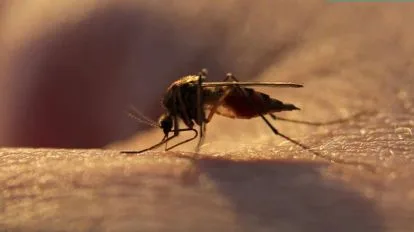
Subsequent field entomology investigations confirmed the presence of the Anopheles mosquito—the vector responsible for transmitting the parasite—within the district.
Gumbo noted that the figures represent a drastic departure from Gweru’s historical baseline. The district previously recorded negligible figures, occasionally reporting zero cases over an entire year.
Last year, the seven cases recorded were considered highly unusual and significant. The current mid-year tally has already tripled last year’s total.
Compounding the containment challenge, several of those infected have been asymptomatic, masking the true scale of transmission. Residents have been strongly urged to seek immediate medical attention if they feel unwell.
District Health Promotion Officer Lameck Govere described the single fatality as “one too many” , noting a fundamental shift in the local ecosystem.
“Our investigations have revealed that Gweru now has mosquitoes carrying malaria parasites, and there is a need to strengthen malaria prevention and control activities,” Govere said. “We used to believe that Gweru was free of malaria, but that is no longer the case.”
District Medical Officer Dr Kundai Guveya echoed these concerns, classifying malaria as an escalating public health threat. He stated that health teams will work alongside stakeholders to deploy targeted interventions in high-risk zones, particularly within the informal and formal mining sectors of Lower Gweru.
However, Dr Guveya acknowledged that entering these areas requires careful community diplomacy. “We need to reach out to miners because, in the past, some communities have mistaken our intentions and assumed we wanted to shut down mining operations, when our goal is to protect their health,” he said.
Beyond the immediate malaria spike, Dr Guveya urged the public to maintain a high state of vigilance against broader regional health threats, citing recent continent-wide reports of emerging pathogens such as Hantavirus and Ebola.