By Simbarashe Muparaganda
Bulawayo, (New Ziana) – The mining sector should deepen domestic manufacturing and strengthen local supply chains to curb the growing outflow of foreign currency spent on imported goods and services, an official said on Thursday.
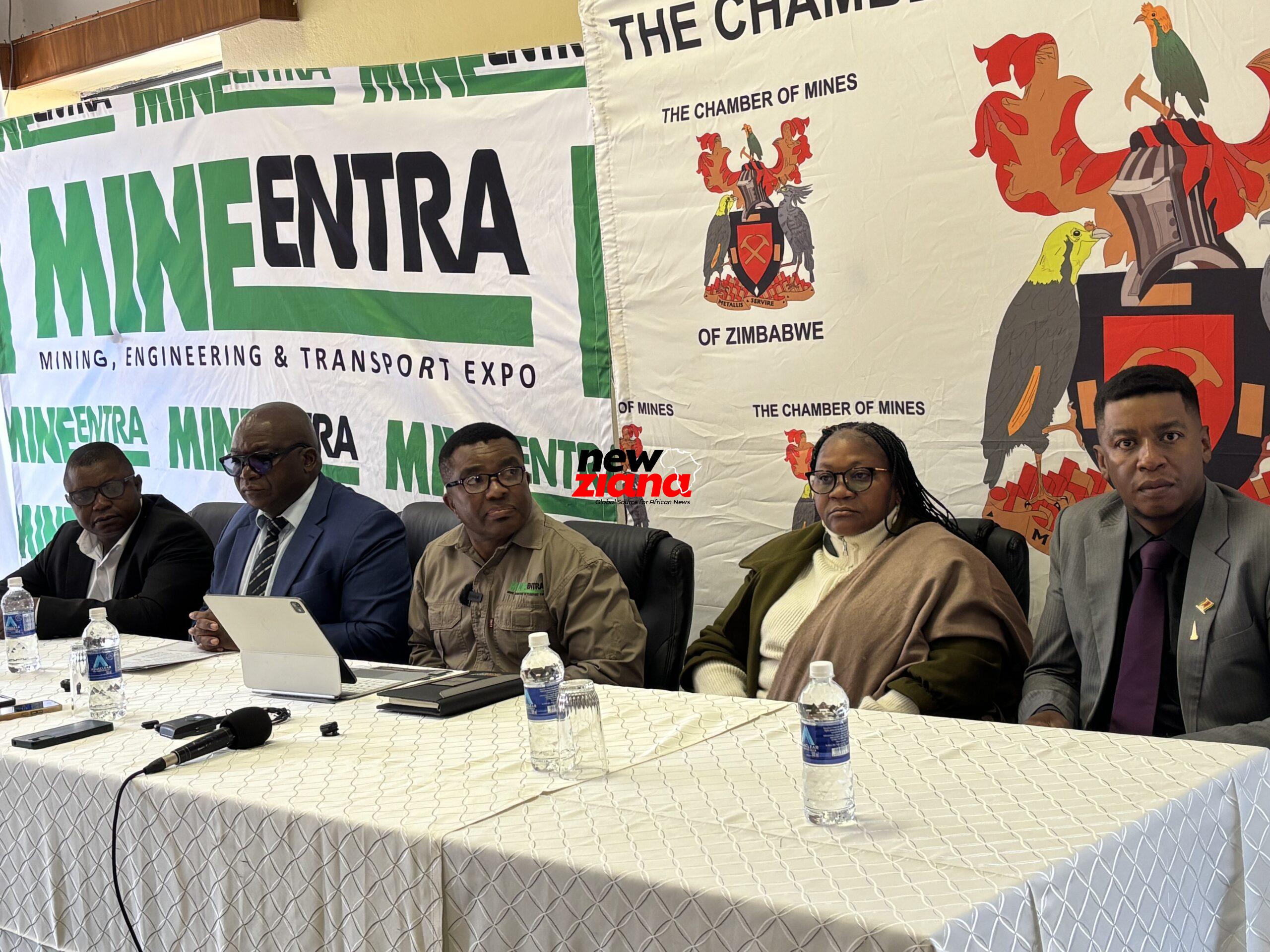
Chamber of Mines of Zimbabwe (CoMZ) chief executive officer, Isaac Kwesu said this while delivering his keynote address during the Suppliers, Energy and Infrastructure Symposium held on the sidelines of the ongoing 29th edition of the Mining, Engineering and Transport (Mine Entra) Expo (Mine Entra) 2026 at the Zimbabwe International Conference and Exhibition Smart City (ZICES).
Running under the theme, “Enhancing Local Content and Linkages in the Mining Value Chain,” the symposium comes at a time when the government is intensifying efforts to promote mineral beneficiation and value addition, as part of a broader strategy to maximise the contribution of the mining sector to the domestic economy.
“The mining sector’s increasing reliance on imported products is limiting the industry’s potential to drive broader industrialisation and economic growth,” said Kwesu.
He said while the mining industry generated US$8.4 billion in revenue last year, about US$3.4 billion was spent on suppliers, consumables, power, transport, machinery, chemicals and other operational inputs.
“Of this expenditure, local procurement now accounts for around 70 percent of the mining industry’s procurement budget. Whilst it is commendable that 70 percent is sourced locally, it is still worrisome that only about US$410 million worth of those products are actually manufactured locally. In other words, of the US$3.4 billion spent by mining companies, only US$410 million represents locally manufactured products, with the balance largely comprising imported goods distributed through local suppliers,” he explained.
Kwesju said the figures demonstrate that although procurement is increasingly being channeled through Zimbabwean businesses, much of the value continues to flow outside the country because locally manufactured products remain limited.
He said strengthening local participation across the mining value chain is critical for the country to maximise the economic benefits of its vast mineral resources.
“This can only be achieved if we strengthen local participation across the entire mining value chain, from the supply of goods and services to manufacturing, engineering, logistics, construction, energy and infrastructure development,” he said.
Kwesu said the mining industry maintains strong linkages with the rest of the economy through purchases of electricity, iron and steel products, machinery, transport services, plastics, rubber and chemicals, creating significant opportunities for domestic industries.
“This underscores the strategic importance of strengthening local content and supply chain programs, as deeper domestic linkages amplify the contribution of mining to economic growth, employment creation and industrialisation,” he said.
He acknowledged that local suppliers continue to face major obstacles, including foreign currency shortages, high production costs and stiff competition from imported goods and services.
“In order to enhance local content in the mining industry, suppliers should continue to improve the quality of their products, reduce costs and improve delivery lead times to take advantage of the huge opportunities available,” he explained.
Kwesu said mining companies remain committed to supporting local suppliers through off-take agreements that could improve access to capital, facilitate business expansion and strengthen local manufacturing capacity.
He also highlighted reliable energy, transport infrastructure, water systems and digital connectivity as essential enablers of both mining and local industrial development.
“The mining industry currently consumes about 1 000 megawatts (MW) of electricity, more than half of the country’s domestic generation capacity, with demand expected to exceed 1 500MW within the next 12 months as expansion projects and new beneficiation plants come on stream.
“Investment in these strategic areas will enhance productivity, improve competitiveness and create an environment where local businesses will thrive,” he said.
Kwesu said the CoMZ will continue to work with mining companies and financial institutions to promote supplier development through enterprise support programs, access to seed capital, technical training and financing initiatives aimed at expanding local participation in the mining supply chain.
New Ziana