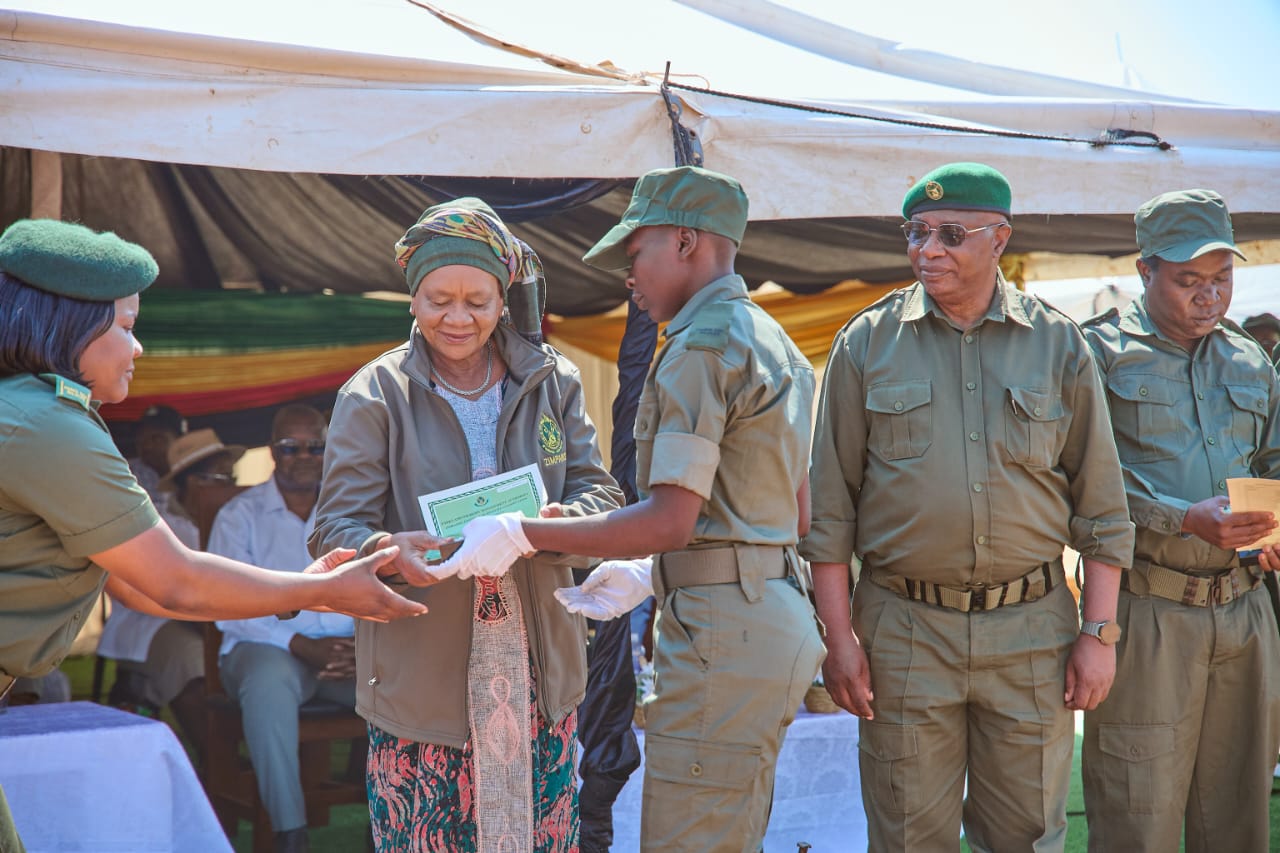
Harare, (New Ziana) — Nineteen-year-old Evernice Dzomba from Mbire District in Mashonaland Central Province joined the country’s growing ranks of female game rangers on Friday, after graduating from a three-month Zimbabwe Wildlife Management Authority (Zimparks) ranger training course.
She emerged the Best Shootist, female category, in the graduating class, cementing the important role that female rangers are now playing in conservation.
More and more young women are lately joining the ranks of game rangers, and conservation in general, work domains that previously were dominated by men because of the perceived dangers involved.
But, as threats to wildlife grow, and game ranger recruitment focus shifts towards communities surrounding protected areas, employment opportunities are opening up for women.
Dzomba was one of only 38 women in the graduating class of 165, and was selected from 30 applicants in Mbire Ward 11 after completing a rigorous recruitment process that included a 10-kilometre endurance run, physical fitness assessments and oral interviews.
They graduated after completing ZimParks’ Basic Ranger Training Course.
Dzomba was among 17 rangers sponsored by the Chewore Conservation Trust (CCT), which manages the 200,000-hectare Chewore South Safari Area in the Zambezi Valley under a 25-year collaborative management agreement with ZimParks.
In a statement on Saturday, the Chewore Conservation Trust said the graduation comes as Zimbabwe strengthens its ranger force to combat poaching, rising human-wildlife conflict and climate-related pressures that are reshaping wildlife habitats across the country.
Conservation organisations increasingly view recruiting rangers from communities bordering protected areas as critical to improving wildlife protection while creating employment opportunities in rural districts. The Chewore Conservation Trust (CCT), an implementation partner of Awe for Nature Foundation, is a Zimbabwe-based conservation organisation working to protect and restore the Chewore South Safari Area in the Zambezi Valley.
“I believed in myself, kept working hard, and proved to myself that I could do it,” Dzomba said. “I hope more girls and young women will realise that conservation is a career they can pursue.”
She said her father encouraged her to apply despite scepticism from some community members who believed ranger training would be too demanding for women.
Speaking during World Ranger Day commemorations, First Lady Dr. Auxillia Mnangagwa, in remarks delivered by Environment, Climate and Wildlife Minister Evelyn Ndlovu, praised rangers as the frontline defenders of Zimbabwe’s natural heritage.
“Behind every thriving protected area, every elephant roaming freely across our landscape, every recovering rhino population, every healthy forest and every flourishing wetland are dedicated men and women who have committed their lives to protecting these priceless national assets,” she said.
CCT Community Manager Simba Sandram said recruiting rangers from communities neighbouring Chewore South strengthens conservation partnerships.
“When someone from Mbire or Hurungwe puts on that uniform, they are protecting land their own families depend on. That kind of community leadership is what makes this partnership work,” he said.
The newly commissioned rangers trained at Ume Camp in Nyaminyami communal land under the Matusadona Conservation Trust in Kariba district, Mashonaland West Province. Their training covered ecological monitoring, patrol-based data collection, fieldcraft, firearms handling and human rights-based law enforcement.
CCT Head of Law Enforcement, Nicholas Chinembiri said the additional personnel would improve protection across the vast Chewore South landscape.
“Every recruit we add means better coverage and a faster response when it matters,” he said.
According to CCT, its ranger teams have already completed more than 1,266 anti-poaching patrol man-days this year.
Zimbabwe hosts some of Africa’s largest elephant populations and forms part of the Kavango-Zambezi Transfrontier Conservation Area, the world’s largest terrestrial conservation landscape shared by five Southern African countries.
However, prolonged droughts linked to climate change, illegal wildlife trafficking and increasing encounters between people and wildlife continue to test conservation efforts.
Across Southern Africa, governments and conservation partners have expanded community-based ranger programmes, recognising local participation as key to safeguarding biodiversity while supporting rural livelihoods.
This year’s World Ranger Day theme, “Rangers: Guardians of a Changing Planet,” underscored the increasingly complex role rangers play in protecting wildlife in an era of climate change and growing pressure on natural resources.
New Ziana