

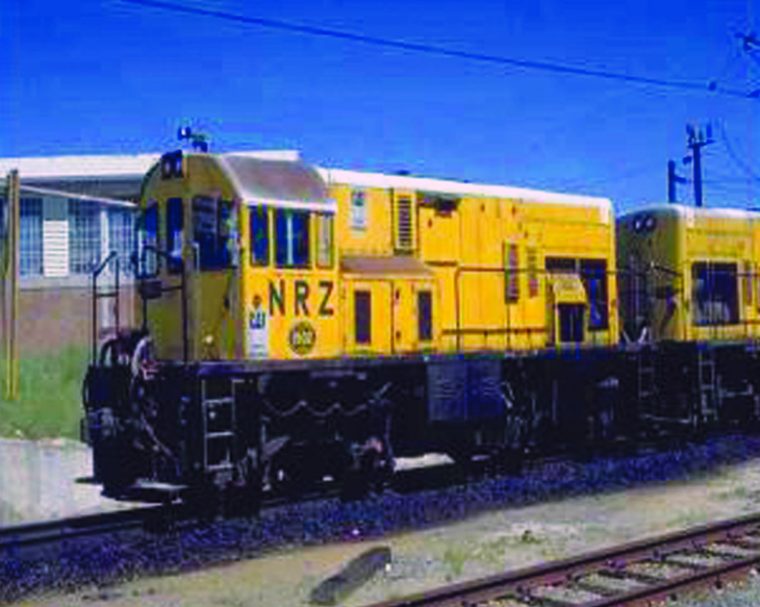
Harare (New Ziana)-The National Railways of Zimbabwe (NRZ) on Friday signed an $81.2 million deal with RITES of India, a state-owned engineering company, to procure new locomotives and wagons.
In its filing at the Indian Stock Exchange, RITES said it will supply the NRZ with 7 locomotives, 315 wagons, 5 diesel multiple units and infrastructure upgrades.
The NRZ last bought locomotives in 1992 and wagons in 1997.
“RITES signed a contract agreement with National Railways of Zimbabwe (NRZ) for the supply of rolling stock (3 000 HP Diesel Electric Locomotives and High Sided Open Wagons) worth $81,175,500,” the company reported through an exchange filing.
“However, the contract agreements are subject to the approval of funding by the funding agency,” RITES said.
The contract was signed during VP Chiwenga’s ongoing visit to India where he said: “We discussed our railway system and there is something that will be happening to our railways because it is important that it be revamped if our economy is to grow. As you know, the mining industry has gone up, the agriculture industry has gone up, the manufacturing is going up and we can’t continue to use the road.”
RITES, 72.2 percent owned by the Indian government, recently exported locomotives and wagons to Mozambique, which were commissioned at an event also attended by President Emmerson Mnangagwa.
Commenting on the deal, NRZ public relations manager Andrew Kunambura said talks about the deal started in 2022.
“The RITES of India supplied CFM of Mozambique locomotives and wagons and His Excellency the President of Zimbabwe was invited to the commissioning ceremony. After the ceremony NRZ was advised to pursue a similar deal with Rites of India.
“Engagements started in 2022 for procurement of 9 locomotives and 315 wagons and draft agreements were done. The Funding model will be a loan from India Exim guaranteed by the Afrexim Bank. The total amount for the transaction is USD81.2 million,” he said.
Lack of investment, particularly in freight wagons and the rail system, has affected the NRZ badly over the last two decades, reducing its cargo carrying capacity from an average 18 million tons per year in peak years, to just three million tons now.
New Ziana