Harare (New Ziana) – The Zimbabwe Republic Police (ZRP) has been hailed for ensuring that the environment leading up to, during and after the August 23 and 24 harmonised elections was peaceful.
Home Affairs and Cultural Heritage Minister, Kazembe Kazembe said this while addressing senior police officers attending a four-day conference at the ZRP Golf Club in the capital on Wednesday.
He said revelling in his re-appointment to the same portfolio, he had occasion to brag about the conduct of the ZRP to his Malawian counterpart while law enforcement agents in the Democratic Republic of Congo (DRC) were keen to learn how the Zimbabwean law enforcers managed the feat.
Attended by commanding and senior officers from around the country, the conference is a precursor to the Home Affairs and Cultural Heritage strategic retreat workshop scheduled for the end of this month and beginning of November.
“Allow me from the onset to applaud the ZRP for policing our just ended harmonised elections in an excellent way. Certainly, the professional approach to policing our just ended harmonised elections coupled with the government’s desire for a thriving democracy, are the key antidotes to realising our national vision for an upper middle-income economy by the year 2030,” said Kazembe.
He urged the police to remain vigilant as detractors disguised as champions of democracy have been lurking in the shadows since independence for an opportunity to waylay the gullible among the citizenry.
Kazemba said delegates to strategic review conferences should ask pertinent questions and make the necessary reforms such as thinking about aiding the human-centred approaches to policing with modern automated technologies.
He said he would delight in the rolling out of automated and integrated information systems across all departments in his and other Ministries considering that some countries deemed poorer than Zimbabwe had automated their policing systems.
Kazembe promised to vigorously pursue the upgrade the police information management and technology-aided policing as the country is faced with the enormous challenge of increasing criminal sophistry that needs to be matched with the acquisition of state-of-the-art technologies.
While police professionalism and selflessness often goes unnoticed, Kazembe commended the ZRP efforts to achieve a positive image in the public eye despite failing to meet some of its targets such as suppressing the growth of crime.
The police recorded 296 966 cases of crime between January and August this year, compared to 264 400 cases received the previous year, reflecting a 12 percent increase against plans to limit growth of crime to 7 percent, a target that had been reviewed upwards from 3 percent.
Such failure, Kazembe said, made it difficult for the parent Ministry to lobby for more resources for the police force while the ZRP capacity building program under the Second Republic compels everyone to up their game.
“I concede that the organisation just like any other government department has been through difficult periods but as resource support continues to be improved, it is central government’s legitimate expectation that key deliverables such as crime and public order management improve,” he said.
Kazembe expressed dismay at the violence recorded at Barbourfields Stadium on September 10 during a soccer match between Highlanders and Dynamos football clubs, which he described as a sobering litmus test for the capabilities of the police to handle spontaneous public disorder situations.
He called for the conference to do an evaluation of the effectiveness of obtaining public order management regimes, requisite equipment and selection of personnel for such incidences, while keeping in mind that in the pursuit of peace, security and order, the safety of the men and women in uniform is non-negotiable.
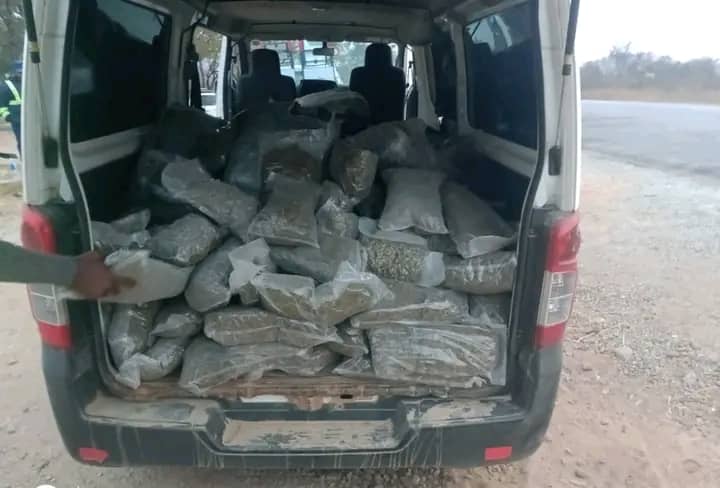
Also requiring a holistic multi-sectoral approach to be contained was the problem of drug and substance abuse with the taking of crystal methametraphine, cocaine, dagga and bronclear leaving many young people suffering various mental health challenges and posing a threat to national security.
New Ziana