By Johnson Siamachira
Harare, (New Ziana) – Zimbabwe’s poultry industry, vital for rural livelihoods and national food security, is on the brink of transformation. Smallholder farmers grapple with challenges like inefficient production systems, disease threats, and inadequate market access. However, a concerted effort involving government and development organisations aims to empower farmers and enhance production.
The Antimicrobial Resistance (AMR) Multi-Partner Trust Fund (MPTF) and the UKAID-supported Fleming Fund are leading initiatives to bolster poultry farming in Zimbabwe. Their One Health Antimicrobial resistance (AMR) projects focus on farmer education through a Farmer Field Schools (FFS), which promote responsible practices across animal and public health sectors. The project was implemented across eight districts : Bubi, Chegutu, Zvimba, Masvingo, Murewa, Marondera, Mutasa and Mutare while the second phase focussed on Beitbridge, Mangwe, Hurungwe and Kariba, tackling multifaceted issues affecting poultry production.
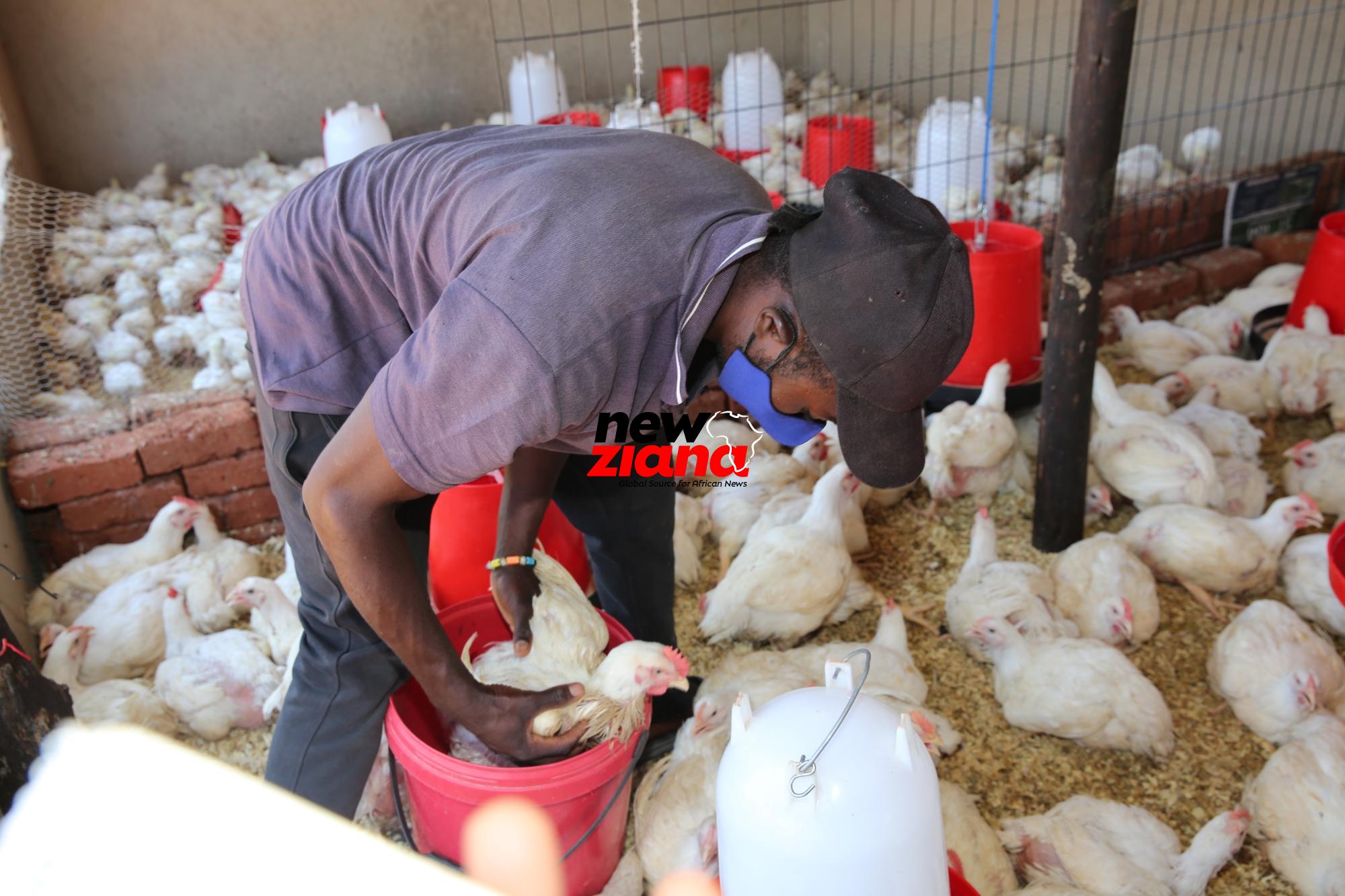
Zimbabwe’s poultry sector is burgeoning, with annual broiler production reaching approximately 100,000 tonnes. Despite the high demand for both indigenous and broiler breeds, farmers face daunting obstacles. Feed alone constitutes up to 70 per cent of production costs, compounded by competition from imported poultry and inconsistent supply chains.
In 2022, Talent Gogwe, a smallholder farmer in Mutare district’s Marange area in Manicaland Province, found herself at a crossroads. Starting with just 200 broiler chickens, she struggled with high mortality rates and frequent disease outbreaks due to poor management practices and inadequate knowledge. “I was raising chickens, but I didn’t know how to manage them. I was frustrated by the constant losses,” Gogwe recalls.
This changed when Gogwe participated in a Farmer Field School supported by the AMR Multi-Partner Trust Fund. The collaborative effort between the Food and Agriculture Organization (FAO) of the United Nations, the Zimbabwean government, and other partners focused on training farmers in biosecurity, husbandry, and responsible antimicrobial use.
The FFS model emphasises participatory learning, transforming farmers’ understanding of poultry management from reactive to preventive. After the training, Gogwe implemented practices that reduced reliance on antibiotics and AMR. “Now, my chickens are healthier, and I’ve seen a significant drop in mortality rates,” she says.
Zimbabwe’s poultry industry suffers from a significant skills gap, particularly among young farmers. Many lack access to practical training and modern farming techniques, hindering their potential contributions to food security and economic growth. The FAO and the government are committed to AMR programmes. empowering young entrepreneurs, especially women like Gogwe.
Together with other smallholder farmers, Gogwe participated in comprehensive training covering essential areas such as vaccination protocols, nutrition management, and poultry housing design. Her knowledge growth exemplifies the One Health approach. The One Health initiative links human, animal, and environmental health through improved farm hygiene, safer waste handling, and reduced antimicrobial misuse. ‘’This protects farmers and birds, limits environmental contamination, and lowers AMR transmission risk across sectors, ‘’ says Ministry of Health and Child Care Public Health Chief Director Dr Munyaradzi Dobbie.
“This is a demonstration of the Government of Zimbabwe’s commitment towards combatting AMR. The country is expected to secure additional resources to support the implementation of AMR activities,” Dr Dobbie adds.The initiative helped smallholder farmers like Gogwe rethink their livelihoods as a business. By introducing improved poultry production in rural areas, the initiative is empowering the smallholder farmers to take control of their food security and create new income-generating opportunities.
Gogwe’s transformative journey led her to expand her flock from 200 to 800 chickens, with plans for 2,000 if market conditions allow. The project also equips farmers with business skills, encompassing budgeting and marketing strategies. “This training has shifted my perspective to view farming as a family business, allowing us to achieve profits we never imagined,” she affirms.
“This new knowledge to look at farming as a family business, and the trainings in agribusiness budgeting and marketing, have changed my farming enterprise,” said Gogwe. “Before, we didn’t treat farming as a family business and, as a result, we couldn’t get any profits.”
Her poultry operation is not just about profit; it’s about community impact. Gogwe envisions creating job opportunities for local youth, particularly women. “Since starting my poultry business, my status in the village has grown. I am respected and now feel empowered to contribute significantly to my family and community,” she says.
Selling 100 chickens every six weeks at US$5 each, she generates a revenue stream that supports her family and allows her to invest in their future. This income enables Gogwe to provide better living conditions, including food, clothing, medication and education for her four children.
Dobbie says, “Gogwe’s progress shows the pressing need for practical skills and guidance for women and youth in agriculture.” Targeted training empowers these demographics to adopt safer farming methods, reducing the risks associated with AMR.
As Gogwe expands her business, she thrives as a role model for her peers, enhancing community awareness and promoting AMR-reducing practices. Her story encapsulates the essence of rural transformation in Zimbabwe, where dedicated interventions are reshaping agricultural landscapes.
In her words, “I feel more hopeful now than ever before. I’m not just running a small farm; I’m building a future.” Through initiatives like the AMR project, organisations are fostering youth and women’s engagement in agriculture, effectively creating opportunities that translate to improved livelihoods.
For farmers like Gogwe, the project has been more than just a technical intervention—it has been a catalyst for well-being and hope. Her journey reflects the broader transformation taking place in Zimbabwe’s rural areas, where knowledge, innovation and local commitment are reshaping the smallholder poultry sector.