
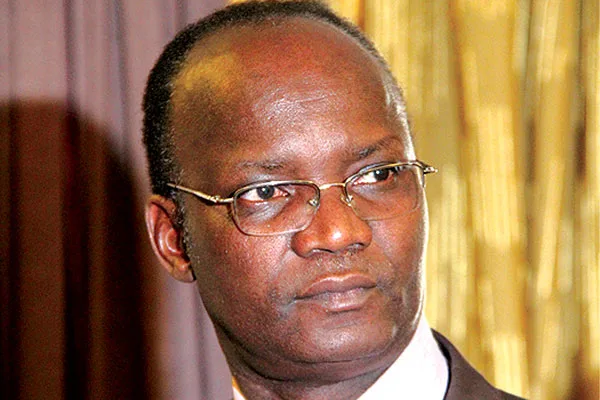
Harare, (New Ziana) – In a year that could have gone down in history as Zimbabwe’s renaissance, 2025 has instead been clouded by a torrent of doom-laden narratives—an endless cycle of misinformation and political theatrics designed to breed division and even flirt with coup rhetoric reminiscent of 2017, Professor Jonathan Moyo, a former top government official, has said.
Posting on his X handle, he said beneath this fog of cynicism lies a different story—one of resilience, recovery, and renewal.”Zimbabwe hasn’t just turned a corner; it’s charging ahead. But why are the country’s achievements buried under a barrage of unrelenting negativity? “The answer lies in the grip of amoral politics, a corrosive force that prioritises backward personal agendas over national unity,” he said.
Moyo noted that in March this year, Zimbabwean sports icon Kirsty Coventry made global history by becoming the first African and the first woman to be elected President of the International Olympic Committee (IOC). The seven-time Olympic medalist’s victory elevated Zimbabwe’s international profile, projecting the nation as a symbol of talent, integrity, and governance maturity.
Diplomatic analysts say Coventry’s presidency brings “soft power dividends” for the country—opening doors for deeper engagement with partners such as China and bolstering Harare’s ambitions for a future UN Security Council seat.
But despite the global applause, the milestone has struggled to receive full domestic recognition, drowned out by political noise and social media negativity, said Moyo. “Coventry’s presidency counters decades of isolation under sanctions, spotlighting the country’s potential for sports-led development, infrastructure investment, and youth inspiration.
“Yet, entangled in domestic political strife driven by amoral politics, the nation has struggled to fully capitalise on this windfall, allowing negative stereotypes to dilute its impact,” noted professor Moyo. He said according to the World Food Programme’s July 2025 Markets Monitoring Survey, Zimbabwe’s food security situation has improved dramatically with 97 percent of monitored markets reporting stable supplies of staple foods such as maize meal, sugar beans, and rice.
Maize meal prices fell by up to 11 percent in U.S. dollar terms, while rural household expenditure dropped 13 percent compared to six months earlier, with analysts attributing this turnaround to favourable rains, a stable local currency, and robust government–partner programs. For many rural families, the change has been transformative, yet online commentators have dismissed the progress as “propaganda,” reflecting how the politics of despair often eclipse tangible success, he said.
“Tragically, this narrative of abundance has been suffocated by the cacophony of despair peddled by amoral politicians and social media influencers fixated on negativity, who view the improved food security situation in the country as propaganda,” he said. Zimbabwe’s economy is also on the upswing with the World Bank (WB), International Monetary Fund (IMF), and African Development Bank (ADB) all projecting a six percent Gross Domestic Product (GDP) growth rate for 2025, outpacing the regional average of around three percent, noted professor Moyo.
He said this rebound is anchored on a good agricultural season, a mining boom driven by global demand for lithium and precious metals, and tighter fiscal policies that have helped stabilise the new ZiG currency. Inflation, he said, has eased to between 23 percent and 31 percent, while remittances and energy supply have improved.
Despite these gains, domestic political divisions continue to overshadow what international observers have described as “one of southern Africa’s most promising turnarounds,” said professor Moyo.
A major diplomatic breakthrough also looms as on September 11, 2025, the U.S. House of Representatives introduced Bill H.R. 5300, proposing the repeal and replacement of the two-decade-old Zimbabwe Democracy and Economic Recovery Act (ZDERA).
“If enacted, this could unlock infrastructure, health and education reforms, easing Zimbabwe’s path to normalised financial relations. “Currently in committee, the Bill heralds potential acceleration of progress, contingent on the political stability being undermined by fabricated discourses of despair churned churned out by amoral politicians and their social media influencers,” said professor Moyo.
He noted that once passed, the law would remove restrictions on international lending and shift focus to Zimbabwe’s arrears settlement framework, potentially unlocking new streams of development finance. Rounding off a year of milestones, he said that Forbes magazine named Zimbabwe the world’s top destination for 2025, citing its pristine landscapes, cultural richness, and growing tourism infrastructure.
Travel searches for Harare and Bulawayo soared by 56 percent and 80 percent respectively, while visitor interest in Victoria Falls, Great Zimbabwe, and the Eastern Highlands reached record highs, he said. The recognition promised to inject new life into the tourism and hospitality sectors—but again, domestic discourse was dominated by political bickering instead of celebration.
Analysts say the persistent negativity reflects what social scientists call amoral politics—a self-serving mindset that places factional interests above the national good. Borrowing from Edward C. Banfield’s book, The Moral Basis of a Backward Society, Zimbabwe’s political landscape mirrors the “amoral familism” Banfield described—where loyalty to one’s faction outweighs duty to the broader community, said professor Moyo.
This political culture, experts warn, has bred polarisation, distrust, and a perpetual cycle of misinformation. It rewards those who destroy rather than build, and silences genuine dialogue with insults and smear campaigns. Despite the noise, he said that Zimbabwe’s 2025 story is one of progress—historic global leadership, stronger food security, economic recovery, improved diplomatic engagement, and international recognition.
These are not isolated victories but signs of a nation reclaiming its potential with the challenge now being to silence the merchants of despair and build a culture that prioritizes unity over division. If 2025 is to be remembered accurately, it should not be as the year of political gloom, but as the year Zimbabwe rose above negativity and began to shape its own renaissance, said professor Moyo.
New Ziana