
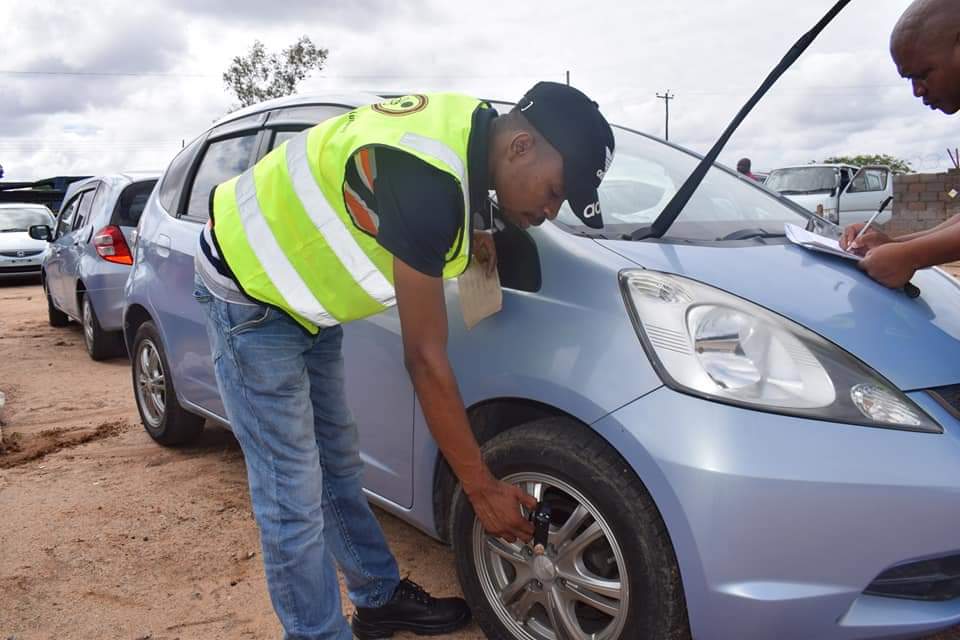
Harare (New Ziana) – The Radiation Protection Authority of Zimbabwe (RPAZ) has rolled out a massive screening exercise at the country’s ports of entry to inspect imported vehicles for possible radiation contamination, an official has said.
Inspection fees for light motor vehicles and minibuses are pegged at USD10 while owners of imported buses, heavy vehicles and haulage trucks will part with USD50.
The initiative is in line with the recently gazetted SI 281 of 2020 which states that: “Any person wishing to import a vehicle into Zimbabwe directly or indirectly from a country that experienced a level 2 and above incident on the International Nuclear and Radiological Event Scale specified in the fifth schedule must make a declaration in Form RP1 (“ declaration of inspection for radiation contamination of vehicles”) at the port of entry, stating where the vehicle is being imported from, and subject it to radiation contamination inspection by the authority upon payment of the prescribed fee.”
According to official statistics, Zimbabweans imported US$1.3 billion worth of second hand vehicles from 2015 to September 2020, mainly from Japan.
A few years ago, the Asian nation suffered a massive explosion at a nuclear power plant which led to contamination of vast areas in the country.
RPAZ spokesperson Chamu Murava said the authority had launched “historic” inspections at Beitbridge border post, the country’s busiest.
“We have launched the exercise in Beitbridge where we are operating from the three transit sheds in the border town. The majority of vehicle imports from Japan into Zimbabwe come via the border hence our presence there following the gazetting of SI 281 of 2020,” he said.
“Our teams are going around the country’s borders with the first team already at Chirundu at the moment from where they will travel to Plumtree doing feasibility studies. Our aim is to make sure we roll out the exercise to all the country’s border posts as soon as possible and ensure that we protect the people from the effects of radiation.”
Murava said the screening exercise was a global best practice.
“Cars that are found to be contaminated will be isolated and decontaminated on site by our inspectors. This is so that vehicle importers do not experience delays and the inconvenience of travelling from the transit sheds for decontamination,” he said.
The de-contamination fee is USD50 for light motor vehicles and minibuses and USD100 for buses, heavy vehicles and haulage trucks.
“Our studies indicate that there is no reason for anyone to panic when they are exposed to radiation from their vehicles. The exercise is precautionary given that Japan has a history of the Fukushima nuclear accident in 2011. This exercise is not unique to Zimbabwe alone but is standard practice meant to protect the people and the environment against possible exposure to radiation.”
According to SI 281, any person who does not comply with the regulations or who makes a false statement or declaration or falsifies any documents concerning the country of origin of a vehicle shall be guilty of an offence and liable to a fine not exceeding level 5 or imprisonment for a period not exceeding six months or both such fine and such imprisonment.
RPAZ is a regulatory body established under the Radiation Protection Act [Chapter 15:15] with a mandate to protect people and the environment from the adverse effects of radiation.
New Ziana