Bulawayo (New Ziana)-The recycling sector in Zimbabwe has potential to become a billion-dollar industry which can create thousands of green jobs for the populace, a cabinet minister has said.
Environment, Climate, Tourism and Hospitality Industry Minister Mangaliso Ndhlovu said this during commemorations to mark the Africa Environment Day whose theme this year was “Growing the Recycling Industry for a Sustainable Economy by 2030.”
The theme recognizes the key contribution of the recycling industry and the growth it has exhibited as the nation forges towards embracing the circular economy.
It also dovetails with the thrust to reduce land pollution by implementing sustainable waste management strategies such as waste separation at source, material recovery and recycling.
A circular economy is an economic system based on the reuse and regeneration of materials or products, especially as a means of continuing production in a sustainable or environmentally friendly way.
On the other hand, a linear economy is based on extraction, consumption, and disposal, which apparently has resulted in accumulation of numerous waste streams including hazardous and electronic waste, unsustainable energy consumption and high chemical usage which then destroys the ecosystems.
Ndlovu said recycling was a key component in scaling up and replicating the circular economic model.
“There is need to explore the best options in terms of disposal, as we sustain our shift from the linear to the circular economy,” he said.
Currently, Zimbabwe recycles only 10 percent of its waste, hence the need to support, enhance and improve the capacity of the sector.
The country has 75 established players in the recycling industry, some of whom are involved either directly or indirectly.
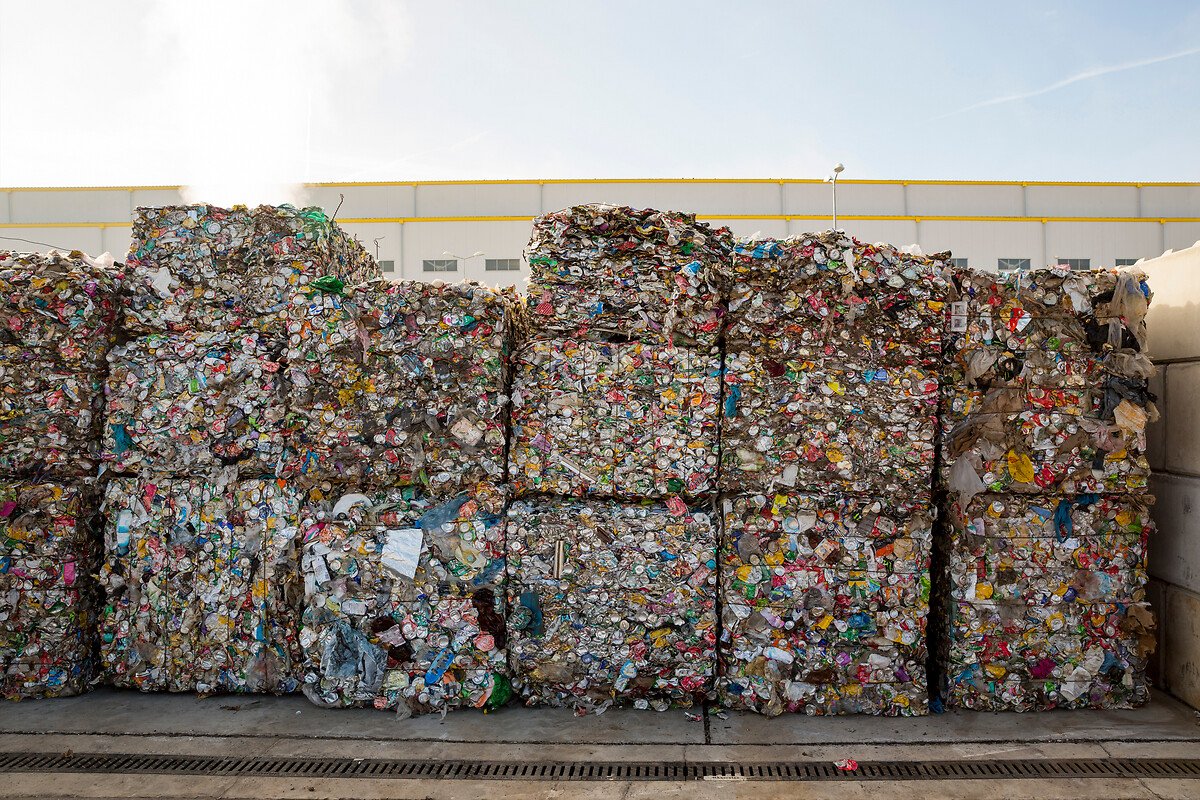
Ndlovu said the bulk of the players in the country recycled plastic, low density polyethylene (LDPE) and high-density polyethylene (HDPE) as well as scrap metal.
“A few companies recycle polyethylene terephthalate (Pet), paper and beverage cans. Recycling is mainly concentrated in Harare,” he said.
He applauded all recyclers for the crucial role they were playing towards the economy and environmental sustainability.
“In order to enhance the functioning of the recycling industry, my Ministry, through the Environmental Management Agency and its partners, has established 150 waste transfer stations across the country, where members of the public can dispose of their separated recyclable material.
“I urge all citizens to take advantage of this facility and utilize it so as to create a clean, safe and healthy environment,” he said.
According to the Integrated Solid Waste Management plan, the country produces an estimated 1.65 million tonne of waste per annum, 90 percent of which can either be reused, recycled, or composted.
The Africa Environmental Day was designated in 2002 by the then Organization of African Union (OAU) Council of Ministers in Durban, South Africa, in recognition of the numerous environmental challenges confronting the African continent and the need to establish lasting, innovative nature-based solutions to these challenges.
In January 2012, the African Union (AU) adopted a decision calling for the joint celebrations of the AED and Wangari Maathai Day in recognition of the work and life of the late Professor Wangari Maathai, who dedicated her life to promoting environmental conservation and sustainable development in Africa.
New Ziana