By Tapiwa Chawagarira
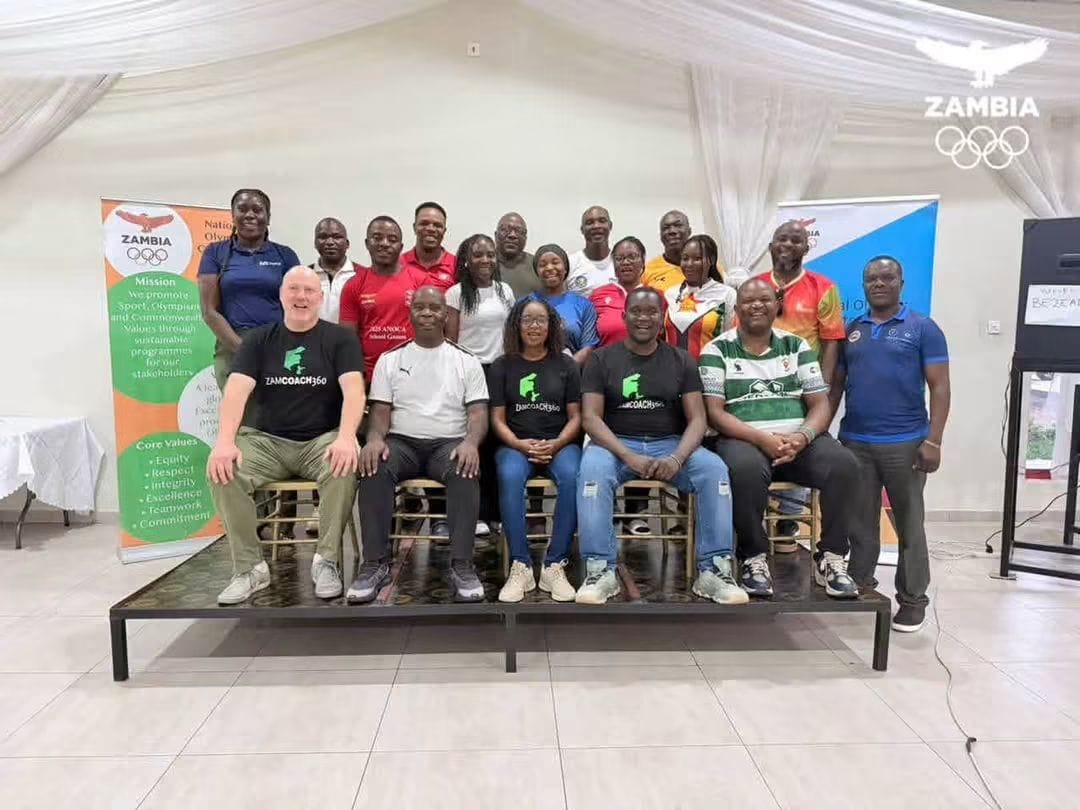
ZAMBIA—The opening phase of the International Council for Coaching Excellence (ICCE) Cohort 5 Coach Developers Training Programme has concluded in Lusaka, Zambia, bringing together sports coaching and coach education practitioners from Zimbabwe, Zambia, and Malawi.
The week-long intensive programme, which ended on Friday, brought together 13 participants from the three countries as part of a regional effort to strengthen coaching systems and to develop a sustainable pool of qualified coach developers.
The training was coordinated by Zimbabwe Olympic Committee programmes officer Newman Gomendo, with Zimbabwe represented by Americo Juma (baseball), Sharon Ndhlovu (tennis), Daniella Phiri (rowing), and Tapiwa Mungate (rowing).
The regional initiative is funded through Olympic Solidarity and is supported by the Norwegian Olympic and Paralympic Committee and Confederation of Sports (NIF), together with the ICCE.
The programme is designed to enhance the capacity of coach developers, who play a critical role in supporting coaches, improving coach education programmes, and ultimately raising the quality of sporting performance across the region.
NIF/ICCE expert and lead facilitator Pelle Kvalsund led the Lusaka phase, working alongside local Zambian facilitators Ntasuwila Namukonda and Mwape Konsolo.
The first phase focused on equipping participants with the knowledge, skills, and competencies required to effectively support the development of coaches within their respective sporting systems.
The regional approach also provided participants with an opportunity to exchange experiences, share challenges, and explore approaches to strengthening coach education across different sporting environments.
Following the successful completion of the Lusaka phase, participants will proceed to the second phase of the programme in Zimbabwe, where they will consolidate the knowledge and skills acquired during the initial training.
The Zimbabwe phase will also provide participants with an opportunity to demonstrate their core competencies as they progress towards completing the coach developers programme.
The second phase will mark the beginning of six months of continuous assessment, mentoring, monitoring, and evaluation, ensuring that participants are not only able to understand the principles covered during the training, but also can effectively apply them within their respective sporting structures.
For Zimbabwe, the programme presents an opportunity to strengthen the country’s coach education framework while building a wider network of coach developers capable of supporting coaches at different levels of sport.
The initiative also reflects the growing emphasis on sustainable human resource development within sport, with effective coach education regarded as an important component in improving athlete development and sporting performance.
With the first phase now completed, attention shifts to Zimbabwe, where participants will continue their development through practical application, mentorship and ongoing assessment as they work towards becoming fully equipped coach developers.