

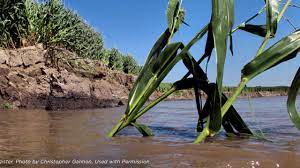
THIS is the growing of crops within a radius of 30 meters of a wetland such as a
river, dam or lake. This practice clogs up the rivers with silt, destroying the habitat of
fish and other forms of life in rivers.
Impacts of stream bank cultivation
It reduces the carrying capacity of rivers, which then negatively affects the
quality and quantity water bodies and aquatic life.
It results in major siltation which is regarded as the gross or undesirable
increase of sand in rivers overlapping the water volume.
Siltation then leads to shortage of water or the fast drying up of rivers, leading
to early drought.
The reduction of river carrying capacity increases the chances of floods in the
area where the river is located.
The massive loads of sand under water makes it impossible for water uptake
by the river which then leaves room for the water to spread out to the adjacent
land and eventually flooding people’s homes. This, therefore, leads to the
relocation of people in affected areas.
Also some activities practised by the stream bank farmers contribute to water
quality problems. For instance, routine agricultural applications of fertilizers
and pesticides negatively affects water though nitrate leaching.
Nitrate leaching is the washing away of nitrogen which then settles in the crust
of the river and become very difficult to remove thus causing water quality
problems.
Methemoglobinemia is a disease mostly affecting people who drink water
from these contaminated sources.
What the law says about stream bank cultivation in Zimbabwe
Stream bank cultivation is a cause for concern and hence the Government of
Zimbabwe has empowered (EMA) through section 20 of the Environment
Management (Environmental Impact Assessment and Ecosystems Protection)
Regulations, 2007 to penalise anyone practising stream bank cultivation. According
to the regulations, it is an offence to dig or cultivate on land within 30 metres of a
naturally defined bank or the highest flood level of a public stream or water
impoundment without a licence issued by the Agency. The public is thus advised to
work hand in hand with EMA officers and Agritex officers in setting up cultivation
plots close to water bodies.


Munhumutapa Cup quarter-finals set for thrilling action
By Tapiwa Chawagarira HARARE — Attention turns to the ZIFA Munhumutapa...