MUTOKO- It was a hive of activity in this normally quiet town of Mashonaland East
when it hosted the second edition of the Sadc Anti Sanctions Solidarity Summit
(SASS) last Wednesday.
The first edition of SASS was held in Harare last year as part of the country’s
international image building mandate as prescribed by the National Development
Strategy 1 (NDS 1).
SASS was conceptualised to promote truthful reporting on the illegality of sanctions
and the adverse existential impact they have exerted on the national economy
particularly in the banking sector, technology transfer, industrial equipment
importation. However, the country has proved that it can develop inspite of the illegal
sanctions and good and services on offer were proof enough of the steps Zimbabwe
was taking in its march towards a middle income economy.
The Second Republic introduced transformative economic initiatives that have
directly and positively impacted the country’s agricultural, mining and tourism sectors
to curtail expectations of the illegal sanctions architects.
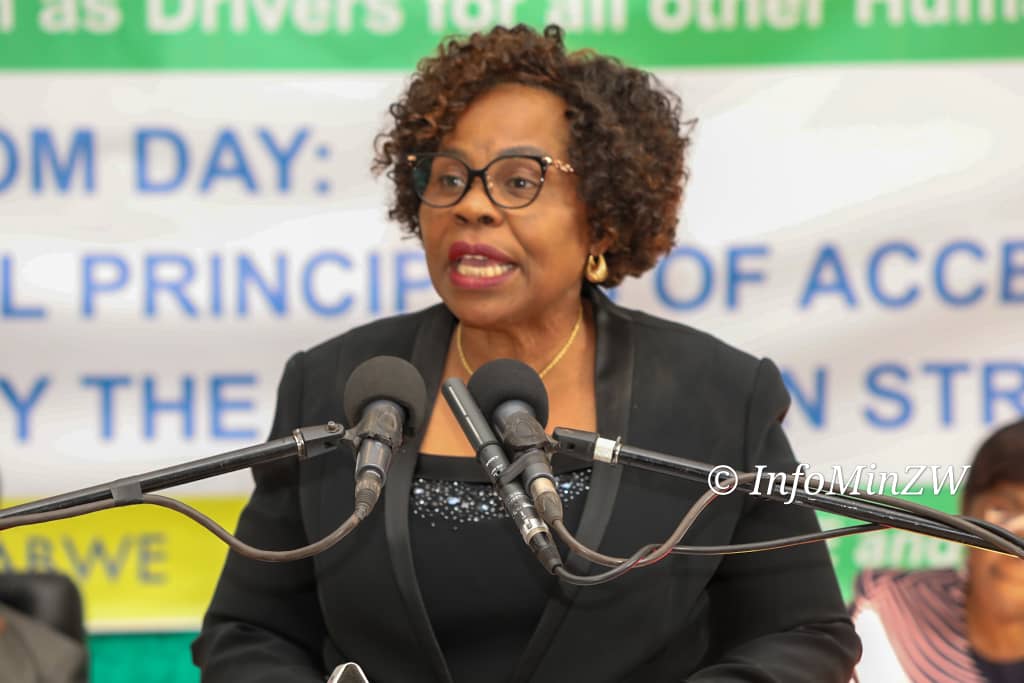
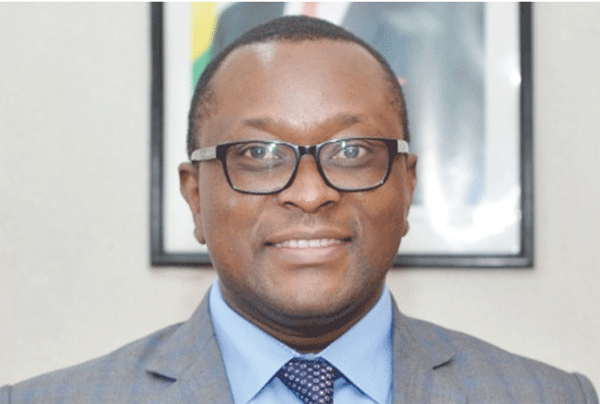
Information, Publicity and Broadcasting Services Minister, Dr Jenfan Muswere,
officiated at the second edition of the SADC Anti-Sanctions Solidarity Summit
(SASS) in Mutoko where he was full of praise of the resilience of the country’s
people.
He said: “The illegal sanctions initially stifled the growth of the agriculture. Likewise,
the mining sector has not been spared from these challenges. The medical sector
was also paralysed by the sanctions at some point.”
Although Zimbabwe has been denied access to international credit lines its inward
looking policies enabled the country to entirely fund the fight against COVID 19
pandemic.
“In reversing the menacing impact of sanctions as a tool to undermine our national
democracy and economic sovereignty, President Mnangagwa initiated the
engagement and re-engagement policy. In so doing, the President repositioned
Zimbabwe’s diplomatic outlook for accelerated investment inflows to our country.”
At the SASS, several Government Ministries and their departments as well as private
entities exhibited their goods and services which have been introduced or
implemented in the face of the illegal sanctions imposed on the country by the United
States of America and other Western powers.
The peaceful environment prevailing in the country allows for people to carry out
their day-to-day activities in a conducive atmosphere.
“Industrial growth has overtaken the stagnation that the sector had endured prior to
the birth of the Second Republic. Therefore, the Anti-Sanctions Business Expo gives
an immaculate display of that fact and show to a greater extent that Zimbabwe
Government Departments are deepening their mandate and impacting the
livelihoods of our people. The Expo also demonstrates growth of industry and indeed
affirming that indeed ‘Zimbabwe is Open for Business’.
The Minister noted that the peace being enjoyed in the country was a result of
several measures taken by the government such as the establishment of the
National Peace and Reconciliation Commission (NPRC) and an inclusive dialogue
platform for all political parties under the Political Actors Dialogue (POLAD).
“Our President has proved beyond doubt that his reform-anchored leadership
stance is aligned to the advancement of sovereign interests over external demands
for governance and democracy prescriptions. It is on that basis that the President
has rallied all Zimbabweans under the Nyika Inovakwa Nevene Vayo philosophy.
All of us must emulate his inclination for hard-work and creation of innovative solutions
for inward focused national development,” Dr Muswere said.
He applauded President Mnangagwa for his diplomatic genius that led to other
Southern African Development Committee (SADC) to join in the chorus on the lifting
of the embargoes imposed on Zimbabwe.
“Within a short period of his previous term, our Chief Diplomat had compelled SADC,
President Mnangagwa managed to advance our cause for the immediate and
unconditional removal of the sanctions.This elaborates how his vision is closely
intertwined to making Zimbabwe a respected actor in the international arena.
Dr Muswere challenged the media to be pro-active in exposing how the illegal
sanctions were sabotaging national interests. He hinted that more radio stations will
be opened at tertiary institutions as part of the broader agenda to fighting sanctions.
“The successful hosting of SASS 2023 is synonymous with the success of the Fast
Track Land Reform Programme. Our tobacco output for the global market is evident
of this fact. Our horticulture export dividend is a key indicator worth mentioning.
Given the irreversibility of the land reform and success stories peculiar to it, the
media has a role to play in promoting it so that future generations may bestow value
in the land.
“Therefore, I urge all media players to take advantage of Government’s initiative to
free the airwaves so as to enable the public to freely call for the conditional removal
of sanctions. The tertiary institutions and distinguished academics present at this
forum are proof of the centrality of the role of higher education in shaping the
national development agenda. The innovation hubs in all our universities depict the
substantial technological creativity which our education can offer to the national
economy.
“With the launch of more campus radio stations, the Ministry of Information, Publicity
Broadcasting Services intends to cultivate an organic intellectual consciousness to
our students which upholds and defends national interest. The anti-sanctions fight is
part of this broader agenda,” he said.