
Antony Chawagarira
CHIREDZI – Small-scale farmers are increasingly turning to two-wheel tractors as a cost-effective solution to labour shortages and the challenges associated with conventional farming methods.
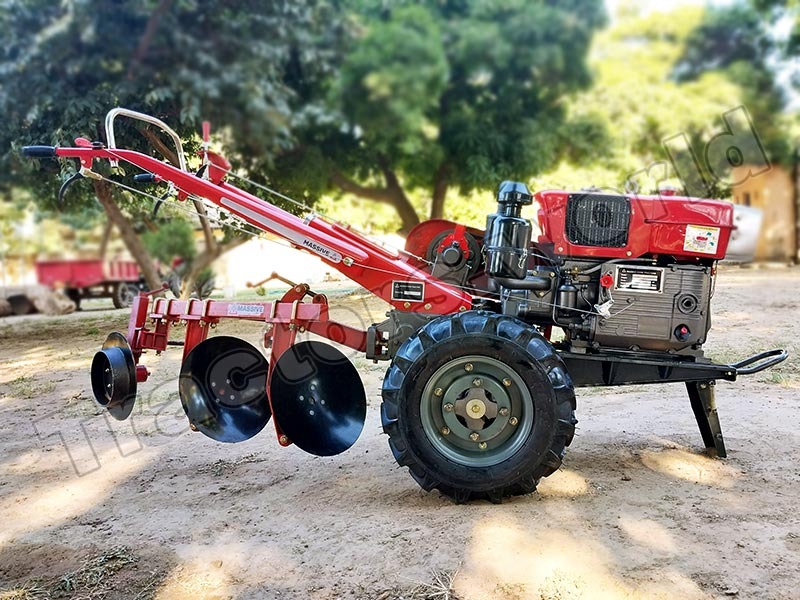
The compact machines, also known as walking or hand tractors, are gaining traction among farmers because of their versatility, affordability and ability to perform several agricultural tasks that would otherwise require significant manual labour or expensive machinery.
For sugarcane farmer Erisha Tamirepi of Farm 4, Lot 6 Essenby in Chiredzi, the two-wheel tractor has become an important part of his farming operations.
Tamirepi said the machine had eased land preparation and other farm activities, allowing him to save both time and labour.
“Using the two-wheel tractor has made farming much easier for me. It reduces the amount of manual labour required and allows me to complete tasks in a shorter period,” he said.
He said the machine was particularly useful for small-scale farmers who cannot afford conventional tractors and their associated maintenance costs.
Chiredzi District Agricultural Extension Services (Agritex) Officer Tongai Bodi said the adoption of two-wheel tractors was an important step towards improving mechanisation among small-scale farmers.
“Two-wheel tractors are helping farmers overcome some of the challenges associated with labour and draught-power shortages. Their affordability and versatility make them suitable for small-scale farmers, particularly those working on smaller pieces of land,” Bodi said.
He said farmers could also use the machines for more than just land preparation, including transportation and other activities, depending on the available attachments.
“This technology has the potential to improve efficiency and reduce the drudgery associated with manual farming. We encourage farmers to embrace appropriate mechanisation that can increase productivity while reducing production costs,” Bodi said.
The growing use of two-wheel tractors comes at a time when Zimbabwe is seeking to accelerate agricultural mechanisation and improve productivity among small-scale farmers.
Unlike conventional tractors, two-wheel tractors are relatively compact and can be operated by walking behind the machine. They can also be fitted with different implements for activities such as ploughing, planting, weeding, transportation, shelling and threshing.
Their versatility makes them suitable for fragmented pieces of land where large tractors can be difficult to manoeuvre.
The technology has already demonstrated its potential to transform small-scale farming.
Research and development partners have promoted two-wheel tractors as labour-saving technologies, with farmers reporting improvements in efficiency and opportunities to diversify their sources of income.
A 2025 report by the International Maize and Wheat Improvement Centre (CIMMYT) highlighted the experience of Masvingo farmer Ranganai Muzorori, who said a two-wheel tractor had improved his earnings while reducing the burden of land preparation and maize shelling.
The machinery also created opportunities for farmers to provide services to other members of their communities.
For Tamirepi, the benefits go beyond simply replacing manual labour. He said wider access to affordable mechanisation could help farmers improve productivity and make agriculture more attractive, particularly to younger people.
The machines can also support rural economies by creating opportunities for owners to offer mechanisation services to neighbouring farmers.
Agricultural experts have previously noted that labour-intensive farming disproportionately affects women and young people, while shortages of draught power can delay land preparation and planting, ultimately affecting yields.
Two-wheel tractors provide an alternative by enabling farmers to carry out critical operations within shorter periods and at a lower cost than conventional tractor hire.
As Zimbabwe pushes towards increased food production, mechanisation and climate-resilient agriculture, the experience of farmers such as Tamirepi points to the potential of small-scale machinery in transforming rural farming systems.
For farmers, wider adoption of the technology could provide a practical bridge between traditional farming methods and modern mechanised agriculture, while improving efficiency and strengthening livelihoods.