Harare (New Ziana) – Power supplies to wheat farmers for this year’s winter wheat cropping programme have been ring fenced to ensure smooth operations, a senior government official has said.
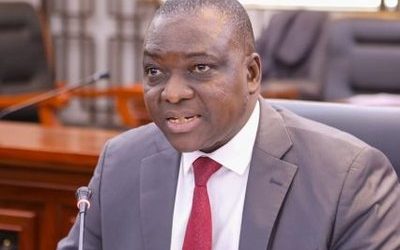
In a tweet accompanied with a statement from the Zimbabwe Electricity Supply Authority (ZESA) on Monday, Lands, Agriculture, Fisheries, Water and Rural Development permanent secretary, John Bhasera said power has been ring-fenced to all wheat production clusters in the 2023 winter wheat programme.
“Subsequent to the recent update on the power supply situation on 25 April 2023, ZESA Holdings is pleased to announce that mechanisms have been put in place to guarantee electricity supply to all the winter wheat farmers across the country,” ZESA said in a statement.
“The utility is cognisant of its role and expectations in powering this sector to achieve wheat self-sufficiency and meat the government’s target of 85 000ha for the year 2023. Accordingly, the utility has put in place the requisite modalities to ring fence 120MW towards this national initiative.”
The winter wheat planting season runs from April to mid-May.
To minimise the duration of power outages due to network faults throughout the season, the utility has established support groups for winter wheat farmers for effective communication and expeditious resolution of the faults, ZESA said.
It encouraged farmers to join these groups through their cluster leadership.
During the 2022 season, Zimbabwe achieved wheat self-sufficiency with a harvest of 375 000 tonnes, well above the minimum 360 000 tonnes that the country needs per year.
The country targets to have 85 000ha under wheat this year from which it expects 408 000 tonnes with the crop supported through private contractors, the government’s National Enhanced Agricultural Productivity Scheme (NEAPS), the Presidential Wheat Support Scheme and self-financed growers.
Self-sufficiency has become a key issue because of the global wheat supply disruptions caused by the Russia-Ukraine war.
The two countries account for 26 percent of global supply of the commodity.
New Ziana