HARARE — Young entrepreneurs are calling on financial institutions and policymakers to ease lending requirements and improve access to productive land, saying the measures would help youth-led businesses grow, create jobs and contribute to economic development.
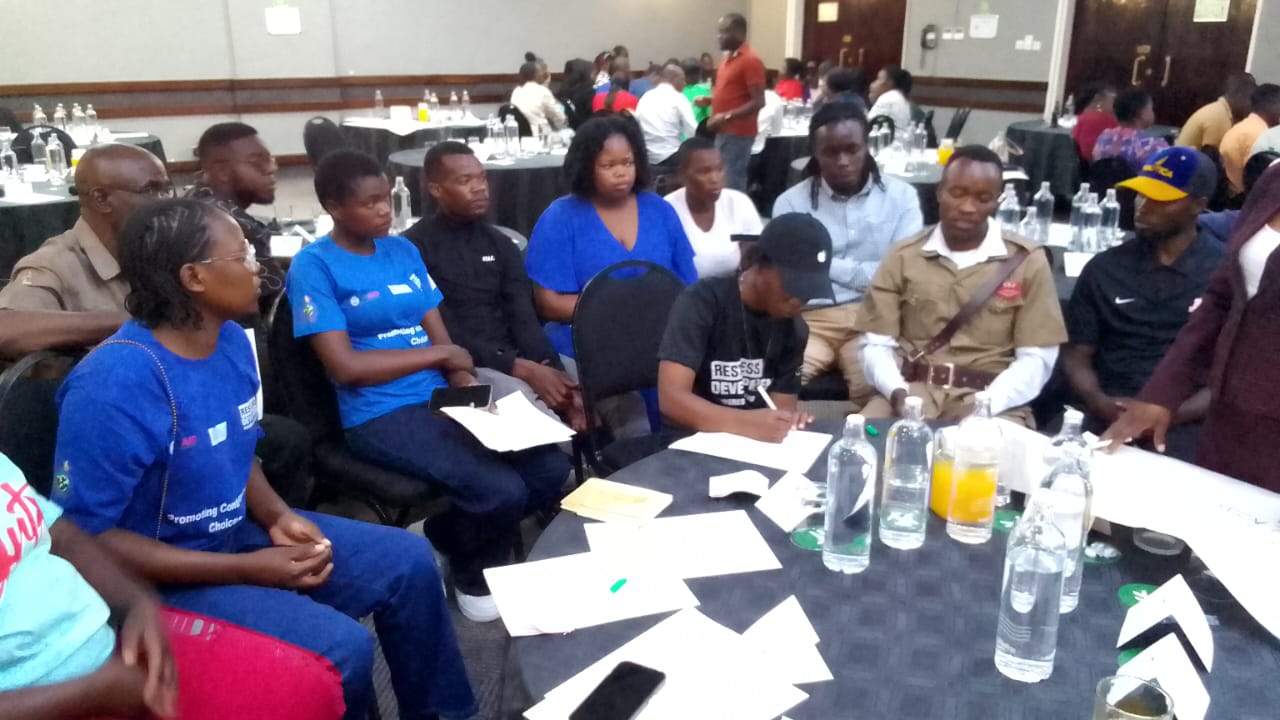
Speaking on the sidelines of a stakeholder engagement meeting with youth from Nyanga and Harare in Harare on Thursday, young researcher with Restless Development, Tanatswa Mukundu, said stringent banking requirements were excluding many young entrepreneurs from formal financing.
Mukundu said requirements such as proof of residence, formal business premises and a City of Harare licence were difficult for young people who were still operating from their parents’ homes or renting facilities.
“When we go to the bank to seek a loan, they ask us for proof of residence and require documents such as a City of Harare licence. Some of these requirements are not feasible for young people,” Mukundu said.
She said the cost of obtaining a council licence was particularly challenging for entrepreneurs who were already seeking loans because they lacked sufficient capital to establish or expand their businesses.
“We are going to the banks to look for loans because we don’t have finances. So we want money from them, but we have to produce money to get the City of Harare licence so that we can get money. It’s not easy,” she said.
Mukundu urged banks to dedicate a portion of their lending portfolios to young entrepreneurs and provide financing at more affordable interest rates.
“Our solution is that banks can reserve small percentages of loans for the youth. From that small percentage, we ask that there be low interest rates because the interest is too high for us,” she said.
She said access to land was another major constraint, particularly for young people seeking to establish agriculture-based enterprises.
Mukundu called for reforms to make land available for youth-led agricultural businesses, arguing that young entrepreneurs should have opportunities to establish viable enterprises closer to their communities.
“We are saying that when it comes to land, lawmakers should reform the existing laws so that land can be set aside for the youth for agricultural-led businesses,” she said.
She also called for authorities to identify idle and underutilised land and make it available to young people interested in productive agricultural activities.
“Most land in the country is lying idle and is also underutilised. So, as youth, we are asking that they identify this kind of land that is remaining idle or vacant and list it for us,” Mukundu said.
She suggested that landowners could be offered incentives, including reduced taxes, to make underutilised land available to young entrepreneurs.
Such measures, she said, could help bridge the gap between landowners and young people who lack access to productive land but are eager to establish businesses and create employment.
Meanwhile, Restless Development livelihoods officer Munyaradzi Mhike said the organisation was working with young farmers in Nyanga while strengthening links between them and government institutions.
The project is being implemented across seven wards in Nyanga and has adopted a government-wide approach involving various ministries, departments and private-sector stakeholders.
“We have adopted the government-wide approach whereby all government departments, stakeholders and the private sector join together and implement the project,” Mhike said.
The initiative involves the Ministries of Agriculture, Youth and Women Affairs, as well as the Department of Veterinary Services and the Department of Social Development.
A key component of the programme is the Mobile Agriculture Excellence Caravan, which brings together government departments to provide training and other services to young farmers.
Mhike said the caravan had developed three training models covering business development, entrepreneurship and financial literacy.
“These three models are the ones that they are using to train young farmers so that, at the end of the day, these young farmers are equipped with knowledge and skills so that their business projects can at least be uplifted to another level,” he said.
Beyond training, the project is also seeking to address one of the major challenges facing young farmers — access to markets.
“Young farmers have complained that, yes, we are doing agriculture, but the challenging part that we are facing is markets,” Mhike said.
He said government departments involved in the mobile caravan were working to establish links between young farmers and potential buyers, including hotels and companies.
The stakeholder engagement meeting was aimed at giving young farmers an opportunity to engage directly with policymakers and government officials over challenges affecting their businesses.
Mhike said the meetings were also intended to help young farmers identify the government offices and officials they could approach when seeking assistance.
“What we are doing here today is called an engagement meeting with policymakers and government stakeholders, so that young farmers have an opportunity to share their challenges and gaps with the stakeholders,” he said.
He said many young farmers were aware of the existence of various government departments but did not necessarily know the officials responsible for those departments at district level.
The engagements would therefore help government officials gain a better understanding of the activities and needs of young farmers while enabling farmers to establish relationships with officials they may need to approach in future.
“We invited the District Development Coordinator for Nyanga to come and have an interaction with young farmers so that at least the District Development Coordinator knows what young farmers want and also has an appreciation of what they are doing,” Mhike said.