
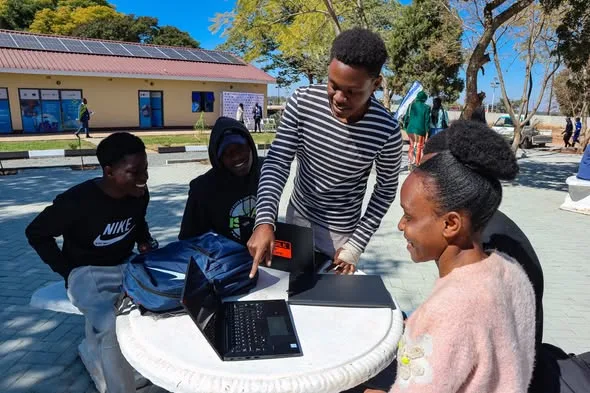

Harare, (New Ziana) — A total of 312 youths, consisting of 228 males and 84 females from the Ruwa and Chitungwiza Vocational Training Centres on Friday graduated from various technical and enterprise courses in a major step towards building the human capital base of the country as well as attainment of the vision to attain upper middle income status by 2030.
The graduation ceremony also coincided with the official commissioning of the Ruwa Social Innovation Hub, a move aimed at accelerating progress towards the vision to become an upper middle income society by 2030.
“Today is a day of celebration, transformation, and promise. We honour the achievements of 312 young Zimbabweans who have successfully completed their vocational training. Additionally, we are unveiling a bold new chapter in youth innovation and climate-conscious enterprise with the commissioning of the Ruwa Social Innovation Hub,” said Youth Empowerment, Development and Vocational Training Minister Tinomudaishe Machakaire who was the guest of honour at the event.
He said this year the graduation theme “Innovate, Digitalize, and Enterprise: Training and Skills Development Combating Drug and Substance Abuse” was more than a slogan, as it was a rallying call reflecting the urgency of addressing Zimbabwe’s escalating drug and substance abuse crisis.
“This crisis threatens to undermine the potential of an entire generation,” Machakaire warned. “Skills training is not just an economic intervention, it is a social vaccine. It restores dignity, builds identity, and offers a pathway to purpose,” he said
Under the Training for Enterprise Curriculum, the two vocational centres have expanded offerings in carpentry, bricklaying, cosmetology, automobile electronics, motor mechanics, hotel and catering, and clothing.
Every course now integrates entrepreneurship, ICT-based teaching methods, and industry-aligned training through strategic partnerships. Machakaire said Government would continue supporting the centres with infrastructure upgrades, modern equipment, and incubation facilities to nurture young artisans and entrepreneurs.
A major highlight was the commissioning of the Ruwa Social Innovation Hub, a collaboration powered by BOOST and supported by the Ministry of Youth, the Ministry of Information Communication Technology, the Zimbabwe Youth Council, ZB Bank, UNICEF and the European Union.
The hub will provide a collaborative platform for young innovators working on green technologies, digital solutions, and sustainable business models as well as give youth access to mentorship, clean technologies, enterprise development training, and global innovation networks.
Machakaire said the initiative aligns with the African Union’s Agenda 2063 and the country’s National Development Strategy 2, positioning it to build an upper-middle-income society by 2030.
UNICEF representative to Zimbabwe Etona Ekole praised the partnership behind the hub, describing it as a model of how the government, the private sector and development partners can collaborate to empower young people.
“This hub shows what is possible when government, private sector, public partners, and young people work together — what we call in UNICEF a Public-Private-Youth Partnership,” she said. “It is more than a building. It is a space where ideas can grow, where skills can be sharpened, and where young people can acquire 21st-century skills.”
Ekole noted that young Zimbabweans continue to face significant challenges, including a 37 percent unemployment rate, even higher in urban areas, an a high proportion of youths out of education or training, at 49 percent while drug and substance abuse were exposing young people to numerous social and health risks.
She also highlighted the mismatch between classroom learning and real-world labour demands, describing the hub as part of the solution.
“It aligns with the Zimbabwe Digital Skills Development Program launched by President Mnangagwa earlier this year, which aims to reach 1.5 million young people with digital literacy and skills.”
Ekole said UNICEF and its partners were committed to scaling the innovation hub model to all 60 Vocational Training Centres throughout the country.
The opening of the Ruwa Social Innovation Hub and the graduation of 312 young trainees mark a renewed push for youth empowerment through practical skills, digital readiness, and climate-smart enterprise, laying a firm foundation for Zimbabwe’s future innovators and economic drivers.
New Ziana

