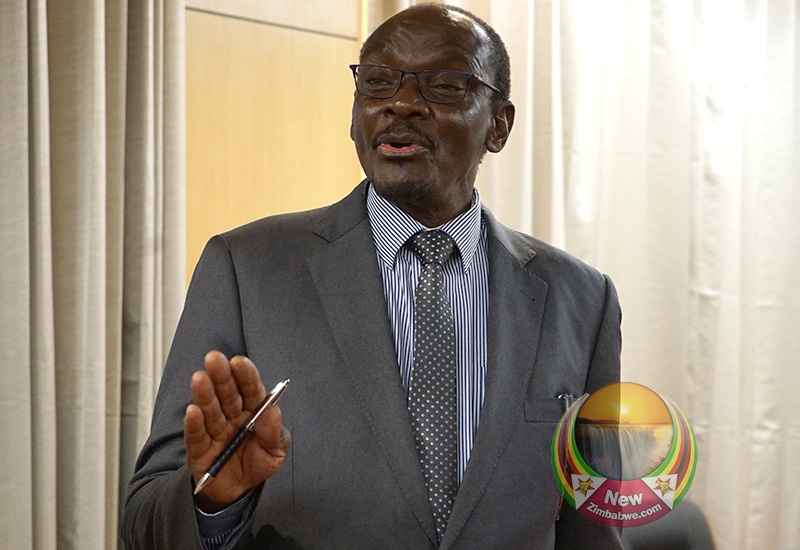
Harare, (New Ziana) – As veld fires continue to pose a significant threat to the sustainable management of Zimbabwe’s natural resource capital, Vice President Kembo Mohadi on Wednesday called for a multi-sectoral approach to promoting prevention measures.
He was speaking at the launch of the National Fire Week and the Integrated Fire Management Capacity Building and Knowledge Exchange Project, conducted in partnership with the Food and Agriculture Organization (FAO).
The launch was held in Goromonzi district of Mashonaland East province under the theme: “Prevent, Protect, Preserve: Combating Veld Fires Together.”
“Veld fires adversely affect key economic sectors such as agriculture, wildlife, and forestry. These fires destroy biodiversity, degrade grazing land, reduce agricultural productivity, and damage property and infrastructure.
“This marks the commencement of national veld fire preparedness. We must also empower communities with knowledge, firefighting equipment, and early warning systems. I therefore call upon our development partners to assist in this regard. The government cannot win this battle alone,” he said.
VP Mohadi added that the FAO’s involvement in Zimbabwe’s fight against veld fires reflects the international community’s confidence in the country’s commitment to environmental protection, climate resilience, and sustainable land management.
The second week of May has been designated as the National Fire Week Launch (NFWL), marking the beginning of the national anti-veld fire campaign.
This period is traditionally associated with the winter season, but in recent years it has increasingly been characterised by the onset of hot and dry conditions due to climate change.
“This shift has heightened the urgency for early preparedness and proactive fire management interventions. It is a time for reflection, awareness, and collective action against the scourge of veld fires,” VP Mohadi said.
In preparation for the 2026 fire season, the Environmental Management Agency conducted a fire risk assessment to identify high-risk zones across the country.
The assessment indicates that 41.93 percent of the country is at high risk, 31.95 percent at medium risk, and 11.69 percent at extreme risk of veld fires.
Provinces along the Highveld, namely Mashonaland West, Mashonaland East, Mashonaland Central, Manicaland, and Midlands, remain the most susceptible to veld fires.
The 2026 veld fire prediction indicates that areas at extreme risk have expanded into zones that were traditionally classified as medium risk.
New Ziana