

Antony Chawagarira
Beatrice-As Zimbabwe increasingly shifts towards drought-resistant crops amid changing climate conditions, a Beatrice farmer has called for urgent reforms in agricultural financing, irrigation rehabilitation and land tenure security to unlock the full potential of resettled farmers.
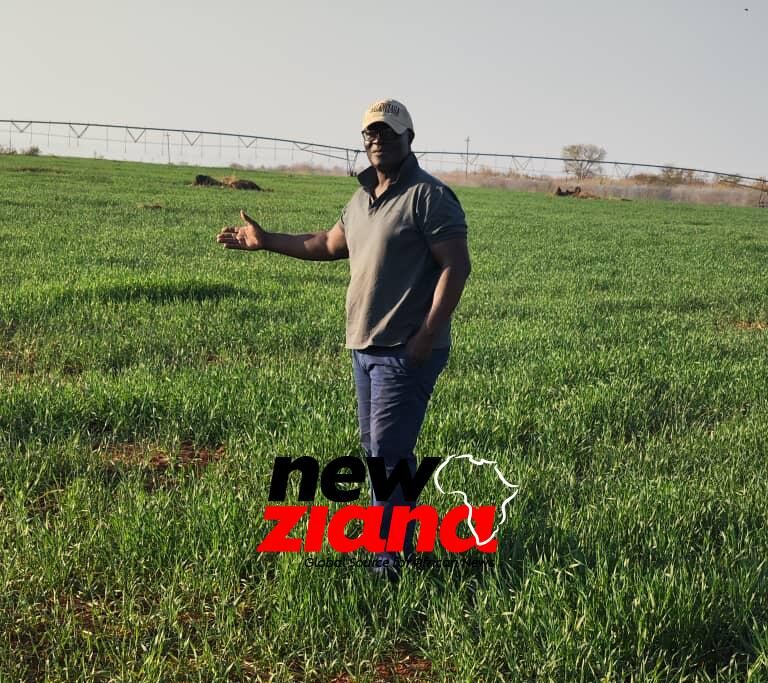
Martin Matsa, a commercial farmer in Beatrice and host of the upcoming Sorghum District Field Day organised by Zadzamatura Seed & Chemicals in partnership with AGRITEX, says farmers need long-term institutional support if Zimbabwe is to achieve sustainable food production and revive commercial agriculture.
Matsa, who once worked as a Telecommunications Technician with the former Posts and Telecommunications Corporation (PTC), says he left formal employment after realising that farming offered greater long-term economic opportunities.
Born into a farming family, he said agriculture had always been central to his upbringing despite initially viewing it as labour intensive work.
“Our school fees came from farming and livestock sales. We used cattle for tilling land and farming sustained our family,” he said.Although he pursued a professional career after school, Matsa quietly began investing in agriculture in the late 1990s by renting small plots in Mazowe while building a cattle herd.
Starting with just five heifers, he expanded his herd to more than 275 cattle by 2002 before eventually leaving employment in 2005 to pursue farming full-time.
He later enrolled for a degree in Agriculture in 2009 and graduated in 2012 with an Upper Second Class degree while simultaneously managing various agricultural enterprises.
Matsa acquired a 159-hectare farm in Beatrice under the land reform programme in 2007 and consolidated his operations there, including poultry production, potato farming and cattle ranching.However, he said the journey was far from smooth.The farmer described the period between 2007 and 2014 as one of the most difficult phases due to economic instability, hyperinflation and limited access to capital.
He also ventured into retail by opening a supermarket in Gutu, but the business later collapsed due to poor economic performance.
By 2017, he returned fully to the farm and began rebuilding operations from the ground up, focusing on contract farming of parent seed maize with Seed Co Limited and investing in climate-resilient crop production.Despite progress, Matsa said recurring theft of irrigation infrastructure, particularly aluminium irrigation pipes, has significantly affected productivity.“We lost a lot of irrigation equipment through thefts and that robbed us of reliable backup irrigation during poor rainfall seasons,” he said.
He added that limited access to financing remains one of the biggest obstacles facing resettled farmers.According to Matsa, many banks have remained reluctant to fully support farmers under the land reform programme despite more than two decades having passed since the redistribution exercise began.“It has been over 26 years since the first farms were redistributed yet banks are still not fully supporting the programme. Without financing there is poor production and little investment on farms,” he said.
Matsa also raised concern over reports of farm repossessions and withdrawal of offer letters, warning that uncertainty over land tenure discourages long-term investment.“The first thing that needs to be done is to secure tenure for resettled farmers. When offer letters are withdrawn or farms are resized it creates instability,” he said.
He believes Zimbabwe’s future agricultural success depends heavily on modern irrigation systems and deliberate Government-supported financing programmes.
Among his proposals is the creation of district-based “centres of excellence” where selected farmers would receive irrigation equipment, machinery and long-term financing support.
Under the proposed model, at least 20 farmers per district would be equipped to irrigate substantial hectarage for maize, soya beans and wheat production, with repayments from beneficiaries helping fund future groups of farmers.
“Gradually we can build our own farming success stories among resettled farmers instead of fragmented schemes that yield very little,” Matsa explained.The farmer said his recent success with sorghum has strengthened his belief that small grains could become a major solution for Zimbabwe’s drought-prone regions.
With seasonal forecasts already predicting another difficult rainfall season, Matsa says investing in crops such as sorghum, alongside irrigation rehabilitation, could help secure food production and improve farmer viability in the coming years.
The Sorghum District Field Day scheduled for May 15 in Beatrice is expected to bring together farmers, AGRITEX officers, seed companies and agricultural stakeholders to explore high-yielding sorghum varieties and climate-smart farming practices.