By Thabisani Dube
HARARE – Zimbabwe has pledged stronger reforms to advance disability inclusion, with government officials, United Nations representatives, and disability rights stakeholders calling for accelerated policy implementation and improved access to essential services.
The three-day meeting, themed “Towards an Inclusive Future: A Self-Assessment of the Inclusion of Persons with Disabilities in Zimbabwe,” brought together senior government officials, development partners, civil society organisations, academia, and organisations of persons with disabilities to assess progress and identify implementation gaps.
United Nations Resident Coordinator in Zimbabwe, Dr Abdul Rahman Lamin, said disability inclusion must be treated as a human rights obligation. He called for stronger support in education, protection services, assistive technologies, and accessible public infrastructure, stressing that persons with disabilities must be meaningfully involved in shaping policies that affect them.
The National Council of Persons with Disabilities and other organisations reaffirmed the principle of “Nothing Without Us.”
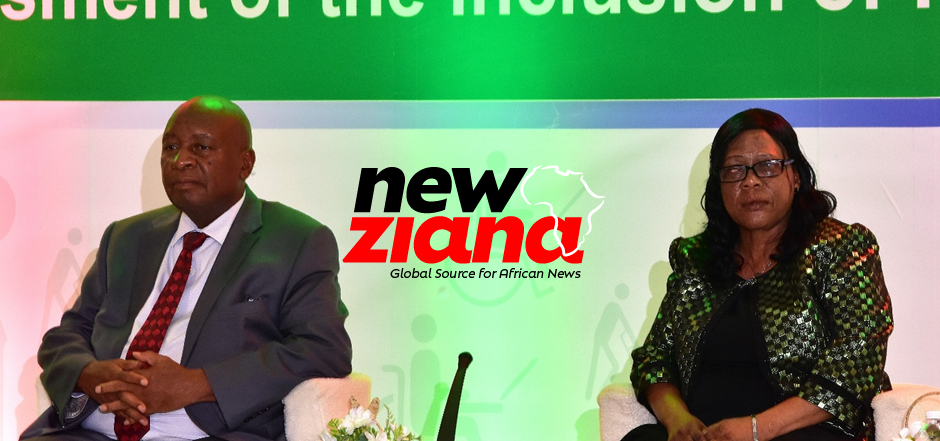
In an interview with New Ziana, two disability advocates highlighted the realities behind policy commitments.
Tsepang Thembani Nare, a disability rights advocate from Bulawayo and recent Midlands State University graduate, said: “Disability inclusion must be lived, not just promised. For men like me, it means being able to access schools, clinics, and workplaces without barriers. It means producing, selling, and earning income with dignity. We want to be part of the economy and society, not hidden away.”
Nqobani Dube, added: “Policies are important, but without organisational capacity and community‑level empowerment, they remain aspirational. We must strengthen Organisations of Persons with Disabilities to lead, monitor, and hold institutions accountable. True inclusion means persons with disabilities shaping the systems that affect their lives.”
A representative of the National Association of Societies for the Care of the Handicapped (NASCOH), Joice Matara, called for solidarity with persons with disabilities, urging practical implementation grounded in rights, development, and equality.
Senator Anna Shiri, who represents persons with disabilities in Parliament, called for equal opportunities and stronger collaboration across government, civil society, and the private sector.
Special Advisor to the President and Cabinet on Disability Issues, Rose Mpofu, described the symposium as historic, saying it marked one of the first structured national platforms dedicated to reviewing disability inclusion. She called for an end to stigma and discrimination.
Minister of Public Service, Labour and Social Welfare, Minister Edgar Moyo, said the symposium was a technical platform for assessing implementation, not a ceremonial gathering.
He cited key legal and policy frameworks, including the Persons with Disabilities Act, the National Disability Policy launched in 2021, and sector policies covering health, education, labour, transport, housing, social protection, and information communication technology.
Moyo said government will within 90 days, produce a consolidated national baseline report on disability inclusion and pilot a national disability identification, assessment, and determination framework within 120 days.
He said disability budget tagging will be introduced in the 2027 national budget cycle, alongside capacity-building programmes for ministries, local authorities, and private sector institutions.
He acknowledged challenges including gaps in disability-disaggregated data, inaccessible infrastructure, shortages of assistive technologies, and limited inclusive education support systems.
The symposium is expected to conclude with resolutions and an action plan to guide Zimbabwe’s disability inclusion agenda across government, civil society, and the private sector.