

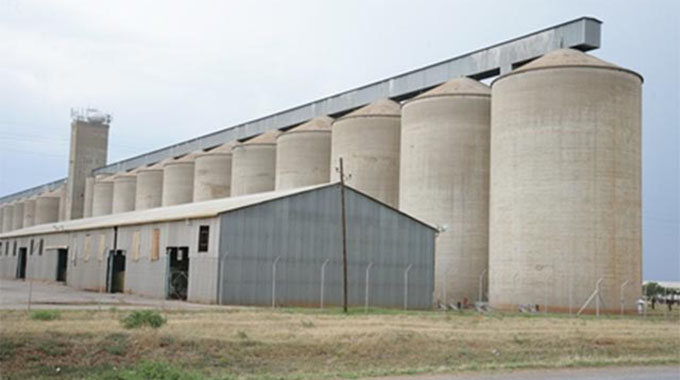
Harare (New Ziana) — The construction of an Artificial Intelligence (AI)-powered silo complex at the Grain Marketing Board (GMB) depot in Rutenga, Mwenezi district of Masvingo province, is set to revolutionise the management of national grain reserves, marking a significant leap toward modern, technology-driven agriculture in Zimbabwe, the government has said.
Posting on its National Development Strategy 2 (NDS2) X handle, the government said the Rutenga project forms part of a US$500 million nationwide program targeting the upgrade of 21 GMB depots, with 14 sites earmarked for state-of-the-art “smart” silo systems.
The initiative is designed to strengthen food security while addressing long-standing inefficiencies in grain storage and handling.
“The construction of the AI-powered silo complex at the Rutenga GMB depot marks a major shift in how national grain reserves are managed in the Mwenezi District,” it said.
“This project is part of a US$500 million nationwide initiative to modernize 21 GMB depots, with 14 sites specifically receiving these ‘smart’ silo upgrades. The facility in Rutenga is designed to address longstanding storage challenges by moving away from less secure tarpaulin shelters and manual monitoring,” it added.
The government said for years, traditional methods such as tarpaulin-covered storage and manual monitoring have exposed grain reserves to spoilage, theft and weather-related damage, adding that the new facility in Rutenga replaces these outdated systems with cutting-edge technology that ensures both efficiency and accountability.
At the heart of the innovation is an automated quality control system powered by AI-driven sensors which continuously monitor temperature, humidity and moisture levels inside the silos.
Grain delivered above the required moisture threshold of 12.5 percent is automatically processed through integrated industrial dryers, ensuring it meets storage standards without manual intervention.
The complex also introduces a new level of operational intelligence, as GMB operators can remotely monitor storage conditions and stock levels in real time with automated building functions and smart energy metering from central offices, with the capability is expected to enhance logistics planning and streamline the national grain supply chain.
Each of the new silo complexes has an estimated storage capacity of 56 000 tons. Collectively, the upgrades are part of a broader strategy to double Zimbabwe’s grain storage capacity to around 1.5 million tons, enough to sustain the country’s Strategic Reserves for up to three years.
The government said the Rutenga facility incorporates digital tracking systems and integrated anti-theft mechanisms, aimed at curbing losses that previously cost the country an estimated US$30 million annually due to outdated storage and management practices.
As the Rutenga site moves toward its anticipated mid-year commissioning, it joins a growing network of modernised depots across the country, including facilities in Mutare, Kwekwe, Mhangura and Mvurwi.
These developments are expected to drastically reduce post-harvest losses while helping Zimbabwe build resilience against climate-related shocks.
Authorities say the shift to smart storage infrastructure represents more than just an upgrade in technology, it is a strategic investment in safeguarding the nation’s food supply for future generations.
New Ziana