By Thabisani Dube
The atmosphere at the National Disability Symposium grew emotional and reflective as persons with disabilities took to the podium one after another, transforming personal struggle into powerful testimony and collective calls for inclusion, dignity, and equal participation in society.
The plenary session on lived experiences brought together voices from different sectors, each offering insight into the persistent gaps between policy frameworks and the everyday realities faced by persons with disabilities.
The session featured Paralympic legend Elliot Mujaji, Councillor Muslin Hwiza of Ruwa Town Council, Taurai Kadzviti, Deaf advocate Lincoln Matongo, David Muranganwa, entrepreneur James Mutisi, and radio presenter Ian Vambe.
Together, they shared stories marked by resilience, exclusion, determination, and triumph — highlighting that while progress has been made, significant challenges remain in education, governance, economic participation, and social inclusion.
Zimbabwe’s celebrated Paralympian moved delegates with his account of a life-changing workplace accident in 1998 that left him in a coma for months and resulted in the amputation of his right hand.
“What first felt like the end of my life became the beginning of a different path,” Mujaji said.
He went on to make history by winning Zimbabwe’s first Paralympic gold medal at the Sydney 2000 Games, before defending his title in Athens in 2004. Mujaji said sport restored his dignity and purpose, urging persons with disabilities never to give up on their dreams.
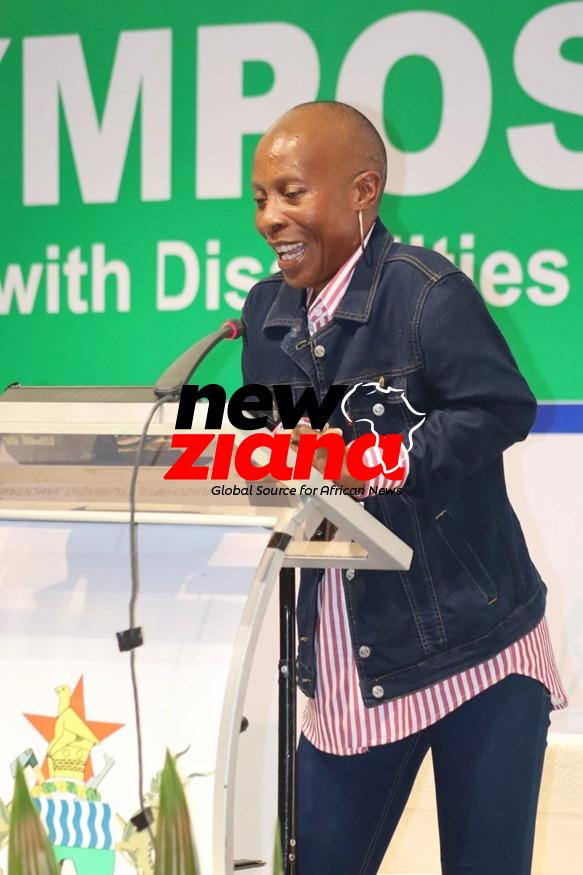
Councillor Muslin Hwiza from Ruwa, Harare shared her lived experience of disability while serving in local governance, saying participation in leadership structures remains both a challenge and a responsibility.
“Living with a disability in leadership is not easy, but it is also a responsibility to show others that it can be done. We must continue to open doors for those who are still being left behind,” she said.
She called for greater accessibility and representation of persons with disabilities in decision-making spaces.
Taurai Kadzviti gave a deeply personal account of living with epilepsy, highlighting stigma, misunderstanding, and social exclusion.
“One of the biggest challenges in my journey is stigma. People, even family members, often misunderstand epilepsy and associate it with witchcraft, which creates division and isolation,” he said.
He explained that epilepsy presents in different forms and affects individuals differently, urging greater awareness and understanding.
Lincoln Matongo emphasised that empowerment begins with access to inclusive education and skills development.
“Empowerment begins with access to education and skills development opportunities that accommodate all abilities,” he said.
He urged learning systems to become more inclusive in order to unlock the potential of persons with disabilities.
David Muranganwa shared how he sustains his livelihood through chicken farming and mining saying persons with disabilities can remain economically active when given opportunity and support.
“I encourage persons with disabilities not to give up. We can still work, survive, and build meaningful lives,” he said.
Radio presenter Ian Vambe of ZBC Classic 263 added a media perspective, stressing the importance of visibility and representation of persons with disabilities in public discourse.
He said storytelling and media platforms play a key role in shaping public attitudes and breaking stigma.
Across the session, speakers underscored a shared message — that inclusion is not charity, but dignity, and that urgent systemic change is needed across education, governance, livelihoods, and media.
They called on government, the private sector, and communities to move beyond policy commitments and ensure practical inclusion in everyday life.
As the symposium continues, the testimonies shared are expected to shape key recommendations and commitments aimed at advancing accessibility, participation, and dignity for persons with disabilities.
For Mujaji, the message remained simple but powerful:
“Disability is not the end — it is another beginning.”
His words captured the spirit of the session — that disability is not a limitation, but a different path to power.
Councillor Muslin Hwiza, one of six representatives who shared their lived experiences at the National Disability Symposium, delivers an impassioned address calling for greater inclusion and accessibility for persons with disabilities in leadership and community development.