By Simbarashe Muparaganda
MATOBO – Government’s ongoing rehabilitation of the Matobo airstrip under the national legacy projects programme is set to transform the district into a key hub for tourism, agriculture and rural connectivity, with officials highlighting long-term economic benefits beyond hosting this year’s Independence celebrations.
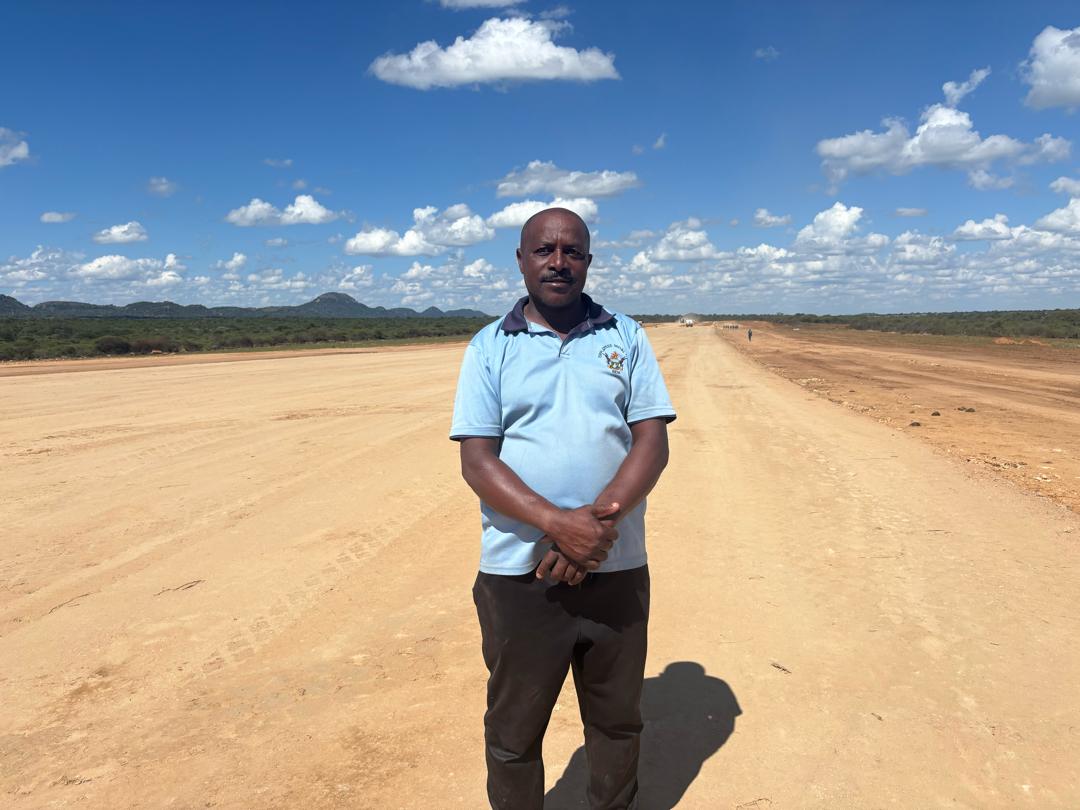
The once-neglected airstrip, believed to have been constructed before independence in 1980, is now undergoing extensive rehabilitation works aimed at restoring it to full operational status.
These legacy projects are designed to leave a lasting footprint long after the events, while also stimulating local economies through increased business activity, tourism and job creation during the construction phase.
Matobo, Bulilima and Mangwe area Roads manager, Ignatius Musekiwa, who is overseeing the project, said the development marks a significant milestone in infrastructure revival in marginalised communities.
“I am currently supervising the rehabilitation of this airstrip. Initially, this was almost abandoned, but we are rehabilitating it for the purposes of Independence,” said Musekiwa.
He noted that the entire airstrip covers a perimeter of about 300 by 2 500 metres, while the runway itself measures 30 metres by 1 300 metres, inclusive of five-metre shoulders on either side.
“We have already started stabilisation works on the runway, and so far, we have covered 820 metres. Surfacing is expected to begin this Sunday, and by April 15, the airstrip will be ready for landing,” he said.
Musekiwa said the rehabilitation goes beyond a one-off national event, positioning the airstrip as a strategic economic asset for Matobo district and surrounding areas.
“This is actually an asset to the district. We are expecting aircraft to land here, and that will generate revenue. Tourists visiting Matobo National Park will be able to land here and easily access the park,” he said.
The improved accessibility is expected to significantly boost tourism in the Matobo area, which is renowned for its unique balancing rock formations, cultural heritage sites and wildlife.
Beyond tourism, Musekiwa said the airstrip will also play a critical role in supporting agricultural activities, particularly for large-scale farming operations in the region.
“Even farmers, including those working with the Agricultural and Rural Development Authority (ARDA), will be able to utilise this airstrip. They can land here and quickly access the farms.
“Produce will also be delivery to the market faster. This will improve efficiency and open up opportunities for investment in agriculture,” he said.
Government has also incorporated additional infrastructure at the site, including a guard room, waiting area and perimeter fencing to ensure security and functionality.
“We are putting in place supporting facilities such as a guard room and a waiting room for passengers. The fencing team is already on site securing the perimeter,” Musekiwa added.
He said the project is also creating employment opportunities for local communities, both during construction and after completion, as a dedicated maintenance team will be stationed at the airstrip.
“We cannot leave such an asset unattended. There will be a maintenance team permanently based here, and that translates to jobs for the local community,” he said.
Experts say the establishment and rehabilitation of airstrips in remote and marginalised areas is critical for inclusive development, as it improves connectivity, enhances emergency response capabilities and attracts investment.
In districts like Matobo, where road access can be challenging and distances to major urban centres are long, air transport provides a faster and more reliable alternative for the movement of people, goods and services.
The airstrip is also expected to ease logistical challenges during major national events such as Independence Day celebrations, while leaving behind infrastructure that continues to serve communities long after the festivities.
The rehabilitation of the Matobo airstrip follows the upgrade of the Grand Reef Aerodrome, which was carried out during last year’s Sanganayi/Hlanganani World Tourism Expo in Mutare, Manicaland Province.
As government continues to roll out legacy projects across the country, the Matobo airstrip stands as a clear example of how targeted infrastructure development can stimulate economic growth, promote tourism and uplift rural livelihoods.
New Ziana