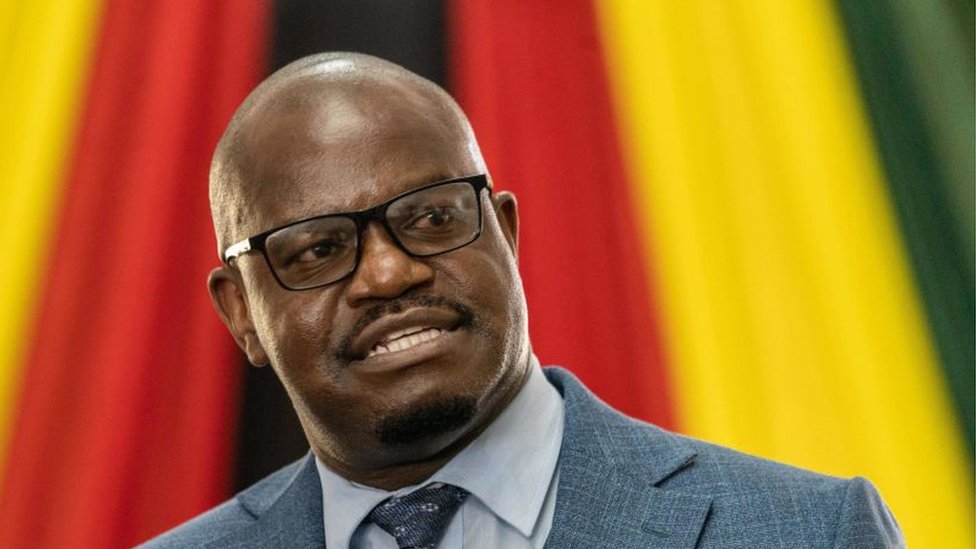
HARARE – A fresh debate over Constitutional Amendment Bill No. 3 (CAB3) has sparked intense discussion across Zimbabwe, with government spokesperson Nick Mangwana stepping forward to defend the proposed changes as both constitutional and democratic.
Mangwana argued that critics of the amendment are misinterpreting the very Constitution they claim to protect, insisting that Zimbabwe’s governance framework already relies heavily on indirect systems of selection.
“‘There is a peculiar irony in the current wave of opposition. Many detractors fail to recognise that representative democracy is built on layers of delegated authority rather than constant direct voting,” he said.
The proposed amendment, which would shift the election of the President from a direct popular vote to a parliamentary process, has drawn concern from opposition groups and civil society, with critics arguing that such a move would weaken the voice of ordinary citizens and concentrate power within political elites.
Mangwana dismissed these concerns, stating: “Those opposing CAB3 are getting entangled in their own mangled arguments, ignoring that the Constitution they claim to defend already embraces the principle of indirect election.
“If they are consistent, they must first explain why they have never demanded a public vote for judges,’ he said. ‘The Constitution clearly outlines that judges are appointed through a structured and representative process, not by direct popular vote,” the government spokesperson said.
According to Mangwana, Section 180 of the Constitution establishes a system where the Judicial Service Commission conducts interviews and submits candidates for appointment, demonstrating that indirect selection is already embedded in national governance.
“‘Have you ever gone to a polling station to vote for a judge? Of course not. The Judicial Service Commission is, in effect, an electoral college—a body of experts selecting on behalf of the people,” he stated.
Beyond the judiciary, Mangwana also highlighted traditional leadership structures as further evidence of indirect democratic systems at work before drawing further comparisons with local government systems, where mayors are often chosen by elected councillors rather than through direct public elections.
“You have never voted for a Chief in a general election. That is because the Constitution provides for their appointment through established traditional and representative mechanisms.
“In most cases, citizens vote for councillors, and those councillors then choose the mayor among themselves. If that is accepted as democratic at the local level, why is it suddenly unacceptable at the national level?” he queried.
Mangwana added that CAB3 merely seeks to redefine the method of choosing the President without undermining the foundational principle of popular sovereignty.
“‘The people have already spoken by electing Members of Parliament. Those MPs represent the will of the people and are fully empowered to make decisions, including selecting a President.’”
As debate over the amendment continues, both supporters and critics agree on one thing: the outcome could significantly shape Zimbabwe’s democratic trajectory.
‘Electoral colleges are not an aberration in our democracy; they are the standard method for filling key positions. It is time to stop the confusion and recognise this constitutional reality,” Mangwana concluded.
The discussion around CAB3 is expected to intensify in the coming months, as stakeholders across the political spectrum weigh in on what many see as a defining issue for the country’s future governance.