Story By: Antony Chawagarira
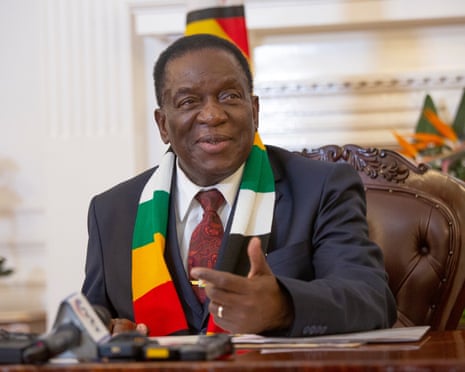
President Emmerson Mnangagwa has restructured the former Ministry of Lands, Agriculture, Water, Fisheries and Rural Development into two separate ministries in a move aimed at improving efficiency, service delivery and focus across critical sectors of the economy.
In a press statement issued by Chief Secretary to the President and Cabinet Martin Rushwaya, President Mnangagwa announced that the restructuring follows a review of the ministry’s broad portfolio, which had previously covered multiple key sectors.
The President divided the Ministry into the Ministry of Lands and Rural Development and the Ministry of Agriculture, Mechanisation and Water Resources Development, with immediate effect.
Veteran legislator Vangelis Peter Haritatos has been appointed Minister of Lands and Rural Development, while Anxious Jongwe Masuka will head the Ministry of Agriculture, Mechanisation and Water Resources Development.
The appointments were made in terms of Subsection 1 of Section 104 of the Constitution of Zimbabwe, which empowers the President to assign ministerial portfolios.
The newly created Ministry of Lands and Rural Development, led by Vangelis Peter Haritatos, is expected to focus on land governance and the transformation of rural communities.
Its core mandate will likely include land allocation and administration, land tenure security, resettlement programmes, rural infrastructure planning, and ensuring productive land use.
The Ministry will also oversee policies aimed at strengthening rural livelihoods, improving rural housing and settlement planning, and coordinating development projects in farming and communal areas.
Meanwhile, the Ministry of Agriculture, Mechanisation and Water Resources Development, under Anxious Jongwe Masuka, will concentrate on boosting agricultural productivity and modernising farming systems. Its responsibilities are expected to include crop and livestock production, agricultural research and extension services, irrigation development, farm mechanisation, water harvesting and dam development, and management of national water resources.
The Ministry will also spearhead climate-smart agriculture initiatives and ensure sustainable food production to enhance national food security.
The restructuring is widely viewed as a strategic move to allow each ministry to specialise in its respective areas, thereby strengthening agricultural output, improving land administration and accelerating rural development programmes across the country.
The changes take immediate effect, marking a significant shift in the Government’s administrative structure within one of the country’s most critical economic sectors.
New Ziana