
By Thabisani Dube
As labour pains intensified, Nobuhle Moyo, a pregnant deaf woman, arrived at Hwange Colliery Hospital in Matabeleland North Province, seeking urgent medical attention. What should have been a routine admission quickly turned into a struggle for communication.
She could not speak, and the nurses on duty did not understand sign language. Questions were asked and instructions were given, but meaning did not fully cross the gap between them. The urgency of her condition was clear, yet communication remained fractured.
Fortunately, Moyo was accompanied by her mother, who understood sign language and helped bridge the communication gap between her and healthcare workers. Moyo also used a pen and paper to write down her symptoms and respond to questions from medical staff, allowing them to better understand her condition and needs.
Although she was eventually assisted, the experience highlighted the challenges many deaf Zimbabweans face when accessing healthcare services in institutions that lack sign language interpretation and other accessible communication systems.
For many Zimbabweans with disabilities, exclusion is not an isolated incident but a recurring reality in hospitals, schools, workplaces and public offices—where communication barriers, inaccessible infrastructure and limited accommodations continue to shape daily life.
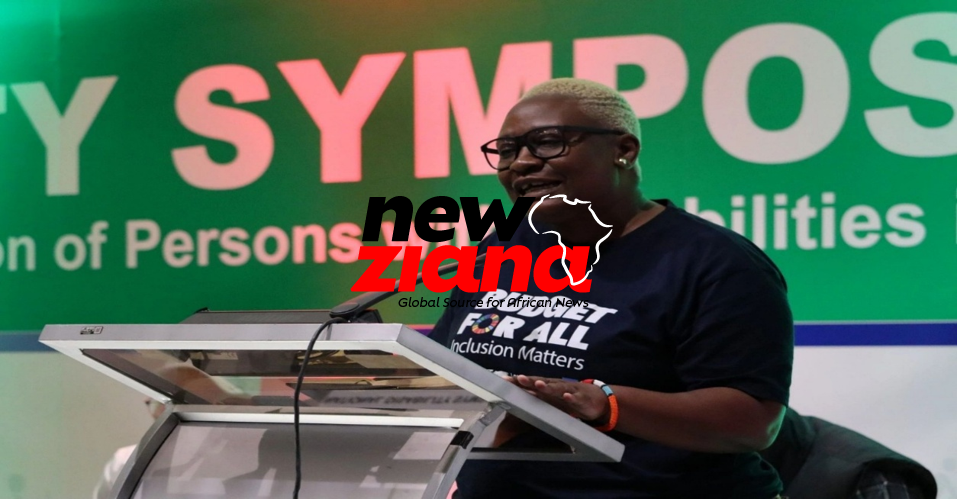
These lived experiences formed the backdrop to discussions at the National Disability Symposium held in Harare from 13 to 15 May 2026, where about 360 delegates, including disability advocates, policymakers and development partners, called for disability inclusion to move beyond symbolic representation and become an integral part of national budgeting.
Disability advocates estimate that Zimbabwe loses about seven per cent of productivity annually due to the exclusion of persons with disabilities from education, employment and economic participation.
Globally, the World Health Organisation estimates that about 1.3 billion people—around 16 percent of the world’s population—live with significant disabilities.
In Zimbabwe, the 2022 Population and Housing Census recorded 206,447 persons aged five years and above with disabilities, representing 1.6 per cent of the population. However, advocates argue that this figure is widely underestimated due to stigma, underreporting and limitations in identification systems.
They say this matters because public funding allocations are often based on official statistics, meaning undercounting can directly translate into underfunding.
According to UNICEF, children with disabilities in Zimbabwe continue to face barriers including inaccessible school infrastructure, limited assistive devices, shortages of specialised learning materials and negative social attitudes.
For learners with albinism, exclusion is not limited to classrooms and learning materials. It extends into sports and physical education as well. Advocates say many children with albinism are unable to fully participate in outdoor sporting activities such as football due to heightened sensitivity to sunlight and increased risk of skin damage.
In many schools, the absence of adapted schedules—such as evening training sessions, shaded facilities or indoor alternatives—means they are often left out of sports programmes altogether. Disability groups argue that with proper planning and modest investment, including sunscreen provision, protective clothing and adjusted timetables, participation could be made safer and more inclusive.
Adding lived experience from the albinism community, Thomas Mapanda, Provincial Chairperson of Albinism4ED in Manicaland, said exclusion affects both economic opportunities and everyday school participation.
“Access remains very limited when it comes to land and economic opportunities for persons with albinism. In Manicaland, only 11 out of 136 members who applied for land‑related opportunities received very limited benefits, while none secured mining claims. Although more than 10 members have received scholarships and over 20 are now employed in government ministries, overall inclusion remains very low,” he said.
Mapanda added that many learners with albinism struggle to clearly see what is written on the blackboard due to visual impairments, while prolonged exposure to sunlight during outdoor sports also poses health risks. He noted that without adapted classroom conditions and safer sporting alternatives, participation remains restricted both academically and socially.
Representing the National Association of Societies for the Care of the Handicapped (NASCOH), Samantha Sibanda said disability inclusion must begin at the earliest stages of budget formulation.
“Budgeting is a process. We need to be part of consultations from the beginning,” she said.
“A budget is like a cake cut into pieces. As the disability sector, we do not want leftovers.”
She said exclusion is not only economic but also social and psychological.
“It is not only about income. It is about dignity. When people are excluded from work, they are also excluded from decision-making, from visibility, from belonging,” she said.
Representatives from the Epilepsy Support Foundation said employment remains one of the clearest examples of the gap between policy and practice.
“You ask someone to apply for work, but have you removed the barriers?” asked Taurai Kazviti.
He said although job advertisements often encourage persons with disabilities to apply, workplaces rarely provide the accommodations needed for fair participation.
True inclusion, he said, requires accessible buildings, assistive technologies and adapted communication systems.
For deaf Zimbabweans, communication barriers remain particularly severe in public services.
Normatter Natsanga of Deaf Women Included said many deaf women continue to face exclusion due to the absence of sign language interpretation in key spaces.
“Gone are the days when representation simply means occupying chairs,” she said.
“We must move from presence to power.”
She said inclusion must ensure that persons with disabilities can meaningfully influence decisions that affect their lives.
Natsanga also raised concern over the heightened vulnerability of deaf women and girls, noting that communication barriers often expose them to various forms of abuse, including sexual exploitation, because they are unable to effectively report or seek help within systems that are not accessible.
Health and rehabilitation experts say communication barriers extend beyond hospitals and public offices into broader service delivery systems.
Trissure Cizanga, the head of St Giles Rehabilitation Centre, said the absence of accessible communication systems continues to limit access to essential services for persons with disabilities, particularly in emergencies and administrative processes.
“Communication barriers remain a major challenge in how persons with disabilities access services, and this affects timely intervention and care,” she said.
Cizanga also noted that limited access to rehabilitation services, assistive devices and trained rehabilitation professionals continues to affect many persons with disabilities, particularly those living in rural communities.
Laizah Choumba, Director of Disability Affairs, said recommendations from the symposium had been shared with ministries and departments for implementation.
She said government is working to strengthen disability-inclusive budgeting and training across public institutions.
“Ministries, Departments and Agencies will be trained on disability-inclusive budgeting before the call for budgets,” she said.
Zimbabwe National Statistics Agency representative Maqhawe Ndlovu said efforts are underway to improve disability data collection through the National Strategy for the Development of Statistics.
He said improved data systems would help ensure more accurate planning across sectors.
Zimbabwe’s Constitution guarantees the rights of persons with disabilities under Section 83, and the country is also a signatory to the United Nations Convention on the Rights of Persons with Disabilities.
However, disability organisations argue that while policy frameworks exist, implementation remains constrained by limited funding.
Although government introduced reforms in July 2024 that increased some disability-related cash transfers, advocates say gaps remain in access to assistive devices, inclusive education and healthcare services.
The International Labour Organisation continues to report significantly higher unemployment rates among persons with disabilities globally. For advocates, the challenge is no longer recognition but implementation, as exclusion continues from childhood into adulthood, affecting education, employment and social participation across different disability groups.
As the symposium ended, delegates agreed that disability inclusion cannot remain a policy aspiration without financial backing. With calls for disability‑inclusive budgeting expected to continue at the Zimbabwe National Disability Expo 2026 in Masvingo, advocates say the real test will be whether commitments are translated into funded services. For Nobuhle and thousands like her, inclusion will ultimately be measured not in speeches or policies, but in budgets that deliver interpreters in hospitals, assistive devices in schools, and accessible workplaces. Because dignity must be financed — not improvised.