
From Mangwe to Harare, young innovators transform waste into livelihoods and resilience.
By Thabisani Dube
In Mangwe District, in Matabeleland South Province—where drought and formal unemployment shape daily life, discarded materials are becoming a source of income and hope for youths.
Zimbabwe’s formal unemployment rate stood at 20.7 per cent in the second quarter of 2025 and most livelihoods are informal, according to Zimbabwe National Statistics Agency (ZIMSTAT) —
Among youths aged 15–24, formal unemployment stood at 15.5 per cent in 2025, underscoring the urgency of creating green livelihoods.
Against this backdrop, from Ingwizi in Matabeleland South Province to Harare, Zimbabwe’s youths are transforming waste into livelihoods, planting thousands of trees, and redefining climate change not as a crisis alone, but as an opportunity.
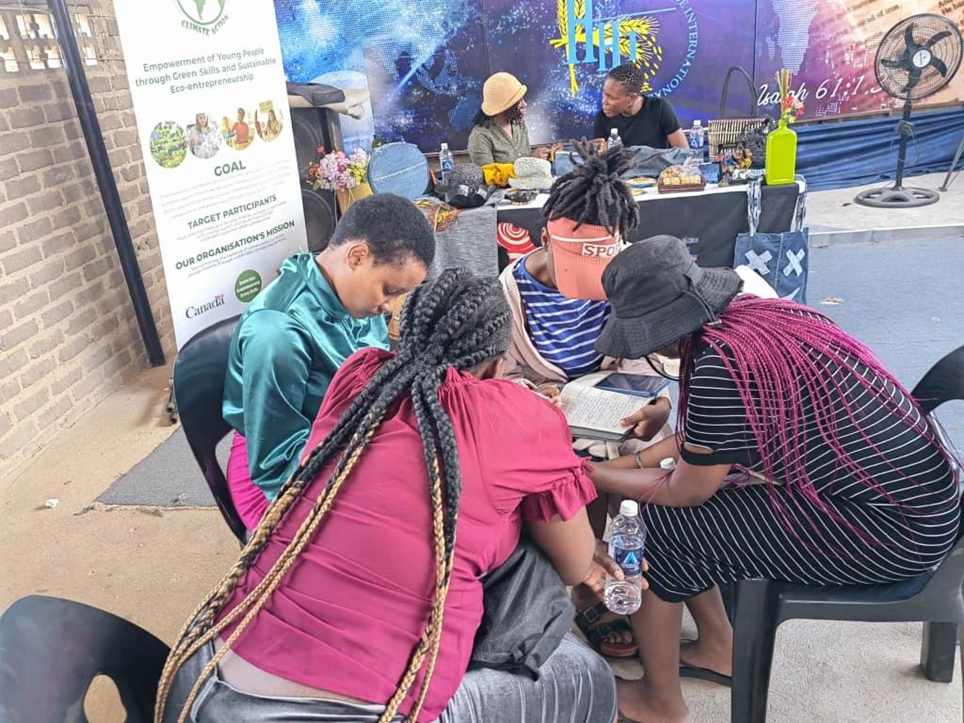
In villages such as Ingwizi and Zimnyama, adolescent girls and young women participating in Community Climate Action programmes are turning waste into jewellery, bags, and eco-fashion items. Over the past year, more than 500 young people have been trained through hands-on workshops, gaining income-generating skills while promoting environmental awareness.
“These workshops open doors to confidence, purpose, and self-reliance in areas where opportunities for young women are often limited,” said Sinethemba Ndebele, a Climate Action Programmes coordinator. “Young climate actors are now creating sustainable livelihoods that benefit families and the environment.”
For 16-year-old Nomsa Dube from Ingwizi, the training was life-changing.
“Before this, I didn’t know I could make money from old clothes and seeds. Now I’m selling jewellery and bags I made, helping my family and protecting the environment.”
Similarly, 19-year-old Tawanda Moyo, also from Mangwe, has started a small agroforestry project after completing tree nursery and agroecology training. His group has already planted more than 3,000 trees across the district.
“It feels great to do something that helps people and the planet,” he said.
Workshops also teach entrepreneurship, teamwork, and environmental stewardship. Rudo Chikomo, 18, from Matabeleland North Province, was visiting a relative in Zimnyama — a village in southwestern Zimbabwe near the provincial hub of Gwanda — when she had the opportunity to attend the programme. She shared how it reshaped her ambitions:
“I never imagined that learning how to make paper beads could also teach me budgeting, marketing, and leadership. I’m now planning to sell my products in markets in Bulawayo, Zimbabwe’s second-largest city.”
Importantly, these initiatives are becoming more inclusive. In Plumtree—a border town in Matabeleland South—similar workshops supported by Diakonia and the Community Youth Development Trust (CYDT) brought together youth and Persons with Disabilities (PWDs) through Inclusive Organisational Development and Strategic Planning sessions. Participants emphasised that disability inclusion is essential for effective climate resilience programmes, ensuring that no one is left behind.
These local initiatives mirror youth participation at the national level. During a national climate policy preparatory workshop held in Harare on 21 October 2025, ahead of the 30th UN Climate Change Conference (COP30) in Belém, Brazil, a 17-year-old climate advocate called for gender-responsive climate action, urging leaders to address the disproportionate impact of climate change on girls and young women.
Zimbabwe’s youth-led climate efforts also reflect a broader continental movement. Across Africa, young innovators are leading reforestation, renewable energy, and sustainable agriculture initiatives — redefining climate resilience through entrepreneurship.
Similar youth-driven programmes are underway in Zambia, Malawi, and South Africa, underscoring that Zimbabwe’s initiatives are part of a wider Southern African Development Community (SADC) momentum toward climate resilience and green innovation.
Government officials have taken note. Mr. Lovemore Dhoba, Director for Climate Change Management in the Ministry of Environment, Climate and Wildlife, said: “Children and youth are not passive observers of climate change — they are crucial partners, innovators, and drivers of solutions.”
Complementing these efforts are youth‑led organisations such as the African Youth Initiative on Climate Change Zimbabwe (AYICC Zimbabwe), led by National Coordinator Jean‑Betrand Mhandu. The organisation has contributed to national frameworks including climate strategies and environmental legislation, while also advancing climate education, research, and community outreach programmes. Its leaders have been recognised among the Top 100 Young African Conservation Leaders — a testament to their continental impact.
Despite these successes, many young people—particularly in remote areas—continue to face barriers to participation, including limited access to information and centralised decision-making, according to a 2025 Children and Youth Policy Brief on Zimbabwe’s proposed Climate Change Management Bill. The brief calls for greater inclusion of youth in climate governance, as well as improved transparency, accountability, and grassroots engagement.
Partnerships have been key to success. Workshops in Mangwe were supported by the Canada Fund for Local Initiatives, in collaboration with government departments such Department of Agricultural Technical and Extension Services (AGRITEX), the Zimbabwe Forestry Commission, and the Ministry of Women Affairs, Community, Small and Medium Enterprises Development. Private sector innovators also provided mentorship in eco‑fashion, waste management, and agroforestry.
Youth organisations are also scaling up initiatives nationwide. “Investing in young climate entrepreneurs is not only about livelihoods — it is about fostering leadership and resilience,” said Tanaka Mafuta, Chairperson of YES Zimbabwe. “We are not waiting for the future to happen; we are building it now.”
Building on this momentum, experts urge policymakers, donors, and private sector partners to deepen investment in youth climate innovation. In recent months, more than 1,200 young Zimbabweans have participated in eco‑training programmes, according to data from the Community Youth Development Trust (CYDT) and partner organisations. These programmes focus on waste management and Agriculture, Forestry, and Other Land Use (AFOLU), equipping youth with skills directly linked to climate resilience.
The initiative aligns with Zimbabwe’s climate policy framework, which promotes community‑based environmental management and youth participation in sustainable development. By creating dignified economic opportunities, it also addresses broader social challenges such as poverty, gender inequality, and vulnerability to climate shocks.
The impact extends beyond individual participants. Families, schools, and communities are benefiting as youth‑led enterprises promote sustainable practices and strengthen local economies. The success of programmes in Mangwe District is inspiring replication elsewhere, with youth forums in Harare, Bulawayo, and Gweru sharing best practices.
By supporting young entrepreneurs today, Zimbabwe can build a greener, more resilient future—one shaped by the creativity, leadership, and determination of its youth.