By Mvelo Mthiyane Zondo
GWANDA — A recently held ZIMRA-stakeholder engagement breakfast meeting, aimed at improving relations between taxpayers and the revenue authority, opened a Pandora’s box as participants voiced concerns about the Gwanda quasi-border post at the Mapane roadblock.
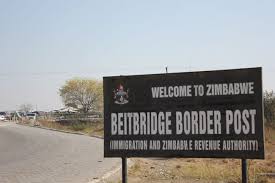
During last week’s meeting, members of the business community and residents accused ZIMRA of double-dipping and duplicating duties already carried out at Beitbridge Border Post.
The breakfast meeting brought together key stakeholders—including SMEs, taxi operators, and business community members—to strengthen regulations, enhance taxpayer education, promote voluntary compliance, and provide a platform for concerns to be raised.
However, the meeting, intended to involve Domestic Taxes, Customs, and Excise, quickly became confrontational.
Buses are routinely intercepted, with some passengers experiencing delays of over eight hours as ZIMRA enforces the US$200 personal rebate cap and conducts secondary searches.
These duplicate inspections have drawn criticism from commuters and Members of Parliament, who refer to such operations as “quasi-border posts” and question why buses are detained and searched inland after clearance at Beitbridge Border Post.
Corruption and anti-smuggling operations have fueled public complaints about extortion and harsh seizures of undeclared goods. In response to widespread bribery allegations, the Zimbabwe Anti-Corruption Commission (ZACC) has intensified awareness campaigns and stepped up monitoring of checkpoints manned by the National Anti-Smuggling Taskforce.
Thomas Gwatida, Matabeleland South chapter chairman of the Zimbabwe National Chamber of Commerce, argued that the Mapane ZIMRA roadblock targets small businesses and the public, who often lose their goods through impoundments.
“We are here to be educated about tax issues, but we must also air our grievances about the second border post at Mapane, manned by ZIMRA. We worry that after completing all paperwork at the border, we are still referred back or risk losing our goods through impoundment,” said Gwatida, known as Maregerere in business circles.
“These impounded goods range from groceries to motor vehicles. We need satisfactory answers about the second border post in Gwanda.”
Another businessman, Ndonsi Nkomo of KwaNdosi Enterprises, echoed similar sentiments, asking whether Gwanda ZIMRA officers are superior to those in Beitbridge.
“Why are the same goods cleared twice by the same authority at different points along the same route? Personally, I am not happy and suspect foul play,” he said.
An SME entrepreneur, Vusumuzi Zulu, had this to say.
“Are Gwanda ZIMRA officers more qualified than those in Beitbridge, or are they corrupt? I hope to gain clarity from this meeting. We appreciate the opportunity for education.”
“The Mapane roadblock is not only a nightmare for motorists but also a problem for Beitbridge–Bulawayo road users,” added Zulu, noting that many business people avoid ZIMRA officers when they visit their premises.
Residents and motorists travelling between Beitbridge and Bulawayo have raised significant concerns about inland roadblocks mounted by ZIMRA and anti-smuggling task forces at Mapane.
However, ZIMRA officers presenting at the breakfast meeting explained that the Mapane checkpoint exists because not all vehicles pass through the country’s legal entry points, although this results in compliant travellers also being affected.
Meanwhile, Matabeleland South Senator Nonhlanhla Mlotshwa (CCC) has voiced alarm in the Senate over what she described as a “punitive and unconstitutional” ZIMRA crackdown, referencing a new treasury directive that orders automatic and permanent forfeiture of goods deemed smuggled, with no option to pay duty or regularise compliance.
“This directive has far-reaching consequences for ordinary Zimbabweans, for traders, and for the integrity of our governance system,” she said on November 26, 2025.
Mlotshwa argued that the directive introduces “an excessively punitive regime that risks criminalising citizens instead of addressing inefficiencies at our border posts.”
Small traders, women cross-border entrepreneurs, and travellers making “innocent documentation errors” now face permanent loss of goods, she said.
She told the Senate that ZIMRA appeared to have bypassed Parliament on a policy shift “of this magnitude,” reducing lawmakers to mere spectators while executive instructions alter people’s lives.
Mlotshwa questioned whether the directive violated Section 68 of the Constitution, which guarantees fair administrative conduct, and whether the government can “issue punitive orders without due process or affording citizens the right to be heard.”
She said inland ZIMRA checkpoints—including those turning towns like Gwanda into “quasi-border posts”—were increasing opportunities for “harassment, extortion, and abuse of authority.”