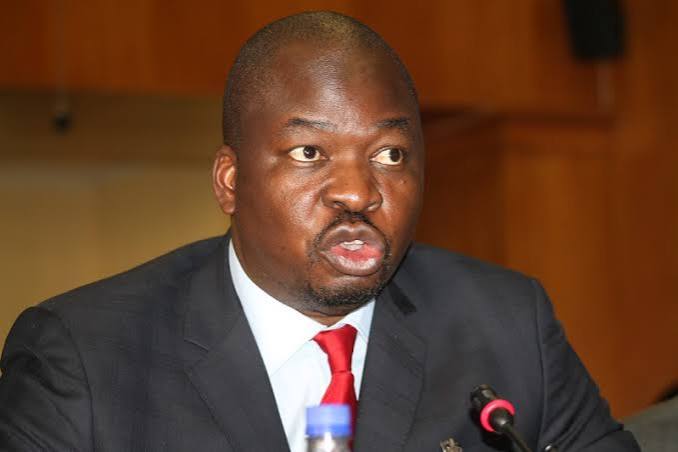
MARONDERA- As he continues to show his commitment to initiate development and
safeguard the people’s welfare, Uzumba legislator Wiriranai Muchemwa is
coordinating cholera response initiatives in the constituency.
The initiatives are meant to complement those rolled out by the Government and
health authorities at a local level.
Muchemwa was one of the legislators who won with huge margins in the August
23/24 harmonised elections after he polled 24 588 votes to Cosmas Konono of the
Citizans Coalition for Change (CCC)’s 1 977.
As at October 19, Uzumba Maramba-Pfungwe District had the third highest new
cases of cholera in Zimbabwe (11), after Buhera (14) and Chiredzi (13).
To date, the cholera outbreak has affected 41 districts and UMP has unfortunately
emerged as a hotspot, a development that has led to authorities upping the ante to
prevent and control such cases.
The outbreak has now spread to more than the 17 traditional cholera hotspot districts
of Buhera, Chegutu, Chikomba, Chimanimani, Chipinge, Chitungwiza, Chiredzi,
Harare, Gokwe North, Marondera, Mazowe, Shamva, Mutare, Murehwa, Mwenezi,
Seke and Wedza.
The first cholera outbreak in the country was reported on February 12 last year in
Chegutu town, Mashonaland West Province.
In the initiative to curb cholera cases in Uzumba, Muchemwa has roped in the local
business community and mining companies operating in the district and specifically
Uzumba constituency have joined in the fight against cholera.
“We recorded new cases of cholera here in Uzumba and we are fighting to prevent
its spread as well as control such cases. There are mining companies – Natural
Stone, Yaungshen and Inducon – that have joined the fray after heeding our call for
them to come forward and assist our health authorities’ in combating this cholera
outbreak.
“President Mnangagwa always say, Nyika Inovakwa Nevene Vayo and true to that
statement, I believe that it is only the people of Uzumba who should work and pull
together to develop the constituency or combat any tragedies that come along the
way. As the Member of the National House of Assembly for Uzumba, I am leading
from the front in the coordination of programmes aimed at combating cholera,” he
said.
As part of the initiatives to combat cholera in Uzumba, Muchemwa is working with
the Zimbabwe National Water Authority (ZINWA) so that people in his constituency
can access safe, clean water.
He said: “We want to complement the Presidential Borehole Drilling Scheme and on
that one, I have engaged the nation’s water authority to help people access safe
water for consumption to prevent cholera. Nhakiwa Business Centre is our priority
area.”
Repeated and increased frequency in cholera outbreaks are a “cause for grave
concern”, and Government will not hesitate to intervene to protect lives as part of
broad, strategic interventions to end the public health menace, President
Mnangagwa has said.
President Mnangagwa recently said that the lasting solution to chronic cholera
outbreaks lies more in service delivery, especially through provision of modern
amenities and infrastructure that delivers clean, safe drinking water, as well as
ensuring modern, efficient reticulation and waste management technologies and
systems.
He added that Government, through the Ministry of Local Government and Public
Works, will ensure that all local authorities, regardless of who controls them, become
functional and responsive to the public health needs of residents.
According to the Ministry of Health and Child Care, nearly 5,000 suspected new
cases of cholera have been recorded since late September, with the death toll
breaching the 100 mark.
The outbreak – the biggest since 2018 – was caused by unhygienic conditions and
blocked sewers. All the country’s 10 provinces have reported cases since the fresh
outbreak was announced earlier this year.
Cholera is an acute diarrheal illness caused by poor sanitation and the ingestion of
contaminated water or food. Outbreaks occur regularly and mainly in Zimbabwean
cities where supplies of drinking water and sanitation facilities are erratic and
infrastructure has collapsed due to years of neglect.
In some areas of the country, people can go for months without tap water, forcing
them to rely on unsafe sources like shallow wells, boreholes or rivers.
In 2008, a major cholera outbreak claimed at least 4,000 lives in Zimbabwe and at
least 100,000 people fell ill.